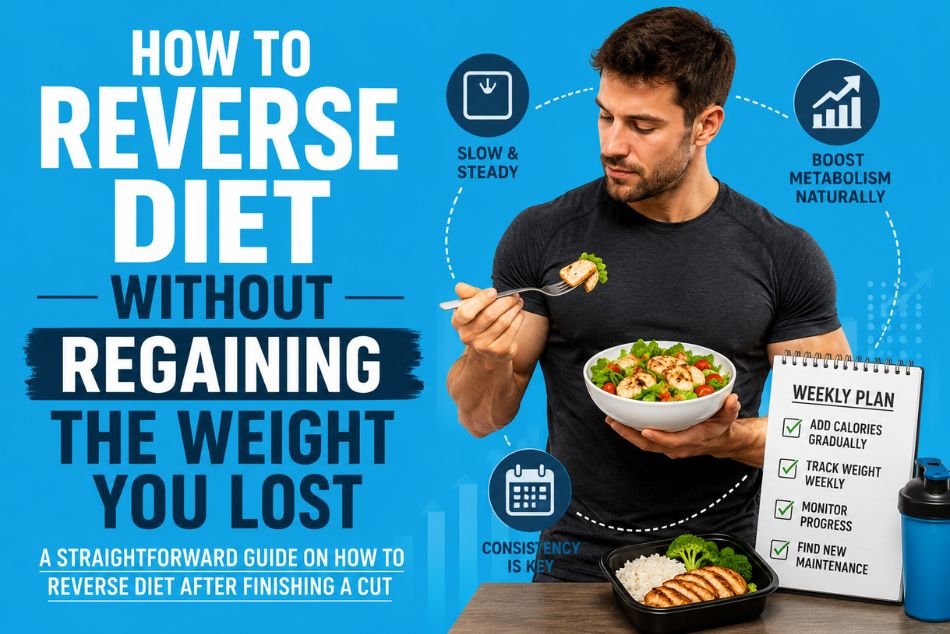
A Straightforward Guide on How to Reverse Diet After Finishing a Cut
So you finally hit your goal weight. The cut is over, the mirror looks better, and now you’re staring at your meal plan wondering what happens next. This is exactly where knowing how to reverse diet saves you from undoing months of hard work in a matter of weeks.
Jumping straight back to your old eating habits after a long cut is one of the fastest ways to regain fat. Your metabolism has adapted to fewer calories, and your body is primed to store the extra food you throw at it. Reverse dieting gives your metabolism a fair chance to catch up before you go back to eating like a normal person.
What Is Reverse Dieting, Exactly?
Reverse dieting is the process of slowly raising your daily calories after a cut instead of jumping back to maintenance all at once. You add small amounts of food back in, usually week by week, and watch how your weight responds.
The goal isn’t to gain weight. The goal is to find your new maintenance number without the scale creeping up while you get there. Bodybuilders and physique athletes have used this approach for years to transition out of contest prep without blowing up overnight.
It sounds almost too simple to work. Add a little food, watch the scale, add a little more. But that simplicity is exactly why it holds up so well after a long cut, when your appetite is high and your patience for tracking is probably running low.
Why Your Body Fights You After a Cut
A long calorie deficit doesn’t just burn fat. It also changes how your body handles food once you stop cutting.
Hormones tied to hunger and energy expenditure shift during a diet. Leptin drops, hunger goes up, and your body becomes more efficient at holding onto whatever calories you give it. This is sometimes called metabolic adaptation, and it’s the main reason people rebound so hard after finishing a diet.
Reverse dieting doesn’t magically undo this overnight. What it does is give your body a slow, controlled path back to normal, instead of a sudden flood of food that gets stored as fat before your metabolism has a chance to catch up.
The Philosophy Behind Reverse Dieting
Before getting into the numbers, it helps to understand why this method works the way it does. There are a few ideas that hold the whole thing together.
Your Metabolism Needs Time: Weeks of dieting slow things down. Your body gets efficient at running on less, and it doesn’t flip back to normal the second you start eating more. Giving it time to adjust is the entire point of a reverse diet.
Small Increases Beat Big Jumps: Adding 500 calories overnight is a shock to a system that’s been running lean for months. Small, steady increases let your body absorb the extra food without immediately storing it as fat.
Consistency Matters More Than Speed: You’re not in a rush here. Rushing the process defeats the purpose, and you’ll end up right back where you started, just heavier. Patience is what separates a successful reverse diet from a slow-motion binge.
Trust the Averages, Not the Bad Days: One heavy meal or one salty dinner can push the scale up two or three pounds overnight. That’s not fat, and treating it like fat is how people panic and quit halfway through. Weekly averages tell the real story.
Reverse Dieting vs. Just Eating More
It’s worth drawing a line between reverse dieting and simply going back to normal eating after a diet ends. They look similar on the surface, but they play out very differently.
Eating however you want right after a cut usually means a fast jump in calories, often without tracking anything. That’s exactly the pattern that leads to fast fat regain, since your body is still running on a slowed-down metabolism and can’t handle the sudden surplus.
A reverse diet keeps the structure of dieting in place, just with the calories moving upward instead of down. You’re still tracking, still weighing yourself, still making decisions based on data instead of how hungry you feel on a given day.
Signs You Might Need to Reverse Diet
Not everyone coming off a diet needs to go through this process. But a few signs make it worth considering.
- You’ve been in a calorie deficit for 8 weeks or longer
- Your energy, sleep, or workouts have taken a hit
- You’re worried about rebound weight gain
- Your calories are already low and you can’t cut further without feeling awful
If any of that sounds familiar, learning how to reverse diet properly is worth your time.
How to Reverse Diet – The Weekly Process
Here’s where the actual work happens. The process is simple on paper, even if it takes discipline to follow through.
Step 1: Know Your Current Calories: Before you add anything back, you need a clear number. Track your food for a week or two at your current diet calories so you know exactly where you’re starting from.
Step 2: Add Calories Gradually: Most people increase daily intake by 50 to 100 calories per week. Smaller frames or those who’ve been dieting a long time often do better sticking closer to the lower end.
Step 3: Track Your Weight, Not Just Your Feelings: Weigh yourself under the same conditions every morning and look at the weekly average, not the daily number. Bodyweight bounces around from water and food volume, so one bad morning on the scale doesn’t mean anything on its own.
Step 4: Adjust Based on What You See: If your weight stays flat or drifts down slightly, add another 50 to 100 calories the following week. If the scale jumps more than expected, hold your calories steady for a week before increasing again.
Step 5: Repeat Until You Land on Maintenance: Keep cycling through these steps for as many weeks as it takes. Some people need four weeks, others need closer to ten, and there’s nothing wrong with either timeline.
Sample Reverse Diet Progression
Seeing the numbers laid out helps make the process less abstract. Here’s a rough example for someone starting at 1,600 calories a day after a cut.
| Week | Daily Calories | Weekly Change |
|---|---|---|
| 1 | 1,600 | Starting point |
| 2 | 1,675 | +75 |
| 3 | 1,750 | +75 |
| 4 | 1,825 | +75 |
| 5 | 1,900 | +75 |
| 6 | 1,975 | +75 |
This is just a template, not a rule. Your own numbers depend on your size, activity level, and how your weight responds week to week.
How Much Should You Increase Calories by?
This is the question everyone asks, and the honest answer is that it depends on your body size and how long you’ve been dieting. Still, there are some solid starting points.
Someone who has been in a deficit for a few months usually starts around 50 to 100 extra calories per week. Larger athletes or those with more muscle mass can sometimes handle slightly bigger jumps without issue.
The point of learning how to reverse diet isn’t to find one magic number. It’s to build a process you can repeat, week after week, until you land at a calorie intake you can maintain without thinking about it.
Reverse Dieting and Your Macros
Most of the extra calories during a reverse diet come from carbohydrates, with protein staying roughly where it was during your cut. Your protein target is based on bodyweight, so it doesn’t need to move much even as total calories climb.
Fat can increase slightly too, but carbs usually do the heavy lifting. More carbs mean more training energy, which is one reason lifters often feel noticeably stronger a few weeks into a reverse diet.
Common Mistakes to Avoid When You Reverse Diet
A few mistakes show up again and again, and they’re the reason people give up on the process or think it doesn’t work.
Increasing Calories Too Fast: Getting impatient and adding 200 or 300 calories at once skips the entire purpose of the method. You’re better off going slower than you think you need to.
Panicking Over Normal Weight Fluctuations: A two-pound jump after a big meal isn’t fat gain. It’s water and food sitting in your digestive system. Judge your progress on weekly averages, not single readings.
Skipping the Tracking Step: Reverse dieting without tracking your food is just guessing. You need accurate numbers to know whether you’re actually following the plan or drifting off course.
Stopping Too Early: Some people get a few weeks in, see the scale hold steady, and quit tracking altogether. That’s usually when things start creeping up again because there’s no longer a system in place.
Ignoring Training and Recovery: Reverse dieting isn’t just about the food. If your training and sleep stay poor, the extra calories won’t do much for your energy or your physique, and it gets harder to tell whether weight changes are coming from food or from other habits slipping.
Comparing Your Timeline to Someone Else’s: Your friend’s six-week reverse diet doesn’t mean yours will take six weeks too. Diet length, starting calories, and body size all change the math, so comparing timelines usually just leads to unnecessary frustration.
Tips to Make Reverse Dieting Work for You
Getting this right doesn’t require anything fancy. A few habits make the difference between a smooth transition and a frustrating one.
- Weigh yourself daily and track the weekly average instead of single days
- Log your food honestly, including sauces, oils, and drinks
- Give each calorie increase a full week before judging the result
- Prioritize sleep, since poor sleep skews hunger and water retention
- Keep your training consistent so the extra calories go toward performance, not just sitting around
How Long You Dieted Changes the Plan
Not every reverse diet looks the same, and the length of your original cut plays a big role in how you approach it.
Short Cuts (Under 8 Weeks): If you were only in a deficit for a month or two, your metabolism probably hasn’t adapted much. You can usually move through the calorie increases a little faster without much risk of fat gain.
Long Cuts (3 Months or More): Extended dieting phases call for more patience. Your body has had time to settle into a lower-calorie state, so smaller weekly increases and closer attention to the scale matter more here.
Aggressive Cuts: If you dropped weight fast on a steep deficit, expect your body to be more reactive to added food early on. Starting at the lower end of the 50 to 100 calorie range is the safer bet.
Who Should Try Reverse Dieting?
This approach isn’t only for competitive bodybuilders, though it’s popular in that world for good reason.
Anyone Coming off a Long Cut: If you’ve spent months eating in a deficit, your body needs a bridge back to normal eating. That bridge is the reverse diet.
Lifters Chasing Performance: Low calories eventually tank strength and recovery. Slowly raising intake helps you train harder without the fat gain that comes from just eating whatever you want again.
People Tired of the Yo-Yo Cycle: If your pattern has always been diet hard, crash out, regain everything, and repeat, a structured reverse diet breaks that cycle by giving you an actual plan for the after.
What You’ll Need to Track Your Reverse Diet
You don’t need much to do this properly. A kitchen scale, a food tracking app, and a bathroom scale cover the basics.
A notebook or spreadsheet to log your weekly averages helps too. Having the numbers in front of you makes it much easier to spot trends instead of relying on how you feel that particular morning.
Kitchen Scale: Weighing your food, especially calorie-dense items like oils and nut butters, keeps your numbers honest. Eyeballing portions is where most tracking errors sneak in.
Food Tracking App: Any app that lets you log meals and see daily totals works fine. Consistency in how you log matters more than which specific app you choose.
Bathroom Scale: Weigh yourself first thing in the morning, after using the bathroom and before eating or drinking anything. Same time, same conditions, every day, so the numbers actually mean something when you compare them.
A Simple Log: Whether it’s a notes app or a spreadsheet, write down your weekly average weight next to your calorie level for that week. Over a few months, this log becomes the clearest picture of how your body responds to more food.
Wrapping Up
Learning how to reverse diet is really about patience more than anything technical. Small weekly increases, honest tracking, and paying attention to weekly averages instead of daily swings will get you to a stable maintenance number without wrecking your progress.
There’s no need to rush back to old habits the moment your diet ends. Give your body the time it needs, follow the process step by step, and you’ll come out the other side stronger and leaner than if you’d just gone back to eating however you wanted.
FAQs
Q1) How Long Does a Reverse Diet Take?
Most reverse diets run anywhere from 4 to 10 weeks, though it can take longer if you were in a deep deficit for an extended period. The timeline depends on how far you need to climb to reach your new maintenance calories.
Q2) Will I Gain Fat During a Reverse Diet?
Some minor scale weight increase is normal and expected, mostly from glycogen and water rather than fat. Following the process correctly keeps fat gain minimal while your metabolism adjusts.
Q3) How Do I Know When to Stop Increasing Calories?
You’ve found your maintenance number once your weight stays stable for a couple of weeks at a given calorie level while you’re eating and training normally. That’s the point where the reverse diet is essentially done.
Q4) Can Beginners Reverse Diet?
Reverse dieting is most useful for people coming off a structured, calorie-tracked diet. If you’ve never tracked your food and don’t have a clear deficit to reverse out of, the process doesn’t really apply yet.
Q5) Do I Need to Track Macros or Just Total Calories?
Total calories matter most, but keeping protein steady throughout the process helps preserve muscle and keeps hunger in check. Carbs and fat can flex more than protein does.
Q6) Should I Keep Training While I Reverse Diet?
Yes, and staying consistent with training actually makes the process work better. Extra calories going toward heavier lifts and better recovery is a much better outcome than extra calories just sitting around doing nothing.
Q7) What Happens After the Reverse Diet Ends?
Once you’re stable at your new maintenance calories, you simply keep eating at that level and monitoring your weight periodically. From there, you’re in a normal maintenance phase until you decide to cut or bulk again.