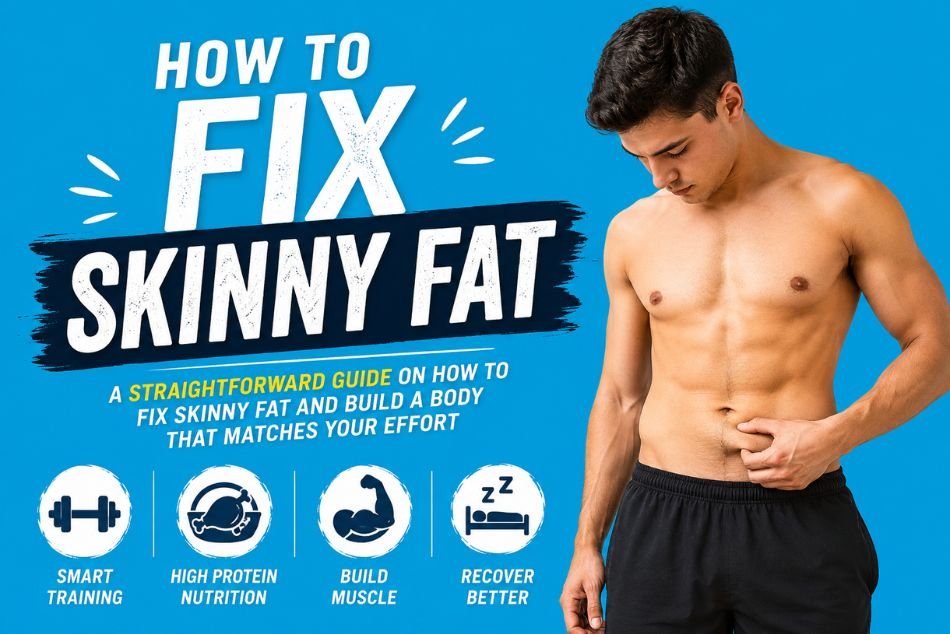
A Straightforward Guide on How to Fix Skinny Fat and Build a Body That Matches Your Effort
You eat reasonably well. You’ve tried cutting carbs, doing more cardio, maybe even skipping meals here and there. And yet you still look soft, your arms still look small, and your stomach still pokes out a little no matter what the scale says. If that sounds familiar, you’re probably dealing with the skinny fat problem, and figuring out how to fix skinny fat is less about eating less and more about training smarter.
Skinny fat isn’t a medical term, but almost every trainer knows exactly what it means the moment you say it. You’re not overweight by the numbers. Nonetheless, your body fat percentage is higher than it should be, and your muscle mass is lower than it should be. Hence, you end up looking “thin” in a t-shirt but soft everywhere else.
The good news is that this is one of the more fixable body types out there. Once you understand what’s actually happening under your skin, the fix becomes pretty straightforward.
What Does Skinny Fat Actually Mean?
Skinny fat describes someone whose body weight sits in a normal range on paper, but whose body composition tells a different story. Their body fat percentage runs high, often somewhere in the 25 to 30 percent range, while their muscle mass sits well below where it should be for their size.
On a scale, you look completely fine. On a body composition scan, the picture changes quite a bit. Similarly, this body type is sometimes called “normal weight obesity,” and it carries a lot of the same metabolic risks as being overweight, including insulin resistance and a buildup of visceral fat around your organs.
The frustrating part is that skinny fat rarely gets caught. Doctors look at your BMI, see a normal number, and move on. Meanwhile, the underlying muscle-to-fat ratio is quietly working against you.
Signs You Might Be Skinny Fat
Not everyone who looks slim is dealing with this. Nonetheless, a few common signs tend to show up again and again in people who are.
- Your weight looks completely normal on a scale, yet you feel soft or “doughy” when you flex or pinch your skin.
- You have little to no visible muscle definition in your arms, shoulders, or legs, even though you’re not overweight.
- Your stomach sticks out slightly even though the rest of your body looks thin.
- You get tired quickly during basic physical activity, more than someone your size should.
- You’ve dieted before and lost weight, but ended up looking just as soft as before, only smaller.
If most of these sound familiar, you’re likely dealing with the skinny fat body type, and the fix isn’t complicated once you know where to focus your energy.
Why You Ended Up Skinny Fat in the First Place
Nobody wakes up and decides to become skinny fat. It’s usually the byproduct of a few habits stacked on top of each other for years.
Chronic Dieting Without Lifting
If you’ve spent years cutting calories without doing any resistance training, you’ve probably lost muscle right along with the fat. Your body doesn’t care whether it burns fat or muscle for fuel; it just looks for the easiest source of energy. Without a reason to keep your muscle, like lifting weights, it lets a good chunk of it go.
This is why so many people end up smaller but not leaner after a diet. The scale drops, the mirror doesn’t really change, and the whole cycle starts again with another diet.
Too Much Cardio, Not Enough Resistance Work
Hours on a treadmill will absolutely help your heart, but it won’t build the muscle your frame is missing. Cardio burns calories while you’re doing it. Resistance training builds tissue that keeps burning calories long after you’ve left the gym.
Similarly, people who lean almost entirely on cardio for years often end up with a smaller frame overall, but the ratio between fat and muscle barely improves. That’s the skinny fat pattern showing up in real time.
Not Eating Enough Protein
Muscle needs raw material to rebuild itself, and that raw material is protein. Without it, your body simply doesn’t have what it needs to repair and grow muscle tissue, no matter how hard you train.
A lot of people underestimate just how much protein their body actually needs, especially if they grew up eating a diet built mostly around carbs. It’s an easy thing to fix once you know your target, but it rarely gets fixed by accident.
Genetics and Lifestyle
Some people are simply more prone to storing fat around the middle rather than under the skin elsewhere on the body. Combine that with a desk job and a diet heavy in processed food, and you’ve got a recipe for the classic skinny fat look.
None of this means you’re stuck with the body you have right now. It just means your starting point isn’t identical to everyone else’s, and your approach should account for that.
How to Fix Skinny Fat With Body Recomposition
Here’s where most people go wrong. When they finally decide to do something about it, they either diet harder or start doing even more cardio. Both moves make the problem worse, not better.
The actual answer to how to fix skinny fat is a process called body recomposition, which means building muscle and losing fat at the same time. It’s not the same as losing weight. In fact, your weight on the scale might barely budge while your entire physique changes underneath it.
Resistance Training Comes First
This part isn’t optional. Lifting weights, particularly compound movements like squats, deadlifts, presses, and rows, is the single most effective tool you have for building the muscle that’s currently missing.
You don’t need a fancy program to start. Three sessions a week focused on the big compound lifts, done with progressive overload, meaning you add a little weight or a rep whenever you can, will get you moving in the right direction. Start with a weight you can control with good form, and build from there.
Isolation exercises like curls, lateral raises, and leg extensions have their place too, but they should come after your main compound lifts, not instead of them. Think of them as finishing touches, not the main event.
Protein Intake Matters More Than You Think
Aim for somewhere around 0.7 to 1 gram of protein per pound of your bodyweight each day. That’s a wide range on purpose, since your exact number depends on your activity level and how aggressive your goals are.
Similarly, spread that protein across your meals rather than trying to cram it all into dinner. Your muscles use protein most efficiently when it’s coming in steadily throughout the day.
Calories: Maintenance or a Small Deficit
You don’t need to starve yourself to fix skinny fat. Eating at maintenance calories, or a small deficit of around 10 to 20 percent below maintenance, gives your body enough fuel to build muscle while still nudging fat loss along.
Go too aggressive with the deficit, though, and you’ll sabotage the whole process. Your body will start eating into the very muscle you’re trying to build, and you’ll end up right back where you started, just smaller.
Sleep and Stress Are Not Optional
Getting seven to nine hours of sleep a night isn’t a luxury when you’re trying to change your body composition. It’s one of the biggest levers you have, and most people ignore it completely.
Poor sleep and chronic stress both drive up cortisol, and elevated cortisol makes it harder to hold onto muscle while also making it easier to store fat around your midsection. Nonetheless, if you’re doing everything right in the gym and kitchen but still not seeing progress, your sleep and stress levels are worth a hard look.
If you suspect something hormonal is going on, like thyroid issues or something else entirely, it’s worth getting bloodwork done. Fixing an underlying hormonal issue won’t transform your body overnight, but it removes a real obstacle that no amount of training can outwork.
Mistakes That Keep People Skinny Fat
There are a handful of habits that quietly keep people stuck in the skinny fat cycle for years. Avoiding these mistakes is just as important as anything else you’re doing.
- Chasing the scale instead of your reflection. Body recomposition can leave your weight almost unchanged for months while your actual shape improves dramatically. Fixating on the number will make you think nothing is working.
- Doing endless cardio and skipping the weights. Cardio has its place, but it will never build the muscle that’s actually missing from your frame.
- Under-eating protein. This is the most common mistake by far, and it quietly stalls muscle growth even when your training is on point.
- Cutting calories too hard, too fast. Rapid weight loss, whether from an aggressive diet or otherwise, tends to strip away muscle along with fat.
- Program hopping. Switching workout routines every couple of weeks doesn’t give your body enough time to adapt and grow. If you’re serious about how to fix skinny fat long term, consistency matters more than finding the “perfect” program.
How Long Before You Actually See Results?
This is the part nobody wants to hear, but it’s the honest answer: visible change usually takes somewhere between 12 and 24 weeks of consistent training and eating.
The first few weeks, you’ll mostly notice strength going up before you see anything in the mirror. Somewhere around weeks eight through twelve, definition starts showing up, particularly around your shoulders, back, and midsection. Similarly, by the three to six month mark, most people have a noticeably different physique, even if their bodyweight has barely moved.
Stop weighing yourself daily during this process. Instead, track your lifts, take progress photos every few weeks, and keep an eye on how your clothes fit. Those measurements tell you far more than a number on a scale ever will.
Who This Approach Works Best for
Body recomposition tends to work especially well for a specific group of people.
Beginners and Returning Lifters
If you’re new to resistance training, or you’re coming back to it after a long break, your body is primed to build muscle quickly. This is often called the “beginner gains” window, and it’s the best time to run a recomp.
Anyone With Some Extra Body Fat to Spare
Recomposition works best when you’ve got a bit of stored fat your body can use for energy while you train. Skinny fat individuals usually fit this description perfectly, which makes this one of the more forgiving body types to work with.
People Willing to Be Patient
If you need to see dramatic results within two weeks, this approach isn’t for you. But if you’re willing to put in a few consistent months, it’s genuinely one of the more reliable paths toward a leaner, stronger physique.
A Simple Weekly Training Split to Start With
You don’t need anything complicated to begin fixing skinny fat. A basic three-day split covering your whole body works well for most people just starting out.
| Day | Focus | Example Lifts |
|---|---|---|
| Day 1 | Lower Body | Squats, Romanian Deadlifts, Leg Press |
| Day 2 | Upper Push | Bench Press, Overhead Press, Dips |
| Day 3 | Upper Pull | Rows, Pull-Ups, Deadlifts |
Add a short walk on your off days if you’d like some low-intensity cardio, but keep resistance training as your main priority. Once you’ve built a base of a few months, you can add a fourth day if your recovery allows for it.
Tracking Your Progress the Right Way
Since your bodyweight might barely move during this process, you need better ways to measure whether things are actually working.
- Take progress photos every two to four weeks, in the same lighting and the same poses, so you can actually compare them side by side.
- Log your lifts every session. If your weights or reps are trending up over time, you’re building muscle, even if the scale disagrees.
- Measure your waist once every couple of weeks. A shrinking waist alongside stable or increasing strength is one of the clearest signs that recomposition is working.
- Check how your clothes fit, especially around your shoulders, chest, and waistband. This tends to change well before the scale does.
Weighing yourself daily during a recomposition phase will mostly just mess with your head. Water weight, sodium intake, and hormones can shift the number several pounds in either direction without meaning anything at all.
A Few Extra Tips to Speed Things Along
- Don’t skip warm-up sets before your heavy lifts. They protect your joints and let you lift heavier with better form once you’re actually working.
- Keep a food log, even a rough one, for the first few weeks. Most people underestimate how little protein they’re actually eating until they write it down.
- Prioritize compound lifts, but don’t neglect your weaker muscle groups. A body that’s strong everywhere looks and functions better than one with a few standout lifts and a handful of weak spots.
- Give each phase of training at least eight to twelve weeks before judging whether it’s working. Switching things up too soon is one of the fastest ways to stall your own progress.
Wrapping Up
Skinny fat isn’t a life sentence, and it’s definitely not something you fix by eating less or running more. Learning how to fix skinny fat comes down to a handful of things done consistently: lifting weights with real intent, eating enough protein, keeping your calories reasonable, and giving your body the sleep it needs to recover.
None of this happens overnight, and that’s fine. Give the process a few consistent months, trust your training log more than your bathroom scale, and the soft, undefined look you’re used to seeing in the mirror will start to change into something you actually built yourself.
FAQs
Q1) What Exactly Causes Skinny Fat?
It’s usually a combination of chronic dieting without resistance training, too much cardio, low protein intake, and in some cases, genetics that favor fat storage around the midsection.
Q2) Can You Fix Skinny Fat Without Going to a Gym?
Yes, to a point. Bodyweight resistance training and resistance bands can build a real amount of muscle, especially for beginners. Nonetheless, access to a barbell and some plates will speed up the process considerably.
Q3) Do You Need to Be in a Calorie Deficit to Fix Skinny Fat?
Not necessarily. Many people make faster progress at maintenance calories or a very small deficit, since it gives the body enough fuel to actually build muscle while fat loss happens more gradually.
Q4) How Much Protein Do I Actually Need?
Somewhere around 0.7 to 1 gram per pound of bodyweight daily works for most people. Spread it evenly across your meals rather than saving it all for one sitting.
Q5) Is Cardio Completely Useless for Skinny Fat?
No, cardio is still great for your heart and overall conditioning. It just shouldn’t replace resistance training, since cardio alone won’t build the muscle that’s actually missing from your frame.