A Simple Guide on How to Get Rid of Muffin Top Stomach for Good
If you’ve ever caught yourself pulling at your waistband or picking looser shirts just to hide the bulge above your hips, you already know what a muffin top is. Figuring out how to get rid of muffin top stomach isn’t about finding some secret ab exercise. It comes down to a handful of things working together: your diet, your training, your sleep, and honestly, a bit of patience.
The muffin top gets its name for an obvious reason. It’s the fat that spills over the top of your jeans or skirt, the same way batter spills over a muffin tin. It’s one of the most common trouble spots people bring up, right alongside lower belly fat and love handles.
Nonetheless, before you go searching for a quick fix, it helps to understand why this fat shows up in the first place, and why some of the advice floating around out there just doesn’t work.
What Exactly Is a Muffin Top?
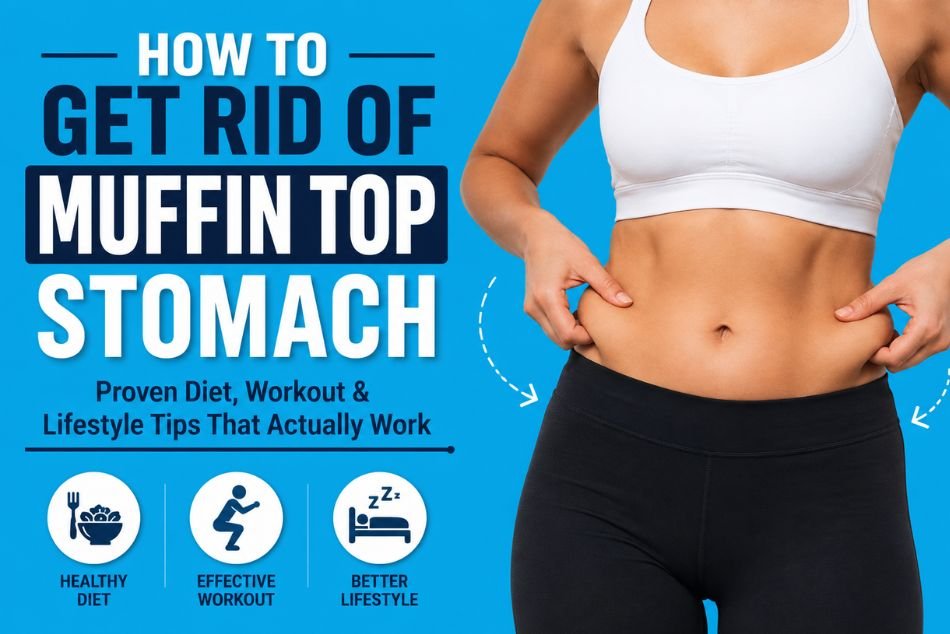
A muffin top is the layer of fat that sits around your waist and lower abdomen, spilling over the sides of tight pants. It’s not a medical term. It’s just the nickname people gave to that stubborn ring of fat.
For some people, it shows up mostly around the sides. For others, it’s more front and center, sitting just above and around the belly button.
Either way, it’s subcutaneous fat, meaning it sits just under the skin rather than around your organs. That matters because subcutaneous fat responds to the same basic principles as fat anywhere else on your body.
Why You Get a Muffin Top in the First Place
Nobody wakes up one day and suddenly has a muffin top. It builds up slowly, usually from a mix of a few things.
Genetics
Where your body stores fat first, and loses it last, is largely genetic. Some people carry weight in their hips and thighs. Others carry it around the midsection. If your parents store fat around the waist, there’s a good chance you will too.
Diet
Eating more calories than your body burns, day after day, is the biggest driver of extra fat anywhere on your body, including your waistline. Processed foods, sugary drinks, and alcohol tend to be the biggest culprits, since they’re easy to overeat and don’t fill you up the way whole foods do.
Lack of Movement
A desk job, long commutes, and evenings on the couch add up. When you’re not moving much during the day, your body simply burns fewer calories, and any extra energy gets stored as fat.
Stress and Sleep
This one surprises people. Chronic stress raises cortisol, and elevated cortisol is linked to increased fat storage around the abdomen. Poor sleep does something similar. Skimp on sleep for long enough, and your hunger hormones shift in a way that makes you crave more food, especially the kind that isn’t great for your waistline.
Does Age Play a Role Too?
Age is another piece of the puzzle that often gets left out. As you get older, your metabolism naturally slows down a bit, and hormone levels shift too.
For women, the drop in estrogen around menopause tends to push fat storage toward the midsection, even in people who never carried weight there before. For men, declining testosterone can have a similar effect over time.
None of this means you’re stuck with a muffin top forever. It just means the same habits, eating well, lifting weights, staying active, matter even more as you get older, since your body isn’t doing you as many favors by default.
The Truth About Spot Reduction
Here’s the part that trips up almost everyone looking into how to get rid of muffin top stomach fat: you cannot choose where your body loses fat from.
Doing hundreds of side bends or oblique twists will strengthen the muscles underneath your muffin top, but it won’t melt the fat sitting on top of them. Research backs this up. Studies on ab-focused training programs have repeatedly found no meaningful difference in abdominal fat loss compared to people who did general exercise instead.
Your body decides where fat comes from based on genetics and hormones, not on which muscle you just worked. So the guy doing 500 crunches a day and the guy doing squats and deadlifts are both losing fat from the same overall pool. The one with a better all-around training and eating plan usually sees results faster.
This doesn’t mean core work is a waste of time. It builds strength, improves posture, and helps your midsection look tighter once the fat does come off. It just isn’t the shortcut a lot of people hope it is.
Diet Changes That Actually Move the Needle
If you’re serious about losing the muffin top, your plate matters more than your workout. Most people can’t out-train a bad diet, and the waistline is usually the first place that shows.
Eat in a Calorie Deficit
Fat loss, anywhere on the body, requires burning more calories than you consume. That doesn’t mean starving yourself. A moderate deficit of around 300 to 500 calories a day is usually enough to lose fat steadily without feeling miserable or losing muscle along the way.
Prioritize Protein
Protein keeps you full longer than carbs or fat, and it helps preserve muscle while you’re in a calorie deficit. Aim for a source of protein at every meal, whether that’s eggs, chicken, fish, Greek yogurt, or tofu.
Fill Up on Fiber
Vegetables, beans, and whole grains slow digestion and help control blood sugar spikes. That translates into fewer cravings and less mindless snacking later in the day.
Cut Back on Sugar and Alcohol
Sugary drinks and alcohol are easy to overconsume because they don’t register as “food” the way a plate of chicken and rice does. Alcohol in particular tends to encourage overeating and gets stored as fat when your body has no immediate use for the calories.
Watch Your Sodium and Bloating
Some of what people call a muffin top is actually water retention and bloating, not fat. Cutting back on processed, salty foods can make your waistline look noticeably flatter within days, even before any real fat loss happens.
What a Day of Eating Might Look Like
You don’t need a complicated meal plan to make progress. A day built around protein and fiber, with a moderate calorie deficit, might look something like this:
- Breakfast: Eggs with vegetables, or Greek yogurt with berries and a scoop of protein powder.
- Lunch: Grilled chicken or fish with rice and a big serving of vegetables.
- Snack: A handful of nuts, or cottage cheese with fruit.
- Dinner: Lean protein, a starchy carb like potatoes or quinoa, and a salad or steamed vegetables.
None of this needs to be exact. The point is having a protein source and some fiber at each meal so you stay full without needing to count every gram.
Best Workouts for Losing Muffin Top Fat
Since spot reduction isn’t real, your training plan should focus on burning fat overall while building muscle that gives your body better shape once the fat comes down.
Strength Training
Lifting weights, whether it’s barbells, dumbbells, or your own bodyweight, builds muscle and keeps your metabolism higher than dieting alone. Focus on compound lifts like squats, deadlifts, rows, and presses. These work multiple muscle groups at once and burn more calories than isolation exercises.
Aim for 3 to 4 strength sessions a week if your schedule allows it. A simple split could look like this:
| Day | Focus |
|---|---|
| Monday | Lower Body (Squats, Lunges) |
| Tuesday | Upper Body Push (Bench, Shoulder Press) |
| Wednesday | Rest or Light Cardio |
| Thursday | Lower Body (Deadlifts, Hip Thrusts) |
| Friday | Upper Body Pull (Rows, Pull-Ups) |
| Saturday | Core and HIIT |
| Sunday | Rest |
You don’t need to follow this exact layout. What matters is hitting your major muscle groups two to three times a week and staying consistent with it.
Cardio and HIIT
Cardio burns calories, plain and simple, which helps create the deficit needed for fat loss. Steady-state cardio like walking, cycling, or jogging works well, and so does interval training.
High-intensity interval training, or HIIT, packs a lot of calorie burn into a short session and can keep your metabolism elevated for a while afterward. Two to three sessions a week, mixed in with your strength work, is a solid target.
Core Work, Done Right
Core training won’t burn the fat off your midsection directly, but it’s still worth doing. A strong core improves posture, protects your lower back, and gives your waistline better definition once the fat layer thins out.
Good options include planks, dead bugs, cable woodchops, and hanging leg raises. Two or three short core sessions a week is plenty. You don’t need to hammer your abs every single day.
9 Targeted Exercises to Add to Your Routine
Remember, none of these moves burn fat directly off your midsection. But they build the core strength that shows once the fat comes down, and a few of them double as solid calorie burners too. Add 2 or 3 of these into your core days.
1) Bicycle Crunches
Lie on your back with hands behind your head and knees bent. Bring one elbow toward the opposite knee while extending the other leg out, then switch sides in a pedaling motion. Aim for 15 to 20 reps per side.
2) Side Plank
Prop yourself up on one forearm with your body in a straight line from head to heels. Hold for 20 to 40 seconds per side. For an added challenge, dip your hips toward the floor and back up instead of holding still.
3) Russian Twists
Sit with knees bent and lean back slightly so your core is engaged. Twist your torso side to side, tapping the floor near your hip each time. Add a light dumbbell or medicine ball once bodyweight feels easy.
4) Mountain Climbers
Start in a high plank and drive your knees toward your chest one at a time, moving at a quick pace. This one doubles as cardio, so it’s a good pick for burning calories while training your core.
5) Standing Oblique Crunch
Stand with feet hip-width apart, hands behind your head. Lift one knee out to the side while crunching your elbow down to meet it. Do 15 reps per side.
6) Dead Bug
Lie on your back with arms reaching toward the ceiling and knees bent at 90 degrees. Slowly lower one arm and the opposite leg toward the floor without letting your lower back arch, then return to start. Do 10 to 12 reps per side.
7) Reverse Crunch
Lie on your back with knees bent and lift your hips off the floor by curling your knees toward your chest. Keep the movement slow and controlled rather than swinging your legs for momentum. Aim for 12 to 15 reps.
8) Plank With Hip Dips
From a forearm plank, rotate your hips down toward the floor on one side, then the other, keeping your core braced the whole time. This adds an oblique-focused twist to a standard plank hold.
9) Woodchoppers
Holding a dumbbell or cable handle with both hands, rotate your torso to bring the weight from high on one side down and across to the opposite hip. This mimics a chopping motion and works the obliques through rotation. Do 12 reps per side.
Lifestyle Habits That Help
Sleep Seven to Nine Hours
Sleep isn’t optional if you’re trying to lose fat around your midsection. Poor sleep messes with ghrelin and leptin, the hormones that control hunger and fullness, making you eat more the next day without realizing it.
Manage Your Stress
Since cortisol plays a role in belly fat storage, finding ways to bring stress down, whether that’s walking, meditation, or just stepping away from your phone for a bit, can genuinely help your waistline over time.
Move More During the Day
Beyond your scheduled workouts, the calories you burn just walking around, taking stairs, or standing at your desk add up. This is sometimes called NEAT, or non-exercise activity thermogenesis, and it can make a real difference over weeks and months.
Stay Hydrated
Drinking enough water supports digestion and can reduce the kind of bloating that makes your midsection look puffier than it actually is.
Common Mistakes to Avoid
Anyone figuring out how to get rid of muffin top stomach fat tends to fall into a few of the same traps.
Doing Endless Ab Exercises
As covered above, crunches and side bends alone won’t get rid of the fat. Combine core work with overall fat loss instead of relying on it as your main strategy.
Crash Dieting
Cutting calories too aggressively might show fast results on the scale, but it usually costs you muscle, tanks your energy, and often ends in a rebound where the weight comes right back.
Skipping Strength Training
Cardio alone can help you lose weight, but without lifting, you risk losing muscle along with the fat, which leaves you looking “smaller” but not necessarily leaner.
Ignoring Sleep and Stress
People obsess over their meal plan and workout split while completely ignoring how little they’re sleeping or how stressed they are. Both work against fat loss no matter how clean your diet is.
Relying on Fat Burners and Supplements
Fat-burning pills, teas, and “belly blaster” supplements are marketed heavily, but the research behind most of them is thin at best. Independent reviews of these products consistently find no meaningful effect on body weight or fat loss compared to a placebo. Save your money and put it toward real food and a gym membership instead.
Expecting Overnight Results
A muffin top usually takes months or years to build up, so it’s unrealistic to expect it to disappear in a couple of weeks. People who quit after two weeks of “no visible change” are usually just quitting right before the results would have started showing.
Tips to Speed Things Up
- Track your food for a couple of weeks, even loosely, to get a real sense of what you’re eating.
- Weigh yourself a few times a week rather than obsessing over one number. Weight naturally fluctuates day to day.
- Take progress photos and measurements. The scale doesn’t always tell the whole story, especially if you’re building muscle at the same time.
- Be consistent for at least 8 to 12 weeks before judging whether your plan is working. Fat loss around the waist tends to be one of the slower areas to change.
- Don’t fall for waist trainers, ab belts, or fat-burning creams. None of them are backed by solid evidence, and the muffin top isn’t going anywhere because of a squeeze garment.
How Long Does It Actually Take?
This depends on how much fat you’re carrying, your starting point, and how consistent you are. Generally, losing 1 to 2 pounds a week is a realistic and sustainable pace for most people.
Since the midsection is often one of the last places fat leaves, don’t be discouraged if your arms or face seem to slim down before your waistline does. It’s coming. It just takes a bit longer to show up there.
Closing Thoughts
At the end of the day, figuring out how to get rid of muffin top stomach fat isn’t complicated, even if it takes real effort. Eat in a moderate calorie deficit, prioritize protein, lift weights a few times a week, move more throughout your day, and don’t skimp on sleep.
Skip the gimmicks, skip the endless crunches, and give it consistent time. The muffin top didn’t show up overnight, and it won’t disappear overnight either, but it will go if you stick with the basics long enough.
FAQs
Q1) Can I Lose Muffin Top Fat Without Losing Weight Elsewhere?
No. Fat loss happens across your whole body based on genetics and hormones, not by choice. As you lose overall body fat, your midsection will shrink along with everything else.
Q2) Do Waist Trainers Actually Work?
Not for fat loss. They can compress your midsection temporarily for the appearance of a slimmer waist under clothes, but they don’t burn fat or change your body composition.
Q3) How Many Times a Week Should I Train My Core?
Two to three short sessions a week is enough for most people. More than that usually just adds fatigue without extra benefit, since your core gets worked indirectly during squats, deadlifts, and presses too.
Q4) Is Cardio or Strength Training Better for Losing a Muffin Top?
Both play a role. Strength training builds and preserves muscle while cardio helps burn extra calories. A combination of the two, alongside a solid diet, tends to work better than leaning on just one.
Q5) Will Diet Alone Get Rid of My Muffin Top?
Diet plays the biggest role in fat loss, but combining it with strength training and cardio gets you there faster and leaves you with a more toned midsection once the fat is gone.
Q6) Why Does My Muffin Top Look Worse Some Days Than Others?
Bloating, water retention, sodium intake, and even where you are in your menstrual cycle can all make your midsection look puffier on a given day. Day-to-day changes are usually water and digestion, not fat.