Your Complete Guide to Knowing When Can I Workout After C section
If you just had a cesarean, chances are this question has been sitting in the back of your mind since the day you left the hospital. When can I workout after c section, and how soon is too soon? It’s a fair thing to wonder, especially if you were active before pregnancy and you’re itching to get back into a routine.
Here’s the thing though. A C section isn’t a small procedure. It’s major abdominal surgery, and your body needs real time to put itself back together before you start loading it again. Rushing that process doesn’t get you back to the gym any faster. It usually does the opposite.
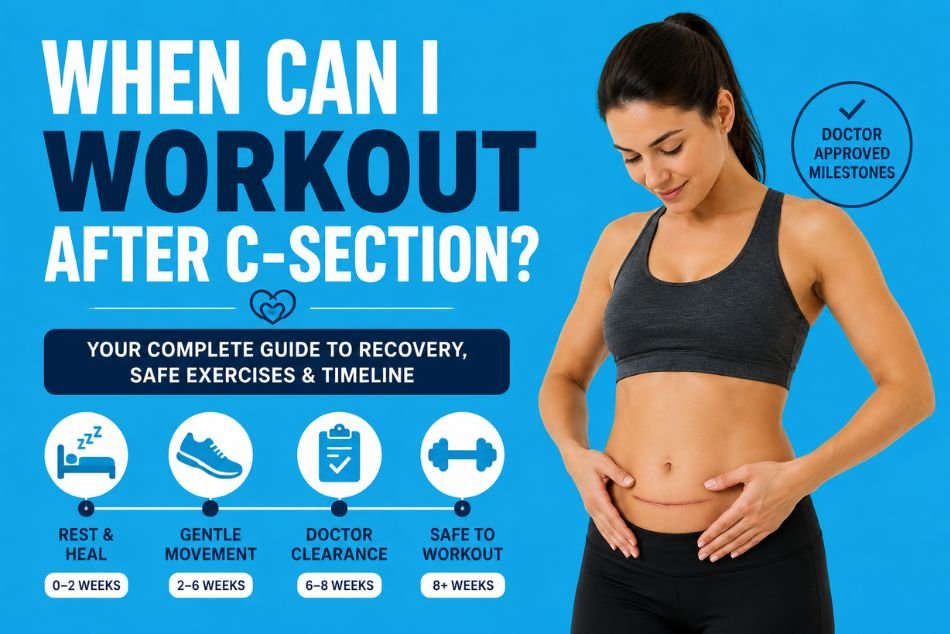
The short answer is that most doctors want you to wait at least six to eight weeks before you do anything that counts as a real workout. But that number isn’t the whole story, and there’s a lot that happens between “day one out of surgery” and “back to your normal training.” Let’s get into what actually happens during recovery and how to know when your body is ready.
Why Healing Takes Longer Than People Expect
A C section involves cutting through several layers of tissue, skin, fat, the sheath around your abdominal muscles, and the wall of your uterus, to get your baby out safely. Once your baby arrives, all of that gets stitched back together in layers, and each layer heals at its own pace.
That’s a lot of repair work happening at once. And it’s not happening in a vacuum. Your body is also recovering from nine months of pregnancy, your hormones are shifting fast, and you’re running on whatever sleep a newborn allows, which for most people is not much.
So it makes sense that your core, in particular, needs extra patience. The muscles and connective tissue around your incision were cut through or stretched, and they need real time to knit back together before you ask them to brace, twist, or lift anything heavy.
People sometimes compare this to a normal muscle strain or a sore day after leg day, and it’s really not the same thing. This is surgical tissue healing from the inside out, and internal healing almost always takes longer than what you can see on the surface. The skin might look closed and fine within a couple of weeks. What’s underneath is a different story.
The First Two Weeks: Rest Comes First
In the first couple of weeks after surgery, your only job is to heal. Walking around your house, getting up to feed your baby, and short slow walks outside once you’re cleared to leave the house count as plenty of movement for this stage.
Doctors do want you up and moving fairly early, usually the day after surgery, mainly to keep your circulation going and lower the risk of blood clots. That’s a very different thing from exercise, though. Think gentle, not strenuous.
Deep breathing and light pelvic floor activation can usually start here too, but check with your doctor first since every recovery is different depending on how your surgery went and whether there were any complications.
Try not to compare your week one to someone else’s week one, either. Some women bounce around the house within days. Others are moving much slower, and that’s completely normal too. How your surgery went, whether you labored beforehand, and your general health all play a part in how this early stage feels.
Weeks Two to Six: Building the Foundation
By week two, most women start feeling a bit more like themselves. This is where you can slowly extend your walks and start paying attention to how your core feels day to day, not to push it, just to notice it.
Avoid lifting anything heavier than your baby during this window. Twisting motions and bending from the waist should also stay off the table for now, since they put direct strain on the area that’s still healing underneath your incision.
This is also a good stretch to start gentle core reconnection work if your doctor gives the go-ahead. Things like slow heel slides, diaphragmatic breathing, and light pelvic floor squeezes fit here well. None of this should ever cause pain. If it does, stop and back off, and try again in a few days.
Household stuff counts as activity too during this window. Carrying laundry baskets, standing at the sink, bending slightly to pick things up off low shelves, none of it needs to be avoided completely, but keep it light and pay attention to how your incision feels afterward.
Getting Cleared by Your Doctor
Here’s the part that actually answers when can I workout after c section for most people: your six to eight week postpartum checkup. This is when your doctor examines your incision, checks how your uterus has healed, and gives you the green light, or asks you to wait a bit longer.
Don’t skip this appointment, and don’t talk yourself into starting early because you feel fine. Feeling fine on the outside and being fully healed underneath the surface aren’t always the same thing. Plenty of women feel great at four weeks and still aren’t ready for real training.
If your doctor gives you the all clear, that doesn’t mean you go straight back to your pre-pregnancy program. It means you can start easing back in, and how quickly you progress from there is still up to you and your body, not a calendar.
If you had any complications during surgery, delivery, or your pregnancy, expect this timeline to shift. Your doctor might want to see you again before clearing you for higher intensity work, and that’s worth following even if it feels frustrating.
What a Safe Return to Exercise Looks Like
Once you’re cleared, low-impact movement is the name of the game. Walking at a brisker pace, swimming, stationary cycling, and gentle yoga or Pilates classes built for postpartum bodies are all good starting points.
Light resistance training can usually come next, using bodyweight or very light weights, and focusing on form over load. Squats, glute bridges, and controlled rows are a reasonable place to begin, as long as nothing pulls or aches around your scar.
Some physical therapists suggest a simple check before ramping up. Lie flat with your legs straight, and slowly raise one leg off the ground while keeping your lower back pressed to the floor. If you feel pulling or pain near your incision, your core isn’t quite ready yet, and that’s a useful signal to keep things light for another week or two.
This is also the point where a lot of women want to jump back into their old workout after c section routine right away, whatever it looked like before pregnancy. Resist that urge. Your program can look completely different for the first several weeks and still be building you back toward that same goal.
Exercises to Avoid in the Early Months
Traditional crunches and sit-ups are off the table for a while, often six months or longer depending on your healing. They put direct pressure right through the area that’s still repairing itself underneath.
Running, jumping, and anything high-intensity fall into the same category early on. So do planks, mountain climbers, and heavy twisting movements like Russian twists. All of these load the core in ways that can strain your incision or worsen ab separation if it’s still present.
High-impact training and heavy resistance work in general are usually held off until closer to the twelve week mark, sometimes longer, depending on how your recovery is going and what your provider recommends.
None of this means avoiding these movements forever. Most women get back to full training eventually. It’s just a matter of sequencing, healing first, rebuilding the foundation second, and loading it up third.
Watch for These Warning Signs
Your body is pretty good at telling you when something’s wrong, if you’re willing to listen. Pain around your incision, pulling sensations, increased swelling, or any bleeding during or after a workout are all signs to stop immediately and scale back.
Leaking urine during exercise is another one people tend to brush off, but it’s actually a sign your pelvic floor isn’t ready for that level of load yet. It’s worth mentioning to your doctor or a pelvic floor physical therapist rather than pushing through it.
A bulging or doming shape down the middle of your stomach during a movement, like when you sit up or lift something, is also worth paying attention to. It can be a sign your abdominal muscles are still separated more than they should be at this stage, and it’s a good reason to dial the exercise back and check in with a professional.
None of these signs mean you’ve done permanent damage. They just mean your timeline needs to slow down a little. Recovery isn’t a race, and pushing through pain almost always sets you back further than taking an extra week off would have.
Sleep, Stress, and Nutrition Matter Too
It’s easy to think about recovery purely in terms of exercises and timelines, but what’s happening outside your workouts matters just as much. Healing tissue needs protein, and a lot of new moms end up under-eating without meaning to, simply because there’s no time.
Sleep is the other piece nobody talks about enough. Deep sleep is when a lot of tissue repair happens, and newborn sleep schedules make that hard to come by. You can’t force more sleep with a baby in the house, but prioritizing rest when you can, even short naps, genuinely helps your body heal faster.
Stress plays a role too. Elevated stress hormones can slow healing and mess with everything from your energy to your appetite. This is one more reason not to add “getting back in shape as fast as possible” to an already full plate. Give yourself permission to move at the pace your body and your life actually allow right now.
Common Mistakes New Moms Make
One of the biggest mistakes is comparing your recovery to someone else’s, especially anyone you see online who seems to be back at the gym within a few weeks. You don’t know their full story, their delivery, their support system, or their actual healing underneath the surface.
Another common one is skipping the gentle foundational work because it feels too easy to matter. Heel slides and breathing exercises don’t feel like a workout, and it’s tempting to skip straight to something that feels more productive. But that foundational work is exactly what protects you once you start adding real load back in.
Overdoing it on a good day is another trap. You’ll have days early on where you feel strong and think you can push a little further than planned. Those are usually the days worth being most careful, since it’s easy to overdo it right when you’re starting to feel capable again.
And finally, ignoring pain because you’re eager to progress is a mistake that tends to cost more time than it saves. A setback from pushing too hard can add weeks onto your timeline. Slower and steady genuinely wins this one.
Should You See a Physical Therapist?
If you can, yes. A pelvic floor physical therapist can check for things like abdominal separation, called diastasis recti, and assess your core and pelvic floor strength directly instead of you guessing based on how you feel.
This matters more if you were active before pregnancy and want to get back to serious training, or if you had any complications during your surgery or pregnancy. A few sessions spread across the first couple of months can catch small issues before they turn into bigger ones.
Even without complications, a lot of new moms find it useful just to have someone confirm they’re progressing at a safe pace instead of second-guessing every twinge. It also takes some pressure off you to figure everything out on your own.
A Rough Week-by-Week Guide
Nobody’s recovery fits perfectly into a template, but having a general shape to expect can help. In weeks one and two, focus on walking, breathing, and pelvic floor awareness, nothing more.
In weeks three and four, extend your walks and add gentle core reconnection work if your doctor is on board. Keep lifting light, nothing heavier than your baby, and avoid twisting.
Weeks five and six are usually about maintaining that same gentle approach while you wait for your postpartum checkup. This is also a good time to start noticing whether your incision feels fully settled.
Once you’re cleared, weeks seven through twelve are typically about low-impact cardio and light resistance training, building strength gradually and watching for any warning signs along the way. Past twelve weeks, most women with an uncomplicated recovery can start layering in more intensity, always guided by how their body responds.
Getting Back to Real Training
Once you’re several months out, healed, and cleared for higher intensity work, you can start layering intensity back in gradually. Add load before you add speed. Add speed before you add impact. That order matters more than how fast you get there.
If you were lifting seriously before your pregnancy, don’t expect to walk back into your old numbers right away. Strength drops off during a long break, and your body has been through a lot. Give yourself permission to rebuild rather than jump straight back to where you left off.
Consistency beats intensity here, just like it does in strength training generally. Small, steady sessions that respect where your body actually is will get you back to full strength faster than trying to rush the process ever will.
Wrapping Up
So, when can I workout after c section? For most women, gentle movement starts almost immediately, structured low-impact exercise starts around six to eight weeks with your doctor’s clearance, and higher-intensity or heavy training usually waits until somewhere between twelve weeks and a few months out, depending on your individual healing.
Every recovery looks a little different, and that’s okay. Listen to your body, get checked by your doctor before you push into anything new, and don’t be afraid to bring in a pelvic floor physical therapist if you want extra guidance along the way. Your strength will come back. Give your body the time it actually needs to get there first.
Quick Answers to Common Questions
Q1) Can I Walk Right After My C section?
Yes, and doctors actually want you to. Short, slow walks starting the day after surgery help circulation and lower your risk of blood clots. Just don’t confuse this with a workout.
Q2) When Can I Do Abs After a C section?
Traditional ab work like crunches and sit-ups usually needs to wait several months. Gentle core reconnection exercises, like heel slides and pelvic floor breathing, can often start much earlier with your doctor’s approval.
Q3) Is Six Weeks Enough Time Before Lifting Weights?
For most women, six to eight weeks is when doctors clear light activity, not full weight training. Heavier lifting typically waits until closer to twelve weeks, and sometimes longer if there were complications.
Q4) What if I Feel Totally Fine at Four Weeks?
Feeling good is a great sign, but it doesn’t mean your internal healing is finished. Stick with your doctor’s timeline rather than your energy levels alone.
Q5) Do I Need a Physical Therapist?
Not everyone does, but it’s a smart move if you were active before pregnancy, had a complicated delivery, or just want confirmation you’re progressing safely.