A Quick Guide to Food With High Thermic Effect for a Faster Metabolism
If you’ve ever wondered why a chicken breast feels like more “work” to eat than a bowl of ice cream, you’re onto something real. Food with high thermic effect makes your body spend extra energy just to break it down, absorb it, and put it to use.
It’s not a loophole, and it won’t undo a bad diet. But once you understand it, you’ll start picking meals that quietly work a little harder for you, and that adds up over weeks and months.
Most lifters spend hours obsessing over sets, reps, and rest periods, which is fair enough since training is where the real adaptation happens. Nutrition gets treated as an afterthought, usually boiled down to “eat more protein” and left at that. There’s more nuance hiding in your grocery list than most people realize, and this is one piece of it worth understanding properly.
What Is the Thermic Effect of Food, Anyway?
Every time you eat, your body burns calories digesting, absorbing, and storing what you just swallowed. Scientists call this the thermic effect of food, or TEF for short. Some circles call it diet-induced thermogenesis, which is just a fancier name for the same thing.
On average, TEF eats up around 10 percent of your daily calorie intake. So if you’re eating 2,000 calories a day, roughly 200 of those calories are burned off simply processing your meals.
That number isn’t fixed, though. It swings depending on what you’re actually eating, and that’s where things get interesting.
How Researchers Actually Measure This
Labs measure TEF using indirect calorimetry, which tracks how much oxygen you use and carbon dioxide you produce after a meal. Your metabolic rate rises after eating, stays elevated for a few hours, and then settles back down. Researchers compare that curve against your resting metabolic rate to figure out how many extra calories a specific meal cost your body to process.
It’s not something you can measure at home, obviously. But knowing the science is legitimate, and not just internet folklore, makes it easier to trust the underlying logic.
Meal Size and Timing Matter Too
Bigger meals tend to produce a bigger thermic response than the same calories split into smaller portions throughout the day. That’s a bit counterintuitive if you’ve been told to “graze” all day to keep your metabolism revving, but the research leans the other way. A few solid, protein-forward meals typically outperform six tiny snacks when it comes to total thermic burn.
Meal frequency still matters for other reasons, like hunger control and blood sugar stability. Just don’t assume more meals automatically means more calories burned through digestion, because that part isn’t really how it works.
Why Food With High Thermic Effect Deserves a Spot on Your Plate
Not all calories cost the same to process. Some foods practically melt into your bloodstream with barely any effort from your body. Others make your digestive system work overtime.
Food with high thermic effect falls into that second category. Your body has to break it down piece by piece, and that breakdown itself burns energy. Build a diet around more of these foods, and you’re getting a small, steady metabolic boost without changing anything else about your training.
It won’t replace lifting weights or walking more. Nonetheless, it’s a free lever you can pull at almost every meal, and there’s no real downside to pulling it.
There’s a secondary benefit too, one that rarely gets mentioned alongside the calorie math. High thermic foods, especially protein-rich ones, tend to be more filling per calorie than low thermic options like refined carbs or oils. That satiety effect often matters more for weight control day to day than the extra calories burned during digestion. Eating this way just makes staying in a calorie deficit less of a fight against your own hunger.
The Macronutrient Breakdown
Before picking specific foods, it helps to know which macronutrients cost your body the most to digest. This is where the real difference between high and low thermic foods comes from.
Protein
Protein sits at the top by a wide margin. Digesting and metabolizing protein burns somewhere between 20 and 30 percent of the calories it provides. Some research puts the range even wider, from 15 to 30 percent, depending on the study and the protein source.
That means if you eat 100 calories worth of chicken breast, your body might spend 20 to 30 of those calories just processing it. Compare that to fat, and the gap is massive.
Interestingly, the type of protein doesn’t seem to change this much. Whey, casein, soy, and whole-food protein sources have all been tested, and none showed a meaningfully different thermic cost when researchers controlled for the amount consumed. Your body appears to charge roughly the same “processing fee” no matter where the protein comes from, which is one less thing to overthink at the grocery store.
Carbohydrates
Carbs land in the middle. Digesting carbohydrates burns roughly 5 to 10 percent of the calories they contain. Whole, fibrous carbs like oats, brown rice, and legumes tend to sit toward the higher end of that range, while refined carbs like white bread and sugary drinks sit closer to the bottom.
Fats
Fat is the least demanding macronutrient to process. Your body only burns about 0 to 3 percent of fat calories during digestion. That’s part of why fat is so easy to overeat; it slides through your system with almost no metabolic resistance.
Best Food With High Thermic Effect to Add to Your Diet
Now for the practical part. Here are the food groups worth leaning on if you want to put TEF to work for you.
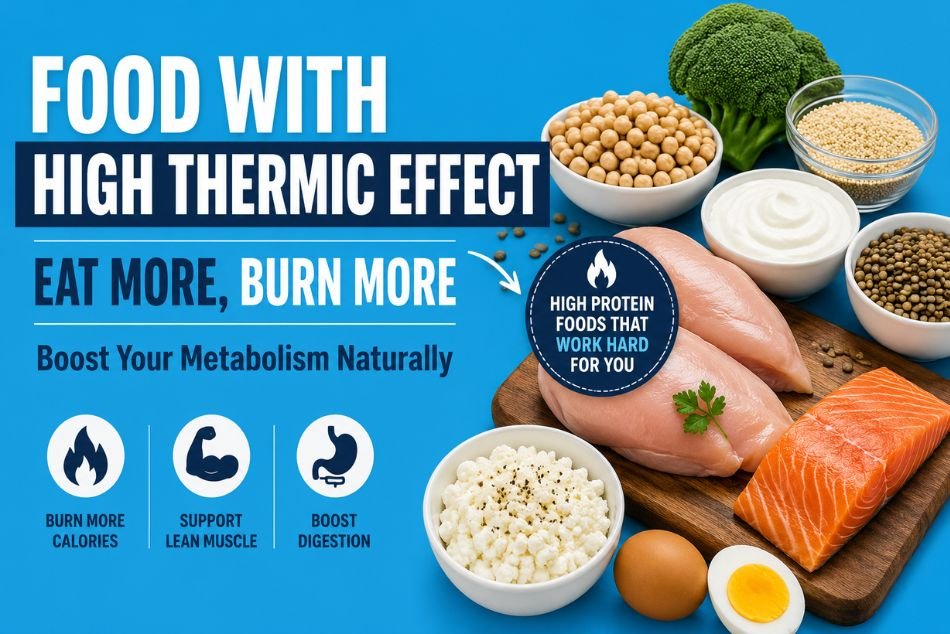
- Lean Meats and Poultry: Chicken breast, turkey, and lean cuts of beef are protein-dense and require real digestive effort. They’re also filling, which helps you eat less overall without feeling deprived.
- Fish and Seafood: Fish like cod, tilapia, and salmon carry a high protein content along with beneficial fats. The protein portion still drives most of the thermic benefit here, and the omega-3s are a solid bonus for recovery and joint health.
- Eggs: Eggs are cheap, easy to prepare, and loaded with complete protein. A few eggs at breakfast can noticeably increase how full you feel through the late morning, partly because of their thermic cost and partly because of their satiety effect.
- Greek Yogurt and Dairy: Nonfat Greek yogurt packs a serious protein punch for relatively few calories. Cottage cheese belongs on this list too. Both make solid snacks that do more metabolic work than a bag of chips ever will.
- Legumes: Lentils, chickpeas, black beans, and soybeans combine protein with fiber, which is a strong combination for TEF. They’re also budget-friendly and versatile enough to throw into almost any meal.
- Whole Grains: Swapping refined grains for whole grains does more than help digestion. One study found participants raised their daily metabolic rate by over 90 calories simply by choosing whole grains over refined versions of the same foods. Oats, quinoa, and brown rice are easy places to start.
- Spicy Foods and Green Tea: Capsaicin, the compound that makes chili peppers hot, gives a small, temporary bump to your metabolic rate. Ginger and green tea have shown modest thermogenic effects too. None of these will move the needle much on their own, but stacking them alongside a protein-heavy diet is a reasonable habit to build.
A Quick Note on Protein Powder and Nuts
Not every protein source pulls its full weight. Whey and other protein powders appear to have a somewhat lower thermic effect than the same protein eaten as whole food, likely because there’s less structural breakdown required. That doesn’t make shakes useless, especially post-workout, but don’t expect them to outperform a chicken breast on this specific metric.
Nuts and nut butters are nutritious, but their high fat content drags their overall thermic effect down compared to leaner protein sources. They’re worth eating for other reasons. Just don’t count on them to do much heavy lifting here.
A Sample Day Built Around High Thermic Foods
Theory is fine, but a lot of people just want to see what this looks like on a plate. Here’s a rough day that leans into higher thermic choices without turning meal prep into a science project.
- Breakfast: Three eggs scrambled with spinach, a side of Greek yogurt, and a piece of whole grain toast.
- Lunch: Grilled chicken breast over a bed of greens, with a serving of chickpeas and a light vinaigrette.
- Snack: Cottage cheese with berries, or a handful of edamame if you’re at your desk.
- Dinner: Baked salmon, a side of quinoa, and roasted vegetables with a bit of chili flake for good measure.
- Evening snack: A small serving of Greek yogurt or a protein shake if you’re still short on your daily target.
Nothing here is exotic or expensive. It’s mostly lean protein, whole grains, and legumes, repeated with enough variety that you won’t get bored of it in a week.
Mistakes People Make When Chasing TEF
Before you start rearranging your entire pantry, watch out for these common missteps.
- Relying on TEF Alone: TEF only accounts for about 10 percent of your total daily calorie burn. Chasing it while ignoring your total calorie intake, your training, and your sleep is like polishing the door handle on a car with no engine. It matters, but it’s not the whole picture.
- Ignoring Overall Calories: Some people assume that because a food has a high thermic effect, they can eat it without limit. That’s not how math works. A 500-calorie protein shake still adds 500 calories to your day, even if your body burns 100 of those digesting it.
- Falling for the “Negative Calorie” Myth: You’ve probably heard someone claim celery or ice cubes burn more calories than they contain. That idea is mostly a misunderstanding of TEF blown out of proportion. No common food actually costs more energy to digest than it provides.
- Skipping Protein at Breakfast and Lunch: Most people load up on protein at dinner and skip it earlier in the day. Spreading protein across all your meals keeps your thermic effect working consistently instead of in one late burst.
- Expecting Dramatic Results: TEF is a real, measurable effect, but it’s not going to transform your physique on its own. Treat it as one small piece of a bigger puzzle that includes total calories, training consistency, sleep, and stress management. Anyone selling TEF as a standalone fat-loss hack is stretching the science further than it goes.
Tips to Get the Most Out of Food With High Thermic Effect
Getting this right doesn’t require a complicated system. Keep these points in mind:
- Aim to get 25 to 35 percent of your daily calories from protein if your goals allow it.
- Choose whole, minimally processed carbs over refined ones whenever you have the option.
- Add a lean protein source to every meal, not just dinner.
- Don’t fear fat entirely, but don’t lean on it as your main calorie source either.
- Treat spicy foods, ginger, and green tea as small extras, not a strategy on their own.
- Remember that portion size still matters more than any thermic bump.
- Favor whole protein sources over shakes when you have a real meal option available.
- Build 2 to 4 solid meals a day around protein rather than grazing constantly.
- Track your intake for a couple of weeks if you’re unsure whether you’re actually hitting your protein target.
Who Should Pay Attention to TEF?
TEF isn’t only for competitive bodybuilders counting every gram. A handful of groups will get real, practical value from paying attention to it.
- People Trying to Lose Fat: If you’re in a calorie deficit, squeezing out an extra 60 to 120 calories a day through smarter food choices can help you stay consistent without feeling like you’re starving.
- Busy Lifters Watching Their Macros: If you already track protein for muscle building, you’re likely eating a lot of high thermic foods without even realizing it. Understanding TEF just gives you the “why” behind what’s already working.
- Anyone Rebuilding Their Metabolism: People coming off crash diets often deal with a sluggish metabolism and low energy. Prioritizing food with high thermic effect, alongside consistent training, can help nudge daily calorie burn back in the right direction over time.
- Older Lifters Protecting Muscle Mass: Muscle naturally declines with age unless you actively work against it, and diet plays a bigger role in that fight than most people assume. Higher protein intake supports muscle maintenance directly, and the thermic bonus that comes with it is a nice side effect rather than the main reason to prioritize it.
Closing Thoughts
Food with high thermic effect won’t replace a solid training program or a calorie-appropriate diet, and anyone telling you otherwise is overselling it. What it will do is quietly stack a modest metabolic advantage onto a diet you’re probably already building around protein and whole foods.
Lean meats, fish, eggs, dairy, legumes, and whole grains all pull their weight here. Build your plate around them most of the time, keep your portions honest, and let the small metabolic bump do what it’s supposed to do in the background.
None of this requires a dramatic overhaul. Swap a few refined carbs for whole ones, make sure protein shows up at every meal instead of just dinner, and treat the rest of your nutrition and training the way you already do. The calories add up quietly, the way most good habits do.
FAQs
Q1) What Exactly Is the Thermic Effect of Food?
It’s the energy your body spends digesting, absorbing, and metabolizing the food you eat. On average, it accounts for around 10 percent of your total daily calorie expenditure.
Q2) Which Macronutrient Has the Highest Thermic Effect?
Protein, by a clear margin. Digesting protein burns roughly 20 to 30 percent of its calorie content, compared to 5 to 10 percent for carbs and 0 to 3 percent for fat.
Q3) Can Eating High Thermic Foods Help With Weight Loss?
It can help at the margins. Choosing more high thermic foods might add up to roughly 60 to 120 extra calories burned per day, which supports weight loss but won’t replace a proper calorie deficit.
Q4) Are There Foods That Burn More Calories Than They Contain?
No. This is a popular myth often applied to foods like celery. TEF is real, but no everyday food has a negative net calorie effect.
Q5) How Much Protein Should I Eat to Maximize TEF?
Most research points to somewhere around 25 to 35 percent of daily calories from protein, spread across your meals rather than concentrated in one sitting.
Q6) Does Eating More Often Boost the Thermic Effect of Food?
Not really. Research suggests larger, protein-forward meals produce a stronger thermic response than the same total calories split across many small snacks. Meal frequency matters more for hunger control than for TEF specifically.