How to Increase Workout Intensity for Better Strength, Fat Loss, and Performance
If you’ve been training consistently but feel like your results have slowed down, the issue usually isn’t effort, it’s intensity. Understanding how to increase workout intensity is what separates average progress from real transformation. Whether your goal is muscle growth, fat loss, or improved endurance, intensity is the driving force behind every result you see in the gym.
Most people think intensity simply means lifting heavier weights or training longer, but that’s only part of the story. True intensity comes from how you manipulate variables like rest time, tempo, volume, and training techniques to challenge your body beyond its comfort zone.
In this guide, you’ll learn practical ways to increase workout intensity safely and effectively, without overtraining or risking injury.
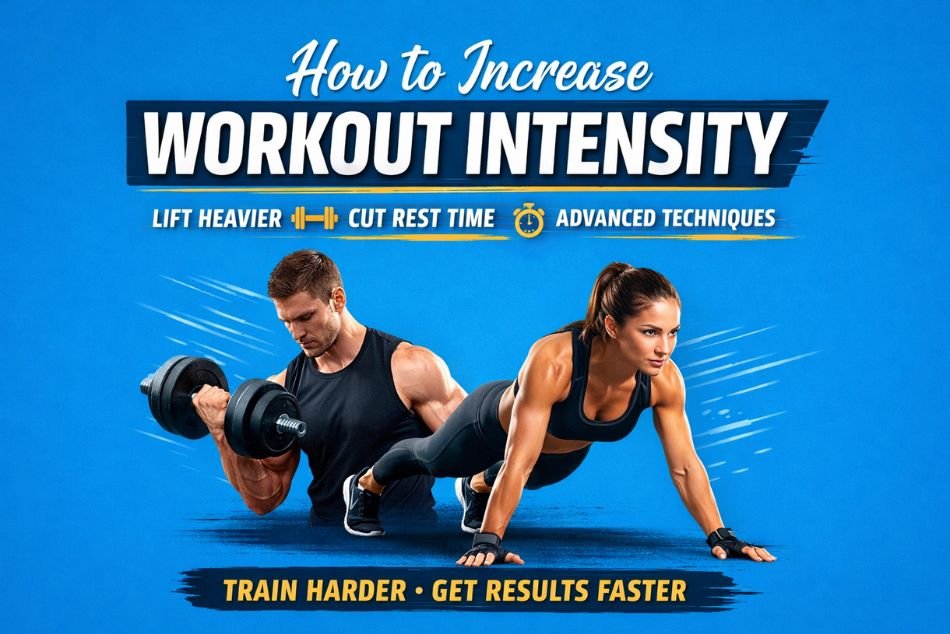
What Does Workout Intensity Really Mean?
Workout intensity refers to how hard your body is working during exercise. It’s not just about weight on the bar, but the overall demand placed on your muscles, heart, and nervous system.
Intensity can be influenced by:
- The amount of weight you lift
- The number of reps and sets you perform
- The speed of your movements
- Your rest periods between sets
- The level of effort (how close you train to failure)
For example, doing 10 push-ups slowly with proper control can be more intense than doing 20 fast, sloppy reps. That’s because your muscles stay under tension longer, which increases the stimulus.
Why Increasing Workout Intensity Is Important
If you don’t progressively challenge your body, it adapts quickly. This is known as a plateau. Once your muscles get used to a certain level of stress, they stop growing.
Increasing intensity helps you:
- Build more muscle
- Burn more calories in less time
- Improve cardiovascular fitness
- Break through plateaus
- Enhance mental toughness
In simple terms, if your workouts feel easy all the time, your body has no reason to improve.
The Foundation: Progressive Overload
Before diving into techniques, you need to understand the principle behind all of them, progressive overload.
This means gradually increasing the demands placed on your body over time.
You can apply progressive overload by:
- Increasing weight
- Adding more reps or sets
- Reducing rest time
- Improving exercise difficulty
- Slowing down reps
The key is gradual progression. A good rule is to increase intensity by no more than 5 to 10 percent per week. This ensures steady progress without increasing injury risk.
1) Lift Heavier Weights (but With Control)
One of the most straightforward ways to increase intensity is by lifting heavier weights. However, the focus should always remain on proper form.
Instead of randomly increasing weight, follow a structured approach:
- When you can complete your target reps easily, increase the weight slightly
- Stay within a rep range that challenges you (usually 6–12 reps for muscle growth)
- Aim to reach near failure on your final reps
Lifting heavier creates more mechanical tension on your muscles, which is essential for growth.
2) Increase Training Volume
Volume refers to the total amount of work you do in a workout. This includes sets, reps, and total exercises.
Ways to increase volume:
- Add one extra set per exercise
- Include more exercises for a muscle group
- Increase total weekly training frequency
For example, instead of doing 3 sets of squats, try 4 sets. Over time, this additional workload leads to better muscle development.
However, more volume doesn’t always mean better. You still need adequate recovery.
3) Reduce Rest Time Between Sets
Shortening rest periods is one of the most effective ways to increase workout intensity without adding weight.
Typical rest guidelines:
- Strength training: 60–90 seconds
- Hypertrophy (muscle growth): 30–60 seconds
- High-intensity training: 20–30 seconds
Shorter rest keeps your heart rate elevated and increases metabolic stress, which helps with fat loss and endurance.
It also makes your workouts more efficient, allowing you to do more work in less time.
4) Increase Time Under Tension (Slow Down Your Reps)
Time under tension refers to how long your muscles are working during a set.
To increase it:
- Slow down the lowering phase (eccentric) to 3–5 seconds
- Pause briefly at the bottom of the movement
- Maintain control throughout the rep
For example, instead of quickly lowering a dumbbell during a bicep curl, take 3 seconds to lower it. This increases muscle engagement and leads to better growth.
5) Train Closer to Failure
Training to failure means performing reps until you can’t complete another one with proper form.
You don’t need to go to absolute failure every set, but getting close is important.
A good approach:
- Leave 1–2 reps in reserve for most sets
- Occasionally push to failure on the last set
This ensures your muscles are being challenged enough to adapt and grow.
6) Use Supersets to Boost Intensity
Supersets involve performing two exercises back-to-back without rest.
Types of supersets:
- Same muscle group (e.g., chest press + push-ups)
- Opposing muscles (e.g., biceps + triceps)
Benefits:
- Saves time
- Increases muscle fatigue
- Keeps heart rate high
Supersets are especially useful if you want to combine strength training with cardiovascular benefits.
7) Include Drop Sets
Drop sets are an advanced technique where you continue a set after reaching failure by reducing the weight.
Example:
- Perform 10 reps with a heavy weight
- Immediately reduce the weight and continue
- Repeat 2–3 times
This pushes your muscles beyond their normal limit and creates a strong growth stimulus.
Use drop sets sparingly, as they are very demanding.
8) Try Circuit Training
Circuit training involves moving from one exercise to another with minimal rest.
Example circuit:
- Squats
- Push-ups
- Dumbbell rows
- Plank
Repeat the circuit multiple times.
Benefits:
- High calorie burn
- Improved endurance
- Increased workout efficiency
This method is great for those who want both strength and conditioning in a single session.
9) Increase Exercise Complexity
Instead of always increasing weight, make exercises more challenging.
Examples:
- Regular push-ups → Decline push-ups
- Squats → Single-leg squats
- Plank → Weighted plank
This approach improves coordination, balance, and muscle activation.
It’s especially useful if you train at home or have limited equipment.
10) Focus on Perfect Form and Mind-Muscle Connection
Good form isn’t just about avoiding injury, it also increases intensity.
When you focus on the target muscle:
- You activate more muscle fibers
- You reduce reliance on momentum
- You improve overall efficiency
For example, during a chest workout, focus on squeezing your chest rather than just pushing the weight.
This small shift can make a big difference.
11) Increase Workout Frequency (With Recovery in Mind)
Training a muscle group more often can increase overall workload and intensity.
Instead of training chest once a week, try twice.
However:
- Ensure at least 48 hours of recovery for the same muscle group
- Avoid overtraining
Balance is key. More isn’t always better if your body isn’t recovering properly.
12) Track Your Progress Consistently
You can’t increase intensity if you don’t know your starting point.
Track:
- Weights used
- Number of reps and sets
- Rest time
- Workout duration
This helps you:
- Identify plateaus
- Ensure progressive overload
- Stay accountable
Even a simple notebook or notes app can make a huge difference.
Common Mistakes to Avoid
- Increasing Intensity Too Quickly: Jumping from light to very heavy weights can lead to injury. Progress gradually.
- Ignoring Recovery: Muscles grow when you rest, not while you train. Lack of sleep and recovery can limit progress.
- Poor Form: Using momentum or incorrect form reduces effectiveness and increases injury risk.
- Doing Too Many Advanced Techniques: Supersets, drop sets, and circuits are powerful, but overusing them can lead to burnout.
Safety Guidelines for Increasing Workout Intensity
To train smarter and avoid setbacks:
- Increase intensity gradually (5–10% rule)
- Warm up properly before every workout
- Stay hydrated and maintain proper nutrition
- Listen to your body
- Take rest days seriously
If you feel sharp pain (not normal muscle soreness), stop immediately.
Sample Weekly Plan to Increase Intensity
Here’s a simple example:
- Week 1: Moderate weight, normal rest
- Week 2: Increase weight slightly
- Week 3: Reduce rest time
- Week 4: Add supersets or drop sets
This progressive approach ensures steady improvement without overwhelming your body.
Final Thoughts
Learning how to increase workout intensity is one of the most important steps in taking your fitness journey to the next level. It’s not about training longer, it’s about training smarter.
By applying progressive overload, adjusting rest times, controlling your tempo, and using advanced techniques strategically, you can continuously challenge your body and avoid plateaus.
Remember, consistency and progression always beat random hard workouts. Focus on small improvements every week, track your progress, and stay disciplined.
If you apply these principles correctly, you won’t just work out harder, you’ll get results faster and more efficiently.
FAQs: How to Increase Workout Intensity
Q1) What Is the Easiest Way to Increase Workout Intensity?
The simplest way is to reduce your rest time between sets or slightly increase the weight you lift. Even small changes like adding 1–2 reps or slowing down your tempo can make your workout more intense without overcomplicating things.
Q2) How Often Should I Increase Workout Intensity?
You should increase intensity gradually, ideally by about 5–10% per week. This could mean adding weight, reps, or reducing rest time. The key is steady progression, not sudden jumps.
Q3) Is Increasing Workout Intensity Necessary for Muscle Growth?
Yes, absolutely. Without increasing intensity, your body adapts and stops growing. Progressive overload is essential for muscle growth, strength gains, and overall fitness improvement.
Q4) Can I Increase Workout Intensity Without Lifting Heavier Weights?
Yes, you can. You can reduce rest time, slow down your reps (increase time under tension), use supersets or circuits, or switch to more challenging exercise variations.
Q5) How Do I Know if My Workout Is Intense Enough?
A good sign is that your last few reps feel challenging, and you’re close to failure while maintaining proper form. If your workout feels too easy, you likely need to increase intensity.
Q6) Should Beginners Focus on Workout Intensity?
Beginners should first focus on learning proper form and building a foundation. Once that’s established, they can gradually start increasing intensity using simple methods like adding reps or reducing rest.
Q7) What Are the Risks of Increasing Workout Intensity Too Quickly?
Increasing intensity too fast can lead to injuries, fatigue, and burnout. That’s why it’s important to progress gradually and listen to your body.
Q8) Are Advanced Techniques Like Supersets and Drop Sets Necessary?
They are not necessary but can be very effective. These techniques help break plateaus and add variety, but they should be used in moderation, especially if you’re not highly experienced.
Q9) Does Higher Workout Intensity Burn More Fat?
Yes, higher intensity workouts can increase calorie burn and improve metabolism. They also create an afterburn effect, where your body continues to burn calories even after the workout.
Q10) How to Increase Workout Intensity Without Overtraining?
Balance is key. Increase intensity gradually, ensure proper sleep and nutrition, and include rest days. Tracking your workouts also helps you avoid doing too much too soon.