What Is ZMA Used for? Everything You Need to Know Before Adding It to Your Stack
If you’ve spent any amount of time reading supplement labels or browsing bodybuilding forums, you’ve probably come across ZMA at some point, and you might be wondering what is ZMA used for. It’s one of those supplements that quietly sits in the background — not as flashy as pre-workouts or as universally hyped as creatine — yet it continues to hold a firm spot in the stacks of serious lifters, athletes, and fitness enthusiasts worldwide.
That’s exactly what we’re going to break down in this complete guide.
Whether you’re a seasoned bodybuilder or someone just getting into strength training, understanding what ZMA does, who benefits from it, and how to take it correctly can make a real difference in your results.
What Is ZMA?
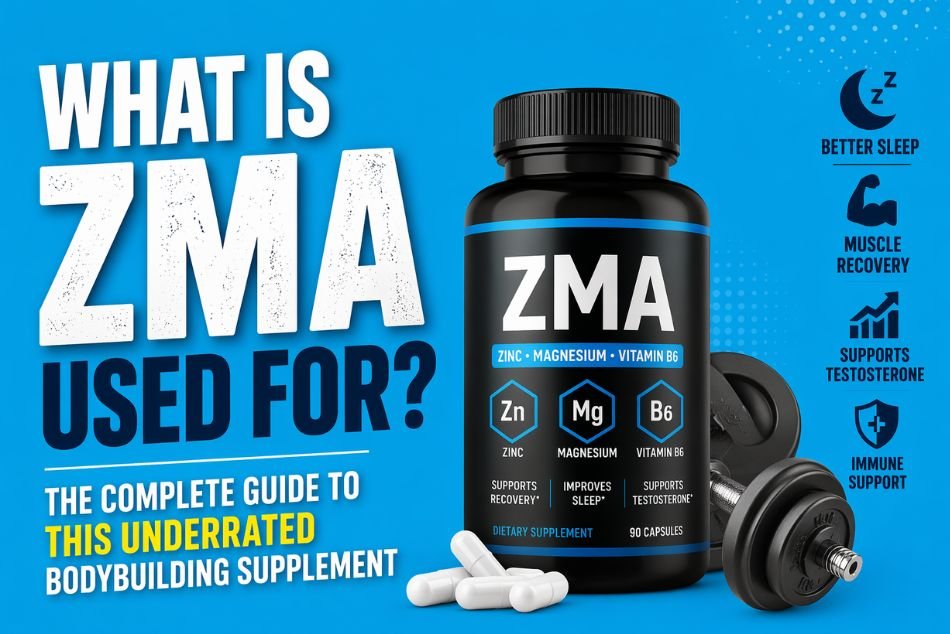
Before diving into the uses and benefits, let’s start with the basics. ZMA stands for Zinc Magnesium Aspartate. It’s a patented supplement formula that combines three ingredients:
- Zinc — An essential trace mineral involved in hundreds of enzymatic reactions, immune function, protein synthesis, and testosterone production.
- Magnesium — A critical mineral responsible for over 300 biochemical processes in the body, including muscle contraction, nerve function, energy production, and sleep regulation.
- Vitamin B6 (Pyridoxine) — A water-soluble vitamin that enhances the absorption and utilization of both zinc and magnesium while supporting neurotransmitter production and protein metabolism.
The specific forms used in ZMA are zinc monomethionine aspartate and magnesium aspartate. These chelated forms are considered highly bioavailable, meaning your body can absorb and use them more efficiently than cheaper oxide or sulfate forms found in many basic multivitamins.
ZMA was originally developed and patented by sports scientist Victor Conte of SNAC System, Inc. It gained massive popularity in the bodybuilding world during the late 1990s after studies suggested it could boost testosterone levels and improve athletic performance in deficient individuals.
Why Are Zinc and Magnesium So Important for Athletes?
Here’s the thing that most people miss when it comes to ZMA: the reason it works so well for lifters and athletes has a lot to do with how quickly they deplete these two minerals through training. When you exercise intensely, your body loses significant amounts of both zinc and magnesium through sweat.
Athletes are far more likely to be deficient in these minerals compared to the general population.
And when you’re deficient in either zinc or magnesium, your performance, recovery, sleep quality, and hormonal health all take a hit.
Zinc deficiency can cause reduced testosterone production, compromised immune function, slower wound healing, and decreased strength output. For anyone trying to build muscle and maintain performance, low zinc is a serious problem.
Magnesium deficiency is linked to poor sleep, increased muscle cramps, higher cortisol levels, reduced energy, and impaired protein synthesis. Given that magnesium is needed for ATP production — the primary energy currency of your muscles — running low on it while training hard is a recipe for stalled progress.
This is the foundation of what ZMA is used for: replenishing two critical minerals that intense training depletes, and doing so in a highly bioavailable form that maximizes absorption.
What Is ZMA Used for? The Key Benefits Explained
Now let’s get into the meat of why people actually take ZMA and what you can realistically expect.
1) Improved Sleep Quality and Recovery
This is arguably the most consistently reported benefit of ZMA among athletes, and it’s the one that tends to surprise people the most. Many lifters who start taking ZMA at night notice deeper, more restful sleep within the first week.
Magnesium plays a central role in regulating the nervous system and activating the parasympathetic “rest and digest” state. It helps the body produce GABA — a neurotransmitter that promotes relaxation and sleep. When magnesium levels are optimal, falling asleep is easier, sleep is deeper, and you spend more time in the restorative stages of the sleep cycle.
Better sleep means better recovery. Growth hormone is primarily released during deep sleep. Muscle repair happens overnight. Cortisol levels reset. If your training is solid but your results feel slow, poor sleep quality might be the missing link — and correcting a magnesium deficiency with ZMA could be the fix.
2) Supporting Testosterone Levels
Testosterone is the cornerstone hormone for muscle growth, strength gains, libido, energy, and overall male health. Zinc is one of the most critical dietary factors for healthy testosterone production. It inhibits aromatase — the enzyme that converts testosterone to estrogen — and it’s directly involved in the synthesis of luteinizing hormone (LH), which signals the testes to produce testosterone.
Research published in the Journal of Exercise Physiology found that ZMA supplementation in football players resulted in significantly higher anabolic hormone levels compared to a placebo group. However, it’s important to be clear here: ZMA is not a testosterone booster in the anabolic steroid sense. It supports healthy testosterone levels by correcting a deficiency. If your zinc levels are already optimal, the testosterone-boosting effect will be minimal. But for zinc-deficient athletes — which includes a large portion of regular gym-goers — it can make a meaningful difference.
3) Enhanced Muscle Recovery and Reduced Soreness
Both zinc and magnesium are deeply involved in protein synthesis and muscle repair. Zinc contributes to the production of insulin-like growth factor 1 (IGF-1), a hormone that drives muscle growth and repair. Magnesium is required for the ATP production that fuels all cellular repair processes.
When these minerals are at optimal levels, muscle tissue repairs faster after hard training sessions. Many athletes report reduced next-day soreness and a faster turnaround between workouts when taking ZMA consistently. This doesn’t make ZMA a magic recovery supplement, but for athletes who are deficient, restoring those levels can remove a significant bottleneck in their recovery process.
4) Immune System Support
Intense training is hard on the immune system. Overtraining — or even just consistently high-volume training — can suppress immune function and leave athletes more vulnerable to illness. Zinc is one of the most important nutrients for immune health. It supports the production and function of T-cells and other white blood cells that defend against infection.
Getting sick and missing training sessions is one of the most frustrating interruptions for anyone with fitness goals. Taking ZMA is a practical way to ensure your zinc levels stay topped up year-round, keeping your immune defenses sharp even during periods of heavy training.
5) Muscle Cramps and Spasm Reduction
If you’ve ever been woken up at 3 AM by a brutal leg cramp or experienced relentless muscle twitches during a workout, low magnesium is a very likely culprit. Magnesium is essential for proper muscle relaxation. Without adequate magnesium, muscles can’t fully relax after contracting, leading to cramps, twitches, and spasms.
Supplementing with ZMA — particularly the highly bioavailable magnesium aspartate form — can significantly reduce muscle cramping for people who are deficient. For endurance athletes and anyone training in hot weather and sweating heavily, this benefit alone can be worth the cost of the supplement.
6) Energy Production and Reducing Fatigue
Magnesium is a cofactor for over 300 enzyme reactions in the body, many of which are related to energy production. It’s required for the conversion of ADP back to ATP — essentially the recharging of your cells’ energy batteries. Without enough magnesium, your muscles and nervous system simply can’t produce energy as efficiently.
This can manifest as chronic fatigue, low motivation to train, and that general sense of running on empty even when you’ve slept enough. Correcting a magnesium deficiency through ZMA can restore energy levels and mental clarity — not with the jittery buzz of caffeine, but with a deeper, more sustained energy that comes from your body’s systems actually working properly.
Who Should Take ZMA?
ZMA is particularly well-suited for:
- Hard-training athletes and bodybuilders who lose significant zinc and magnesium through sweat. If you’re training four or more days a week with intensity, you’re almost certainly sweating out meaningful amounts of these minerals.
- People on calorie-restricted or clean-eating diets who may not be consuming enough zinc and magnesium-rich foods (red meat, shellfish, nuts, seeds, leafy greens) on a consistent basis.
- Anyone struggling with poor sleep quality. If you wake up feeling unrested, have trouble staying asleep, or struggle to wind down at night, low magnesium is a common and correctable cause.
- Men over 30 who want to support natural testosterone production and overall hormonal health as levels begin their gradual decline.
- Endurance athletes who lose especially high amounts of minerals through extended sweat sessions during running, cycling, or swimming.
How to Take ZMA Correctly
Timing and dosing matter more with ZMA than with many other supplements. Here’s what you need to know:
Timing: Take ZMA 30 to 60 minutes before bed on an empty stomach. This is important for two reasons. First, both zinc and magnesium compete with other minerals for absorption — particularly calcium. Taking ZMA with food (especially dairy) or alongside a multivitamin containing calcium will significantly reduce how much zinc and magnesium your body actually absorbs. Second, taking it before bed allows the sleep-enhancing effects of magnesium to align with your sleep schedule.
Standard Dosage: The most commonly studied and used dose follows the original ZMA formula: 30mg of zinc, 450mg of magnesium, and 10.5mg of vitamin B6 for men. Women typically use a lower dose: 20mg zinc, 300mg magnesium, and 7mg vitamin B6.
Consistency: Like most mineral supplements, ZMA works best when taken consistently over time. You won’t notice dramatic effects after one or two nights. Give it at least three to four weeks of consistent use before evaluating whether it’s working for you.
Avoid calcium at the same time: This is the most important practical rule. Don’t take ZMA with a protein shake (especially whey or casein, which naturally contain calcium), with milk, or with a calcium-containing multivitamin. Separate your calcium intake by at least two to three hours.
Does ZMA Have Any Side Effects?
ZMA is generally very well tolerated when taken at the recommended doses. However, a few things are worth knowing:
Vivid Dreams: One of the most commonly reported effects of ZMA — particularly in the first week or two — is extremely vivid, often intense dreams. This is largely attributed to the elevated magnesium levels enhancing slow-wave sleep and REM sleep quality. Most people find this more interesting than unpleasant, but it can be surprising if you’re not expecting it.
Nausea: Some people are more sensitive to zinc, and taking too much zinc on an empty stomach can cause mild stomach upset. If this happens, try taking it with a small, low-calcium snack.
Upper Tolerable Intake Levels: Zinc is a mineral where more is not better. Chronically excessive zinc intake (well above the recommended ZMA dose) can interfere with copper absorption and potentially suppress immune function. Stick to the recommended dosage and avoid stacking multiple zinc-containing supplements simultaneously.
ZMA vs. Individual Zinc and Magnesium Supplements
You might wonder whether you can just buy zinc and magnesium separately and skip the ZMA product. Technically, you can achieve similar results by sourcing quality individual supplements. However, there are a few advantages to the ZMA formula.
The specific chelated forms used in ZMA (zinc monomethionine aspartate and magnesium aspartate) are among the most bioavailable and well-tolerated forms available. Cheaper supplements often use zinc oxide or magnesium oxide, which have significantly lower absorption rates. The inclusion of vitamin B6 in ZMA further enhances the absorption and cellular utilization of both minerals. And from a practical standpoint, having the three ingredients in one capsule simplifies your supplement routine.
If you’re already taking a high-quality zinc bisglycinate and magnesium glycinate separately, you may not need a dedicated ZMA product. But for most people, a quality ZMA formula is the most efficient and cost-effective way to get the combination right.
How Does ZMA Fit Into a Complete Supplement Stack?
ZMA is a foundational supplement rather than a performance enhancer in the traditional sense. It works best as part of a sensible stack that covers your nutritional bases. Here’s how it fits alongside other common bodybuilding supplements:
- Whey Protein + ZMA: Great combination, but time them separately. Take whey protein post-workout and ZMA before bed, well away from your shake.
- Creatine + ZMA: No issues here. Creatine is best taken around workouts; ZMA before bed. They work through entirely different mechanisms and complement each other well.
- Pre-workout + ZMA: No conflict. Your pre-workout goes before training; ZMA goes 30 to 60 minutes before sleep.
- Multivitamin + ZMA: Be careful here. If your multivitamin contains significant calcium, zinc, or magnesium, you’ll want to make sure you’re not stacking on top of already-adequate levels. Take your multi in the morning and ZMA at night.
The Bottom Line: Wrapping Up What Is ZMA Used for
So, what is ZMA used for in practical terms? At its core, ZMA is a targeted mineral support supplement designed to correct the zinc and magnesium depletion that intense physical training causes. Its primary uses are improving sleep quality and depth, supporting natural testosterone production in deficient individuals, speeding up muscle recovery, reducing cramps and spasms, supporting immune health, and improving energy production at the cellular level.
ZMA isn’t a miracle supplement that will transform your body overnight. It won’t add 20 pounds to your bench press in a week or replace a solid training program and nutrition plan. What it will do — consistently, reliably, and without any gimmicks — is ensure that two of the most training-critical minerals in your body are present at optimal levels. And when you’re training hard, sweating regularly, and pushing for real results, that foundational support matters more than most lifters realize.
If you’re already eating a clean, varied diet rich in zinc and magnesium sources and your training volume is moderate, ZMA may not move the needle much for you. But if you’re training intensely four or more days per week, dealing with poor sleep, feeling overly fatigued between sessions, or struggling to make progress despite solid effort in the gym, ZMA is one of the most affordable and practical supplements you can add to your routine.
Take it consistently, time it correctly away from calcium, and give it a full month to evaluate the results. Most people who are actually deficient notice the sleep improvement within the first week — and once you start sleeping deeper and recovering faster, everything else in your training tends to follow.