What Is a HIIT Workout and Why It Matters for Your Fitness
If you’ve ever wondered what is a HIIT workout and why it has become one of the most popular training styles in the world, you’re in the right place. HIIT has a reputation for delivering big results in a short amount of time, and once you understand how it works, it’s easy to see why. Whether you’re trying to burn fat, improve conditioning, build power, or upgrade your overall fitness, HIIT gives you a simple framework that fits almost any schedule.
In this guide, we’ll break down what HIIT is, how it works, the benefits, the different types, and how to safely build your own training routine.
Understanding the Basics of HIIT
High-Intensity Interval Training is a training method built around short bursts of challenging effort followed by strategic recovery. The work intervals push your heart rate high, often reaching 80 to 95 percent of your maximum. The rest intervals bring it down just enough so you can attack the next round with force.
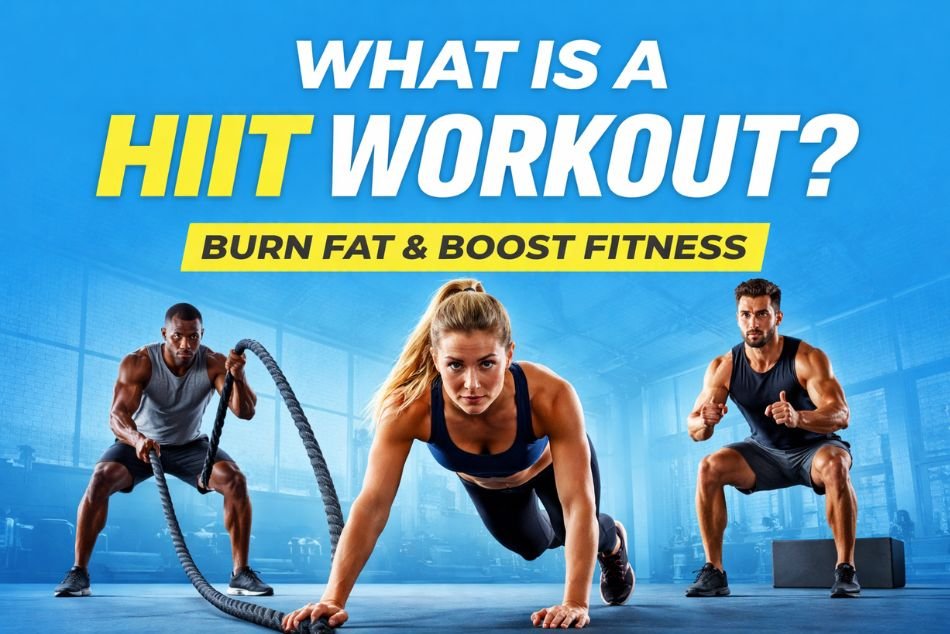
Think of HIIT as a framework, not a single workout. You can apply it to bodyweight movements, sprints, cycling, kettlebells, rowing, boxing, or even strength circuits. As long as the intensity is high during the work interval and you alternate it with recovery, it qualifies as HIIT.
The idea is simple: work hard, rest briefly, repeat. That cycle trains both your aerobic and anaerobic systems, builds power, boosts calorie burn, and improves conditioning in a time-efficient way. That’s why HIIT is a favorite among athletes, weekend lifters, busy professionals, and beginners who want a structured approach to fitness without spending hours training.
How HIIT Differs From Traditional Cardio
Many people compare HIIT to steady-state cardio, but the two serve different purposes.
Traditional cardio keeps your heart rate at a moderate, comfortable level for a long time. Think jogging, brisk walking, or cycling at a steady pace. It’s great for building endurance and supporting heart health.
HIIT, on the other hand, demands short bursts of high effort. This raises your heart rate much higher than moderate cardio and forces the body to recover quickly between bursts. Because the effort is more demanding, the overall session can be shorter while still delivering strong results. You burn more calories per minute, and your metabolism stays elevated long after the workout ends.
Both forms of cardio have benefits. HIIT simply provides a more efficient way to push your limits, stimulate muscle, and burn fat.
Why HIIT Works So Well
HIIT workouts are built on a simple but powerful principle: intensity creates change. During a hard burst, your body demands energy quickly, often relying on anaerobic energy systems. When you rest, your body works hard to recover. These repeated cycles challenge the cardiovascular system, muscles, and metabolism.
Research consistently shows benefits such as:
- Higher calorie burn
- Strong improvements in heart health
- Increased insulin sensitivity
- Reduced body fat
- Improved performance
- Better conditioning in less time
Many of these benefits occur because your metabolic rate stays elevated for hours after the workout. This effect is often referred to as the “afterburn,” and it’s one reason HIIT is favored for fat loss.
How HIIT Boosts Fat Loss and Changes Your Body
One of the biggest reasons people seek HIIT is fat loss. Many studies show that HIIT can reduce body fat and waist circumference even though the sessions are shorter than traditional workouts.
This happens for a few reasons:
1) You Burn More Calories in Less Time
The intense effort forces your body to work harder and expend more energy. Even a 20-minute session can burn more calories than a longer moderate workout.
2) Your Metabolism Stays Elevated After Training
HIIT increases oxygen consumption long after your session is finished. Your body keeps burning calories to return to baseline, resulting in more total energy burned over the day.
3) HIIT Helps Maintain or Build Muscle
While weight training is still the best for building muscle, HIIT that includes strength-based movements (like squats, swings, or explosive pushups) can help beginners gain muscle and support lean body composition.
Cardiovascular Benefits of HIIT
HIIT has strong benefits for heart and lung health. Studies show that HIIT can:
- Improve oxygen consumption
- Lower blood pressure
- Reduce resting heart rate
- Improve circulation
- Strengthen the cardiovascular system
HIIT can improve aerobic capacity just as effectively as longer endurance sessions. Because it also trains the anaerobic system, it enhances power, explosiveness, and athletic performance.
HIIT for Blood Sugar and Insulin Sensitivity
One of the most studied benefits of HIIT is how it affects blood sugar. Research shows that HIIT can improve insulin sensitivity and lower blood glucose levels, making it a great option for people with type 2 diabetes or prediabetes.
Short bursts of challenging exercise force the muscles to use stored glucose quickly. Over time, this improves how efficiently your body handles sugar.
Different Types of HIIT Workouts
One of the strengths of HIIT is how adaptable it is. You can use it with almost any exercise style.
1) Tabata
Twenty seconds of all-out work followed by ten seconds of rest for eight rounds. A classic Tabata lasts four minutes and is deceptively tough.
2) Circuit-Style HIIT
You rotate through multiple exercises with short rests. Great for mixing strength and cardio.
3) EMOM
Every Minute On the Minute. You complete a set number of reps at the start of each minute and rest for the remainder.
4) AMRAP
As Many Rounds As Possible within a set time. Great for tracking progress.
5) Sprint-Based HIIT
Sprints followed by walking or light jogging.
6) Equipment-Based HIIT
You can use a treadmill, bike, rowing machine, Ski-Erg, battle ropes, kettlebells, sleds, or dumbbells.
7) Low-Impact HIIT
Perfect for those with joint issues. Includes cycling, swimming, stepper intervals, or low-impact bodyweight movements.
Sample HIIT Workouts You Can Try
Here are practical routines that match different goals and fitness levels.
Beginner Bodyweight HIIT
- 20 seconds jump squats
- 20 seconds pushups
- 20 seconds mountain climbers
- 20 seconds burpees
Rest 30 seconds and repeat for 3 rounds.
Full-Body HIIT
- Jump squats
- Pushups
- Mountain climbers
- Lunges
- High knees
- Burpees
Each for 20 seconds, rest 30 seconds between exercises. Repeat 3 rounds.
Cardio-Focused HIIT
- Jump squats
- Jumping jacks
- High knees
- Jump rope
- Burpees
- Mountain climbers
Work 20 seconds each, rest 30 seconds, repeat 3 rounds.
Upper-Body HIIT
- Pushups
- Bench dips
- Dumbbell curls
- Shoulder presses
- Mountain climbers
Work 20 seconds each, rest 30 seconds, repeat 3 rounds.
Lower-Body HIIT
- Jump squats
- Lunges
- Box jumps
- Jump rope
- Mountain climbers
Work 20 seconds each, rest 30 seconds, repeat 3 rounds.
How to Structure Your HIIT Intervals
The key element of HIIT is the balance between work and rest. The wrong ratio can make your session too easy or too exhausting.
Typical Ratios Include
- 1:1 or 1:2 for aerobic fitness (30 seconds work, 30–60 seconds rest)
- 1:5 for power and explosiveness (15 seconds work, 75 seconds rest)
- 20/10 for classic Tabata
- EMOM for hybrid strength-conditioning
- AMRAP for conditioning and endurance
Beginners should start lighter, around 20 seconds of work followed by equal or slightly longer rest.
How Often Should You Do HIIT?
Because HIIT is demanding, the body needs time to recover. Most experts recommend:
2–3 Sessions per Week
If your sessions are extremely high intensity, even twice per week is enough.
Doing too much HIIT without recovery can lead to:
- Fatigue
- Plateaus
- Joint stress
- Hormonal imbalance
- Performance decline
Rest days, mobility work, and strength training are important to balance your routine.
Warm-Up and Cool Down Matter More Than You Think
HIIT is intense, so warming up is essential. A good warm-up lasts around 5–10 minutes and may include:
- Light cardio
- Dynamic stretches
- Glute activation
- Mobility movements
- Rehearsal of the main exercises
Cooling down helps your heart rate return to normal and prevents dizziness. Keep it simple with light walking, gentle stretching, and breathing exercises.
Tips to Make HIIT Safe and Effective
A few simple habits can help you get better results with lower risk.
Start Slow
Build intensity over time. Don’t jump straight into max-effort intervals.
Choose the Right Movements
Pick exercises you can perform with good technique even when tired.
Watch Your Heart Rate
You should be working hard, but not to the point of losing control of your form.
Prioritize Technique Over Speed
Bad form at high intensity is a fast way to get injured.
Use a Timer
HIIT is all about managing intervals. A timer keeps your effort consistent.
Give Yourself Enough Rest
If your rest is too short, your work period won’t actually be high intensity.
Track Progress
Increase work time, decrease rest time, or improve the number of reps.
Who Is HIIT Good for?
HIIT works for almost everyone when scaled properly:
- Beginners who want a structured start
- Busy people who need efficient training
- Athletes who need conditioning
- People trying to lose fat
- Those looking to improve heart health
- Older adults who scale intensity sensibly
Intensity is always relative. What is hard for one person may not be hard for another. HIIT allows you to push at a level that matches your ability.
Who Should Be Cautious?
You should consult a doctor before beginning HIIT if you have:
- Heart conditions
- Chronic joint issues
- Uncontrolled high blood pressure
- Respiratory problems
- Injuries
- A long break from physical activity
With the right modifications, many people can still enjoy HIIT safely.
Putting HIIT Into a Weekly Routine
A balanced weekly plan might look like:
- Monday: HIIT (20–25 minutes)
- Tuesday: Strength training
- Wednesday: Rest or light cardio
- Thursday: HIIT
- Friday: Strength training
- Saturday: Optional low-intensity workout
- Sunday: Rest
This structure gives you the benefits of HIIT while supporting muscle strength and recovery.
Final Thoughts: Time to Put HIIT Into Action
Now that you clearly understand what is a HIIT workout, you can start putting it into your routine with confidence. HIIT gives you an efficient way to burn calories, boost metabolism, improve performance, and build fitness without spending hours training.
Whether you sprint, lift, jump, cycle, or mix everything together, the idea stays the same: short, powerful bursts of effort followed by brief recovery. With the right intensity, a simple plan, and enough recovery, HIIT can elevate your conditioning and help you reach your goals faster.
If you’re ready for a workout style that challenges you, fits your schedule, and delivers real results, HIIT is worth adding to your routine.
Frequently Asked Questions About HIIT
Q1) Is HIIT Good for Beginners?
Yes. Beginners can absolutely do HIIT as long as the intensity and intervals are scaled down. Shorter work periods, longer rest, and low-impact exercises are the best way to start. Over time, you can increase the intensity as your fitness improves.
Q2) How Long Should a HIIT Workout Last?
Most HIIT sessions fall between 15 and 30 minutes, including warm-up and cool-down. The intense portion itself can be as short as 8–15 minutes, depending on your intervals.
Q3) How Many Times per Week Should I Do HIIT?
Two to three sessions per week is ideal. HIIT is demanding, so doing it daily can lead to fatigue or injury. Balance it with rest days or lower-intensity training.
Q4) Do I Need Equipment for HIIT?
Not at all. You can do HIIT with bodyweight moves like burpees, jump squats, mountain climbers, and high knees. If you prefer equipment, you can use bikes, rowers, treadmills, kettlebells, dumbbells, battle ropes, or sleds.
Q5) Can HIIT Help With Fat Loss?
Yes. HIIT is one of the most efficient training styles for fat loss because it burns a high number of calories in a short time and increases your metabolism for hours afterward.
Q6) Is HIIT Safe for People With Joint Pain?
HIIT can be safe when modified. Choose low-impact exercises like cycling, swimming, incline walking, or step-ups. Avoid high-impact moves like jump squats or sprints until your joints feel stronger.
Q7) What’s the Difference Between HIIT and Regular Interval Training?
Intervals simply alternate effort and recovery. HIIT specifically requires high-intensity work (around 80–95% of your max effort). Many classes call their sessions HIIT even if the intensity doesn’t reach that level.
Q8) How Soon Will I See Results From HIIT?
Most people notice improvements in stamina, energy, and conditioning within 2–4 weeks. Fat-loss and body-composition changes usually show up between 4–8 weeks, depending on diet and consistency.
Q9) Can I Build Muscle With HIIT?
HIIT can help beginners build some muscle, especially when strength-focused movements are included. But for serious muscle growth, weight training should still be the main focus.
Q10) Is HIIT Suitable for Older Adults?
Yes. HIIT can be great for older adults because intervals can be scaled to match ability. Brisk walking, cycling, step-ups, or light circuits work well. The key is using “higher intensity” relative to your personal fitness level.