Are Microwaves Bad for You? Here’s the Short Answer
Almost every kitchen has one, yet the questions never really stop. Are microwaves bad for you, or is that just another one of those internet myths that refuses to die? The short answer is no, a working microwave in good condition is one of the safer, more nutrient-friendly ways to heat your food. But there are a few real caveats worth knowing, and we’ll walk through every one of them.
Nonetheless, the rumors persist. Cancer scares, nutrient loss claims, radiation worries, you’ve probably heard at least one of these from a family member who swears they “just don’t trust” the appliance. Some of these concerns come from a misunderstanding of how microwaves actually cook food. Others come from genuine issues, like heating food in the wrong type of plastic container.
So let’s break this down properly, the same way we’d break down a training program: look at the mechanism first, then the evidence, then the practical advice you can actually use.
How Does a Microwave Actually Cook Food?
A microwave oven doesn’t cook food the way a stove or oven does. Instead of heating the air around your food, it generates electromagnetic waves using a component called a magnetron.
These waves target water molecules inside your food. Water molecules are polarized, meaning one end carries a slight positive charge and the other a slight negative charge. The microwaves cause these molecules to flip back and forth millions of times per second, and that rapid movement creates friction. Friction creates heat, and heat cooks your food.
This matters for the whole “are microwaves bad for you” debate because it explains why microwave cooking is fast. Since the energy goes straight into the water molecules throughout the food rather than slowly conducting inward from a hot pan or oven wall, your food heats faster and spends less total time exposed to high temperatures.
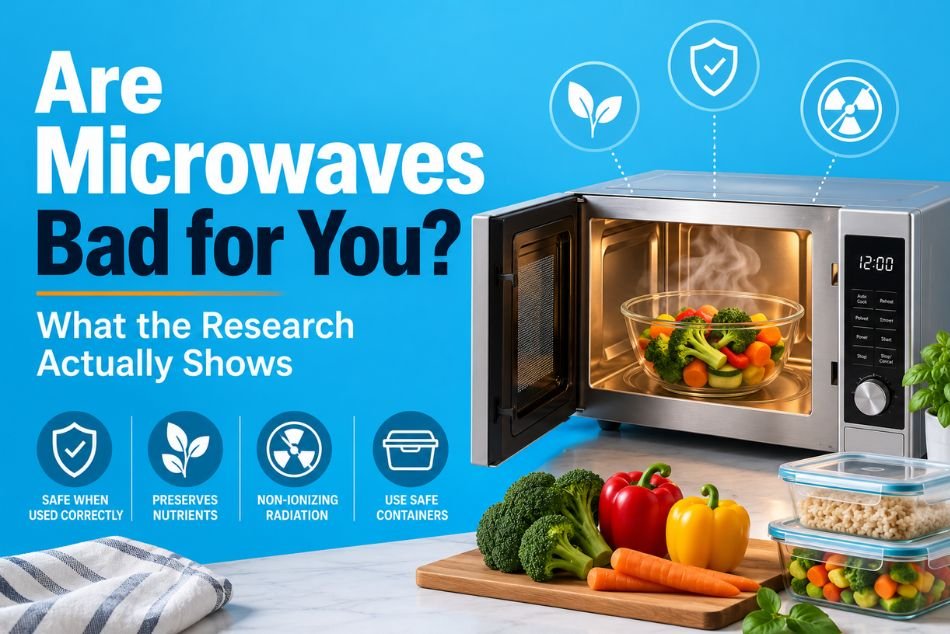
Microwaves themselves are non-ionizing radiation. That’s a different category from X-rays or gamma rays, which carry enough energy to damage DNA directly. Microwave energy simply doesn’t have that kind of punch. It heats water molecules; it doesn’t rearrange your cells.
Do Microwaves Destroy Nutrients in Food?
This is probably the biggest reason people ask if microwaves are bad for you, and it’s worth answering carefully because the answer depends on the nutrient and the food.
Vitamin C is a good example. It breaks down when exposed to heat, and the longer that exposure lasts, the more of it you lose. Because microwaving is fast, it often preserves more vitamin C than boiling or roasting the same vegetable for a longer stretch.
Boiling is actually one of the worse methods for nutrient retention. When you drop vegetables into a pot of water, water-soluble vitamins like C and several B vitamins leach straight out of the food and into the water, which usually gets poured down the sink. Microwaving typically uses little or no added water, so you avoid a lot of that leaching altogether.
That said, it’s not a universal win. One commonly cited study found that microwaving broccoli and garlic for even a short time could reduce certain protective plant compounds. Overcooking anything, in any appliance, breaks nutrients down. The microwave isn’t immune to that rule; it’s just usually faster and therefore gentler by comparison.
Here’s a practical takeaway if you’re trying to hold onto nutrients in your vegetables: use minimal water, cover the dish loosely so it steams from the inside, and don’t leave food in there longer than needed just because you got distracted scrolling your phone.
Does Microwaving Cause Cancer?
No, and this is one of the more persistent myths out there. Microwave ovens produce non-ionizing radiation, and there’s no credible research linking properly functioning microwaves to cancer risk in humans.
The confusion sometimes comes from acrylamide, a compound that can form naturally in starchy foods like potatoes when they’re cooked at high heat. Acrylamide has shown carcinogenic effects in animal studies, and researchers are still working out what that means for humans at typical dietary exposure levels. This isn’t unique to microwaving though; acrylamide forms in roasted, fried, and baked starchy foods too.
If you want to be cautious, soaking or par-boiling potatoes before microwaving can reduce acrylamide formation. But this has nothing to do with microwave radiation itself, and everything to do with how starchy foods behave under any high-heat cooking method.
Is the Radiation From a Microwave Dangerous?
Here’s where a lot of the fear comes from, and it’s worth addressing directly since it’s central to whether are microwaves bad for you as an everyday appliance.
In the United States, the FDA sets a strict leakage limit for microwave ovens, and every unit sold has to meet it before it can legally be manufactured. That limit is set well below the threshold known to cause any harm to a person. On top of that, microwave energy drops off fast as you move away from the source; a measurement taken 20 inches from an oven is roughly a hundred times weaker than one taken just 2 inches away.
Manufacturers are also required to build in safety interlocks. The moment you open the door or the latch releases, the magnetron stops producing microwaves immediately. There’s a backup monitoring system too, so if one interlock somehow fails, the oven still won’t run.
The one scenario worth paying attention to is a damaged microwave. If your door hinge is bent, the seal is cracked, or the door doesn’t close flush anymore, that’s when leakage becomes a real possibility. A microwave in that condition should be repaired or replaced rather than kept in daily rotation.
What About Heating Food in Plastic Containers?
This is where a genuine safety concern actually exists, and it has nothing to do with the microwave’s radiation and everything to do with what you’re putting inside it.
Not all plastic is built to handle heat. Containers labeled “microwave-safe” go through testing to confirm they won’t warp, melt, or release chemicals into your food at typical reheating temperatures. Containers that aren’t labeled this way haven’t been through that testing, and heating them can cause the plastic to break down.
Polystyrene, often used in takeout containers and foam cups, can release styrene when heated, a compound flagged by health researchers as a possible carcinogen. Older polycarbonate plastics may contain BPA, which can migrate into food faster once the plastic gets hot. Neither of these is something you want mixed into your dinner.
The fix here is simple. Use glass or ceramic when you can, since neither absorbs microwaves or reacts to heat the way plastic does. If you do use plastic, stick to containers that are actually labeled microwave-safe, and avoid sealing anything airtight before it goes in, since trapped steam can cause splatter or even minor container failure.
Skip the flimsy takeout containers and margarine tubs entirely. They weren’t designed for repeated heat exposure, and using them that way is one of the few legitimately risky habits tied to microwave use.
Microwave vs. Stovetop vs. Oven: How Do They Compare?
It helps to see microwaving next to the other cooking methods you probably already use, since a lot of the “are microwaves bad for you” worry disappears once you compare it with the alternatives.
- Microwave vs. Boiling: Boiling wins on flavor for some dishes, but it’s rough on nutrients. Water-soluble vitamins leach out into the cooking water, and unless you’re using that water for a soup or sauce, those nutrients are gone. Microwaving with minimal water sidesteps most of that loss.
- Microwave vs. Oven Roasting: Roasting develops flavor and texture that a microwave simply can’t replicate, there’s no substitute for caramelization. But roasting also means longer cook times at higher temperatures, which breaks down more heat-sensitive nutrients along the way. If your priority is a quick, nutrient-preserving reheat rather than a flavor project, the microwave has the edge.
- Microwave vs. Pan-Frying: Pan-frying often adds oil, which adds calories you may not be accounting for. It also means longer exposure to direct heat at the pan’s surface. Microwaving skips the added fat entirely, which matters if you’re tracking intake as part of a cutting phase or just trying to keep meals simple.
None of this means you should throw out your stovetop or oven. Each method has its place, and flavor, texture, and convenience all factor into what you reach for on a given night. But from a pure nutrient-retention standpoint, the microwave usually isn’t the villain people make it out to be.
Common Mistakes People Make With Microwaves
Just like with a workout program, most of the problems people run into aren’t with the tool itself, they’re with how it gets used. A few mistakes show up again and again.
- Using the Wrong Container: We already covered this one above, but it’s worth repeating since it’s the single most common misstep. Grab glass or a container that’s clearly marked microwave-safe, and skip anything you’re not sure about.
- Overheating in Short Bursts Without Stirring: Microwaves can heat unevenly, leaving cold spots right next to scalding ones. Stirring or rotating food partway through helps distribute the heat and lowers your risk of biting into something lukewarm in the middle while the edges are burning hot.
- Sealing Food Completely Before Heating: An airtight lid traps steam with nowhere to go. That pressure can build up fast and cause a lid to pop or liquid to erupt the moment you open the container. Leave a small vent or crack the lid instead.
- Ignoring Standing Time: Food often keeps cooking for a minute or two after the microwave shuts off, since the heat generated inside continues to spread through the food. Skipping this standing time is a common reason people end up with undercooked centers, especially with meat, poultry, and frozen dinners.
- Never Cleaning the Interior: Old food splatter isn’t just gross, it can also scorch and, over time, contribute to uneven heating or unwanted odors. A quick wipe-down after spills keeps your microwave working properly and your food tasting like food instead of last week’s soup.
Tips to Make Microwaving Safer and More Effective
Getting the most out of your microwave doesn’t require any special skill. A handful of habits make a real difference.
- Cover food loosely with a microwave-safe lid or damp paper towel to help it heat evenly and retain moisture.
- Cut vegetables and larger food items into similar-sized pieces so everything cooks at close to the same rate.
- Use short intervals for reheating leftovers, checking and stirring between each one instead of running one long cycle.
- Follow the cook times listed on frozen and packaged meals, since these are tested specifically for that food and container.
- Let food rest for the time listed on the packaging or a minute or two on your own, giving the heat a chance to finish the job.
- Check your microwave’s door seal and hinges periodically, and stop using it if you notice damage.
- Keep the interior clean so splatter doesn’t scorch onto the walls or interfere with even cooking.
None of this is complicated. It’s the same principle as sticking to a lifting program instead of freestyling every session: following a few consistent habits gets you a better, more predictable result.
Who Should Be a Bit More Careful With Microwave Use?
Most people don’t need to change a thing about how they use their microwave. A couple of groups benefit from being slightly more deliberate about it.
Anyone reheating meat, poultry, or leftovers should make sure the food reaches a safe internal temperature all the way through, not just around the edges. Uneven microwave heating is a real food-safety issue, separate from any radiation concern, since bacteria can survive in a cold spot even while the rest of the plate is steaming.
People with older pacemakers were once advised to keep some distance from microwave ovens, since early concerns focused on interference from leaking radiation. Modern microwaves and modern pacemakers have both improved significantly, and this is largely a non-issue today, but it’s still worth a quick conversation with a doctor if you have any implanted medical device and specific concerns.
Parents warming baby bottles should stick to a water bath or bottle warmer instead. Microwaves heat unevenly, and a bottle can end up with hot pockets of liquid even when the outside feels only lukewarm.
If you’re meal prepping for the week, which a lot of people reading a fitness site probably are, batch reheating is another spot worth a little extra attention. Reheating the same container of chicken and rice five days in a row is fine, but only if you’re storing it properly in the fridge, reheating it to a proper internal temperature each time, and not leaving it out on the counter for hours beforehand. None of that is a microwave problem. It’s a basic food-safety habit that applies no matter which appliance you’re using.
Closing Thoughts
So, are microwaves bad for you? Based on the actual research, no. A microwave oven in good working condition, used with the right containers, is one of the more efficient and nutrient-friendly ways to cook or reheat food. It doesn’t make food radioactive, it doesn’t cause cancer, and in a lot of cases, it holds onto more vitamins than boiling or long roasting would.
The real risks aren’t hiding inside the appliance itself. They come from damaged units, non-microwave-safe plastics, and uneven heating that leaves cold spots in meat or leftovers. Handle those three things correctly, and there’s no real reason to fear the appliance sitting on your counter.
Nonetheless, like most things in nutrition and training, the details matter more than the headline. Keep your microwave in good shape, use the right containers, stir your food, and you’ll get the convenience without any of the downsides people worry about.
FAQs
Q1) Are Microwaves Bad for You in Terms of Radiation Exposure?
No. Microwaves use non-ionizing radiation, which doesn’t carry enough energy to damage DNA the way X-rays or gamma rays can. The FDA also requires manufacturers to keep leakage far below any level known to cause harm, and modern ovens include multiple safety interlocks that shut off microwave production the instant the door opens.
Q2) Do Microwaves Really Destroy More Nutrients Than Other Cooking Methods?
Generally, no. Because microwaving is fast and typically uses little added water, it tends to preserve heat-sensitive and water-soluble nutrients better than boiling and often better than long oven roasting. Nutrient loss depends more on cooking time, temperature, and water use than on the appliance itself.
Q3) Can You Get Cancer From Using a Microwave?
There’s no credible evidence linking microwave ovens to cancer in humans. The acrylamide concern some people bring up relates to how starchy foods react to high heat in general, not to microwave radiation specifically, and it applies to frying, baking, and roasting as well.
Q4) Is It Safe to Microwave Food in Plastic Containers?
Only if the container is labeled microwave-safe. Unlabeled plastics, takeout containers, and foam cups can warp, melt, or release chemicals like styrene or BPA into your food when heated. Glass and ceramic remain the safest options if you want to avoid the question entirely.
Q5) How Do I Know if My Microwave Is Still Safe to Use?
Check the door seal, hinges, and latch regularly. If the door doesn’t close flush, if you see visible damage, or if the unit sparks or makes unusual noises, stop using it and have it repaired or replaced. A microwave in good condition poses no meaningful radiation risk.