A Simple, No-Nonsense Guide on How to Gain Muscle as an Ectomorph
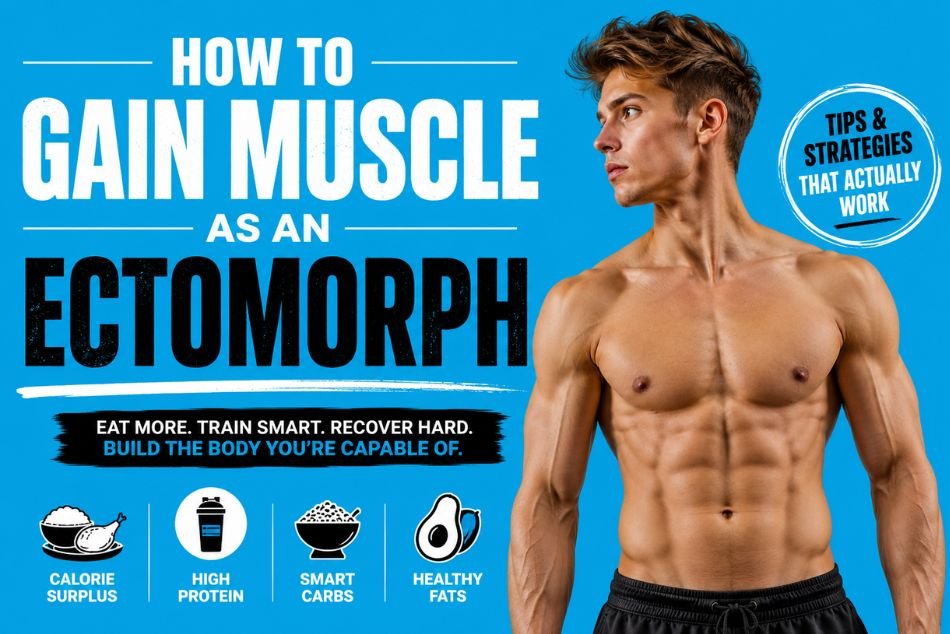
If you’ve spent years eating whatever you want without gaining a pound, you’re probably an ectomorph. And if you’ve been asking yourself how to gain muscle as an ectomorph without wasting another six months in the gym with nothing to show for it, you’re in the right place.
The skinny-guy struggle is real. You train hard, you eat “a lot” by your own standards, and the scale barely moves. That’s not bad luck. It’s biology, and once you understand it, you can work with it instead of against it.
This guide breaks down exactly what makes ectomorphs different, why the usual “eat more, lift heavy” advice often isn’t enough on its own, and what actually needs to change in your food, training, and recovery to start seeing real size.
What Is an Ectomorph, Exactly?
Ectomorph is one of three body types first described by psychologist William Sheldon back in the 1940s. The other two are mesomorph (naturally athletic, gains muscle and loses fat with relative ease) and endomorph (naturally stockier, holds fat easily, and often struggles more with fat loss than muscle gain).
Most people aren’t a pure version of any one type. You might be an ecto-mesomorph, for example, leaning skinny but still able to build some muscle once you get the food and training right. Still, if the shoe fits more often than not, the strategies below apply to you.
Common Traits of an Ectomorph
Ectomorphs usually share a few physical markers:
- Narrow shoulders and a smaller bone structure
- Long limbs with less natural muscle mass
- A fast metabolism that burns through calories quickly
- Difficulty gaining both fat and muscle
- Low body fat even without dieting
None of this means you can’t build a solid, muscular frame. It just means your starting point and your strategy need to look different from someone who packs on size just by looking at a barbell.
Why Ectomorphs Struggle to Build Muscle
The biggest reason ectomorphs stay skinny isn’t lack of effort. It’s that their bodies burn calories faster than they can eat them, a process called diet-induced thermogenesis combined with a naturally high resting metabolic rate.
Add in nervous energy, fidgeting, and a tendency to move around more throughout the day, and you get someone who needs a genuine surplus of food just to maintain weight, let alone gain muscle.
This is why so many ectomorphs think they’re “eating enough” when they’re really just eating maintenance calories. Tracking food for even a week usually reveals the gap between what you think you’re eating and what you’re actually eating.
There’s also a mental side to this. After years of not gaining weight no matter what you eat, it’s easy to develop a mindset that food doesn’t “work” for you. That belief becomes self-fulfilling once you stop pushing your intake as hard as you need to.
Eating: The Foundation for How to Gain Muscle as an Ectomorph
Nutrition matters more for ectomorphs than almost any other body type. You can have the best training program in the world, but if you’re not feeding your body enough to grow, you’ll stay the same size.
Eat in a Calorie Surplus
You need to consistently eat more calories than you burn. A surplus of 300 to 500 calories above maintenance is a solid starting point for most ectomorphs, though some need to push closer to 500 to 700 to see the scale move at all.
One simple way to find your starting point: multiply your bodyweight in pounds by 16 to 18 to estimate daily maintenance calories, then add your surplus on top. A 150-pound ectomorph might land somewhere around 2,400 to 2,700 calories a day to start gaining.
If you’re not gaining roughly half a pound to a pound per week, bump your calories up further. Ectomorphs often need a bigger surplus than the “average” advice you’ll find online, and there’s nothing wrong with adjusting every couple of weeks based on what the scale and mirror tell you.
Prioritize Protein
Protein is what your body uses to repair and build muscle tissue after training. Aim for somewhere between 1.6 and 2.2 grams of protein per kilogram of body weight each day.
Good sources include chicken, eggs, fish, Greek yogurt, lean beef, and tofu. If hitting that number through whole food alone feels like a chore, a whey protein shake between meals makes it easier without forcing down another plate of chicken breast.
Spread your protein across four to six meals rather than cramming it all into one or two sittings. Your body uses protein more efficiently for muscle repair when it’s spaced out through the day.
Don’t Skimp on Carbs
Carbohydrates are your training fuel. They also help drive insulin, which plays a role in shuttling nutrients into muscle cells after a workout.
Rice, oats, potatoes, whole grain pasta, and fruit are all solid choices. Ectomorphs typically do better with a higher-carb approach than low-carb diets that work for other body types, since carbs are the easiest, least filling way to add calories without feeling stuffed.
Don’t Forget Healthy Fats
Fats are calorie-dense, which makes them useful for ectomorphs trying to hit a high daily calorie target without eating constantly. They also support hormone production, including testosterone, which plays a direct role in muscle growth.
Olive oil, avocado, nuts, nut butter, and fatty fish are all good additions. Aim for roughly 20 to 30 percent of your total calories from fat, and don’t be afraid to drizzle olive oil on things or add a handful of almonds to a meal just to close the calorie gap.
Eat Frequently
Three big meals a day can be tough on a stomach that fills up fast. Spreading your calories across five or six smaller meals makes it easier to hit your daily targets without feeling stuffed after every sitting.
Keep calorie-dense snacks like nuts, peanut butter, trail mix, and dried fruit around for the gaps between meals. A smoothie with oats, peanut butter, banana, and a scoop of protein powder can pack 600 to 800 calories without requiring you to sit down and chew through a full meal.
Training: Lifting the Right Way for Your Body Type
Once your nutrition is dialed in, training becomes the second half of the equation. Ectomorphs don’t need to train less than other lifters, but they do need to train smarter.
Build Around Compound Lifts
Squats, deadlifts, bench presses, and overhead presses should be the backbone of your program. These movements recruit multiple muscle groups at once and let you move the most weight, which is exactly what triggers growth in a naturally lean frame.
Isolation work like curls, lateral raises, and triceps extensions still has a place, but it should support the main lifts, not replace them. Think of compound lifts as the main course and isolation work as the side dish.
Don’t Overdo the Volume
It’s tempting to think more sets and more exercises equal more muscle. For ectomorphs, that logic backfires fast, because you’re already burning through calories at a high rate, and excessive volume just adds more fuel demand your body can’t keep up with.
Three to four working sets per exercise, with a handful of exercises per session, is usually plenty. Leave the marathon two-hour gym sessions to someone else, and aim to keep your workouts under an hour whenever you can.
Train in the 6 to 12 Rep Range
Lower rep ranges with heavier weight build strength, and moderate rep ranges build size. For most ectomorphs, spending the bulk of your training in the 6 to 12 rep range on your main lifts, with a few lighter, higher-rep sets on accessory work, tends to produce the best mix of both.
Rest Long Enough Between Sets
Ectomorphs often have an easier time recovering set to set because their nervous systems tend to reset quickly. Still, resting 90 seconds to 3 minutes between heavy compound sets gives you the energy to lift with good form and real intensity.
Rushing through sets just to “get a pump” trades long-term strength gains for a short-term burn that doesn’t build much muscle.
Progressive Overload Is Non-negotiable
You have to lift heavier, do more reps, or add more sets over time. Without that gradual increase in demand, your muscles have no reason to adapt and grow.
Keep a simple log of your weights and reps every session, whether that’s a notebook, a spreadsheet, or an app on your phone. If you’re not adding weight or reps every couple of weeks, something in your recovery or nutrition needs adjusting, not your effort in the gym.
A Sample Weekly Split for Ectomorphs
You don’t need anything fancy. A four-day upper/lower split works well because it hits each muscle group twice a week without draining your limited recovery capacity.
- Day 1: Upper body (bench press, rows, overhead press, curls)
- Day 2: Lower body (squats, leg press, hamstring curls, calf raises)
- Day 3: Rest
- Day 4: Upper body (deadlifts, pull-ups, dips, lateral raises)
- Day 5: Lower body (deadlift variation, lunges, leg extensions)
- Day 6 & 7: Rest
Adjust the exact exercises based on your equipment and preferences, but keep the frequency and the rest days intact. Two rest days matter more for ectomorphs than for other body types, since your recovery capacity is already stretched thin by a fast metabolism.
Equipment You’ll Actually Need
You don’t need a fully loaded home gym to gain muscle as an ectomorph. A barbell, a set of plates, a squat rack, and an adjustable bench cover almost everything in the sample split above.
Dumbbells are useful for accessory work and add some variety, and a set of resistance bands or a chin-up bar rounds things out nicely. Beyond that, a basic gym membership with access to the essentials is more than enough to make consistent progress.
Why Recovery Matters More for Skinny Guys
Muscle isn’t built in the gym. It’s built during recovery, when your body repairs the micro-damage caused by lifting.
Sleep Is Non-Negotiable
Aim for 7 to 9 hours of sleep a night. Growth hormone release peaks during deep sleep, and cutting your sleep short is one of the fastest ways to stall progress no matter how well you’re eating or training.
Manage Your Stress and Activity Outside the Gym
If you’re naturally fidgety or have a job that keeps you on your feet all day, factor that extra calorie burn into your food intake. Otherwise you’ll end up in a bigger deficit than you realize, even while eating what feels like “a ton.”
High stress also raises cortisol, which can interfere with recovery and make it harder to hold onto muscle you’ve already built. For an ectomorph already fighting an uphill battle with calories, that’s one more reason to take stress seriously instead of brushing it off.
Common Mistakes to Avoid When Learning How to Gain Muscle as an Ectomorph
Most ectomorphs make the same handful of mistakes before they figure out what actually works.
Doing Too Much Cardio
Long cardio sessions burn through calories that could otherwise go toward muscle repair. Keep cardio light, or skip it altogether while you’re focused on gaining size. A short walk or two a week is plenty; you don’t need to be training for a 10K while trying to bulk.
Chasing a “Clean” Diet Too Hard
Whole foods are great, but if eating only chicken and broccoli means you’re falling short on calories, it’s not working for your goal. Adding calorie-dense foods like nut butter, olive oil, or a mass gainer shake can close that gap without derailing your health.
Switching Programs Too Often
Jumping from one workout plan to another every few weeks means you never give progressive overload a real chance to work. Pick a program, stick with it for at least 8 to 12 weeks, and track your numbers before deciding whether it’s working.
Underestimating How Much Food Is Actually Needed
Most ectomorphs underestimate their calorie needs by a wide margin. Tracking food intake for a week, even roughly, usually reveals just how far off the mark “eating a lot” really is.
Skipping Rest Days
Training every single day without a break sounds dedicated, but for an ectomorph it usually just means under-recovered muscles that never get the chance to grow. More isn’t always better here.
Tips to Make Muscle Gain Work for You
- Track your food for at least the first few weeks so you know exactly where your calories stand.
- Weigh yourself two to three times a week and take the average, since daily weight naturally fluctuates.
- Take progress photos every two weeks. The mirror and the scale don’t always tell the same story.
- Keep a training log so you can see whether you’re actually adding weight or reps over time.
- Be patient. Ectomorphs often see strength gains before visible size, and that’s completely normal.
Supplements Worth Considering
Supplements won’t replace food or training, but a few can make the process easier.
- Whey Protein: An easy way to hit your daily protein target without cooking another chicken breast.
- Creatine Monohydrate: One of the most researched supplements out there, and it supports strength and muscle gains well.
- Mass Gainers: Useful if you genuinely struggle to eat enough through whole food alone.
- A Multivitamin: Not essential, but a reasonable backup if your diet is inconsistent while you adjust to eating more.
None of these are mandatory. They’re tools to make an already solid nutrition and training plan slightly easier to follow.
Wrapping Up
Figuring out how to gain muscle as an ectomorph really comes down to two things: eating more than your body wants to burn, and training with compound lifts while giving yourself enough rest to recover. Neither one works without the other.
Stick to the basics, track your food and your lifts, and give the process real time to work. Skinny doesn’t have to be permanent. It’s just the starting line.
FAQs
Q1) Can Ectomorphs Really Build Muscle?
Yes. Genetics affect the starting point and the pace, not whether it’s possible. With enough food, the right training, and consistency, ectomorphs can build a genuinely muscular physique over time.
Q2) How Long Does It Take an Ectomorph to See Results?
Most ectomorphs notice visible changes within 8 to 12 weeks of consistent eating and training, though real, lasting size takes closer to a year or more of steady work.
Q3) Should Ectomorphs Do Cardio?
Light cardio for heart health is fine, but heavy cardio work competes with the calorie surplus needed for muscle gain. Keep it minimal during a muscle-building phase.
Q4) What’s the Biggest Mistake Ectomorphs Make?
Not eating enough. Training gets all the attention, but for ectomorphs, the fork does more heavy lifting than the barbell.
Q5) How Many Calories Should an Ectomorph Eat to Bulk?
It varies by size and activity level, but most ectomorphs need somewhere between 2,400 and 3,500 calories a day, spread across five or six meals, to see steady gains.
Q6) Do Ectomorphs Need to Lift Differently Than Other Body Types?
Not drastically. The main lifts stay the same. The difference is in volume and recovery: ectomorphs generally do better with fewer sets, more rest, and a stronger focus on eating enough to support the training.