A Quick Guide on How to Get Rid of a Square Butt and Build Rounder Glutes
So you’ve caught a glimpse in the mirror, or maybe in a photo someone else took, and your butt looks more like a box than a curve. If you’re searching for how to get rid of a square butt, you’re not alone, and here’s the good part: this shape usually isn’t permanent.
A square butt happens when the sides of your glutes sit flat instead of curving out, so the width up top and the width down low look almost identical. Genetics play a role, sure, but weak side-glute muscles and stubborn fat are usually part of the story too. Nonetheless, that means there’s plenty you can actually do about it, and that’s exactly what this guide walks through.
What Exactly Is a Square Butt?
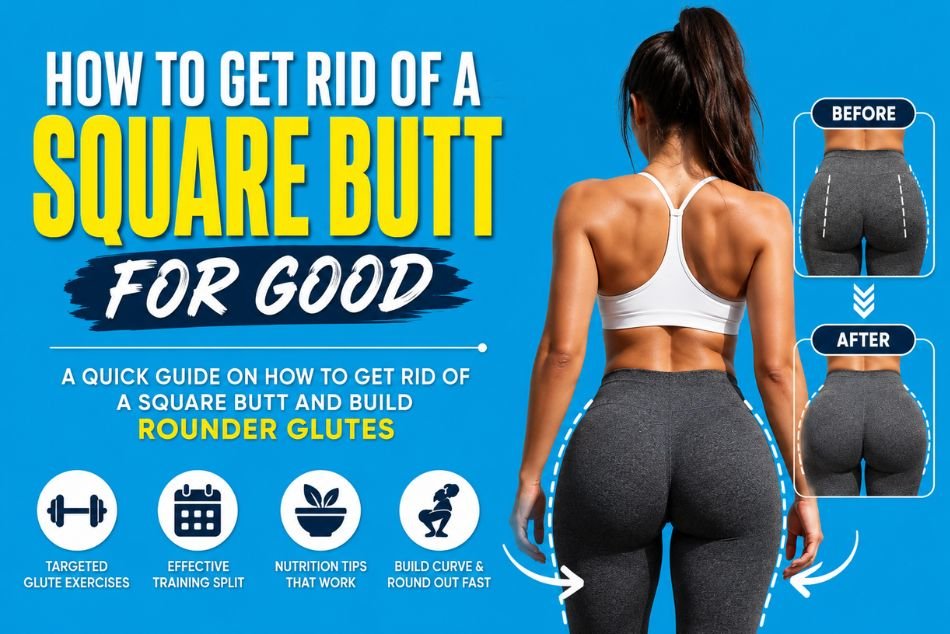
Picture your glutes from behind. On a rounder butt, the sides curve outward from your waist down through your thighs, giving it that bubble shape people usually mean when they say “round.” On a square butt, the sides run almost straight down, so the outline looks boxy instead of curved.
This is sometimes called an H-shaped butt for the same reason. It isn’t a medical term, just a way to describe how the shape reads under leggings or jeans. And it’s incredibly common, especially among people who sit for most of the day.
Square Butt vs. Other Butt Shapes
Fitness folks usually talk about four general shapes: round, square, heart, and inverted. None of these are official categories, they’re just quick ways to describe where fat and muscle tend to sit on the lower body.
A round butt, sometimes called a bubble butt, has fairly even development across the top, sides, and bottom, so the outline curves smoothly all the way down. A heart-shaped butt is fuller at the bottom with a narrower top, while an inverted V shape is the opposite, fuller up top and narrower at the bottom.
A square butt sits between the top and bottom evenly, but the sides stay flat instead of curving out. That’s really the whole difference. It isn’t better or worse than the other shapes, it just responds to a different mix of exercises than, say, a heart shape would.
What Causes a Square Butt Shape?
Genetics and Hip Structure: Your bone structure decides a lot of this before you ever step into a gym. The width of your hips, the shape of your pelvis, and where your body naturally stores fat are mostly inherited. You can change the muscle and fat sitting on top of your skeleton, but you can’t change the skeleton itself.
Underdeveloped Glute Medius and Minimus: Most people only think about the gluteus maximus, the big muscle that gives your butt its overall size. But the gluteus medius and minimus sit on the side of your hip, and those two are what actually create the outward curve. If they’re underdeveloped while your maximus is doing just fine, you end up with that flatter, squared-off look.
Too Much Sitting: Desk jobs, long commutes, hours on the couch, it all adds up. Sitting for extended periods keeps your glutes switched off, and muscles that don’t fire regularly tend to lose tone over time. This is one of the biggest reasons a square shape shows up even in people who technically go to the gym a few times a week.
Body Fat Distribution: Body fat sits on top of muscle, so even a well-trained glute can look flat if extra fat is sitting mostly on the upper part of the buttocks. Similarly, carrying very little body fat overall can also make the underlying muscle shape more obvious, for better or worse depending on how developed your glute medius already is.
Hormones and Age: Hormonal shifts, whether from age, pregnancy, or menopause, can change where your body stores fat and how easily you build muscle. This doesn’t mean the shape is locked in forever, it just means results might come a little slower at certain life stages, and that’s normal.
Muscle Imbalances From One-Sided Training: If you’ve spent years doing mostly squats, deadlifts, and leg presses, you’ve built a lot of glute maximus without giving the medius and minimus much attention. This is one of the more fixable causes on this list, since it just comes down to adding movements you haven’t been doing.
How Long Will It Take to See Results?
Muscle doesn’t grow overnight, so patience matters here. Most people who train glutes consistently, three times a week with proper intensity, start to notice a visible shift in shape somewhere around the 8 to 12 week mark.
Full transformation, meaning a noticeably rounder outline, usually takes anywhere from four months to a year depending on your starting point, how much muscle you already have, and how consistent you are with both training and nutrition. Slower progress doesn’t mean it isn’t working, it usually just means the process is doing what it’s supposed to do.
Equipment You’ll Want for These Exercises
None of this requires a fully loaded gym, but a few pieces of equipment make the exercises above easier to load properly.
- A flat bench, for hip thrusts, step-ups, and Bulgarian split squats.
- A cable machine or resistance band, for kickbacks and lateral work.
- A hip abduction machine, if your gym has one, though a resistance band around the knees gets you most of the way there.
- A barbell and plates, for hip thrusts and Romanian deadlifts once bodyweight stops being challenging.
- A set of mini bands, since they’re cheap and cover frog pumps, band walks, and abductions at home.
How to Get Rid of a Square Butt With the Right Exercises
This is where the actual work happens. The short version is that you need to train the sides of your glutes and not just the middle, so mixing side-focused movements with the classic glute builders is what changes the outline over time.
Hip Thrusts: Hip thrusts are the gold standard for building the gluteus maximus, and they add the fullness a square butt is often missing. Set your upper back against a bench, drive through your heels, and squeeze hard at the top for a second before lowering. Three to four sets of 8 to 12 reps works well.
Seated Hip Abductions: This machine move goes straight after the gluteus medius, the muscle responsible for that side curve. Sit down, push your knees outward against the pads, and hold briefly at the widest point. Three sets of 15 to 20 reps is a good range, since this muscle tends to respond well to higher rep work.
Bulgarian Split Squats: Single-leg training hits your glutes from an angle regular squats tend to miss, and it forces your hip stabilizers to work overtime. Rest your back foot on a bench, lower into a lunge, and push through your front heel to stand back up. Three sets of 8 to 10 reps per leg is plenty to start with.
Cable Kickbacks: Attach an ankle cuff to a low cable, kick your leg back and slightly out to the side, and squeeze your glute at the top. That slight outward angle brings the glute medius into the movement along with the maximus. Three sets of 12 reps per side gets the job done.
Step-Ups: Step-ups build strength and shape at once, especially with a box tall enough that your hip has to work to drive you up. Step up fully, pause at the top, then step back down under control instead of just dropping. Three sets of 10 reps per leg is a solid starting point.
Frog Pumps: Lie on your back, put the soles of your feet together, and let your knees fall open before driving your hips up. It’s a small range of motion, but it isolates the glutes hard and burns fast. Three sets of 15 to 20 reps at the end of a session works well.
Romanian Deadlifts: RDLs stretch the glutes and hamstrings under load, a range plenty of glute exercises skip entirely. Keep a slight bend in your knees, hinge at the hips, and lower the bar along your legs until you feel a stretch. Three sets of 8 to 10 reps is enough.
Lateral Band Walks: Loop a resistance band around your ankles or just above your knees, drop into a slight squat, and step sideways. This one looks easy right up until it burns like crazy within a minute, which is a good sign it’s hitting the right muscle. Two or three sets of 15 steps in each direction is usually plenty.
Sample Weekly Training Split
You don’t need to train glutes every single day to see change, but consistency matters more than intensity here. Here’s a simple three-day split you can slot into your week.
| Day | Focus | Key Exercises |
|---|---|---|
| Monday | Glute Max & Hamstrings | Hip Thrusts, RDLs, Step-Ups |
| Wednesday | Glute Medius & Minimus | Seated Abductions, Lateral Band Walks, Cable Kickbacks |
| Friday | Full Glute Circuit | Bulgarian Split Squats, Frog Pumps, Hip Thrusts |
Give yourself at least one rest day between sessions so the muscle actually has time to grow, since growth happens during recovery and not during the workout itself.
How Nutrition Fits Into Getting Rid of a Square Butt
Exercise alone won’t fully solve how to get rid of a square butt if your diet is working against you. You need enough protein to build the muscle you’re training, and you need to be in the right calorie range depending on whether your goal is adding size or losing fat.
If you’re trying to add curve and size, eat in a small calorie surplus with roughly 0.7 to 1 gram of protein per pound of bodyweight. If you’re trying to lose the fat sitting on top of your glutes while keeping the muscle you’ve built, aim for a modest calorie deficit and keep protein high so you don’t lose the very muscle you’re trying to grow.
Either way, don’t crash diet. Losing weight too fast tends to take muscle down along with the fat, which can actually make a square butt look flatter instead of rounder.
Posture and Daily Habits That Help
Training is only part of the equation. How you stand and sit all day affects how your glutes look too.
- Stand with a slight core brace instead of letting your pelvis tilt forward, since an anterior pelvic tilt can flatten your glutes visually.
- Get up and walk for a couple of minutes every hour if your job keeps you seated.
- Avoid sitting on your wallet or phone on one side, since it throws your pelvis off balance over time.
- Stretch your hip flexors regularly, since tight hip flexors pull your pelvis forward and can make your glutes look flatter than they actually are.
Mistakes to Avoid When Trying to Fix a Square Butt
Only Training the Glute Maximus: A lot of people do squats and deadlifts for months and wonder why their butt still looks square. Those lifts are great for overall size, but they barely touch the glute medius, which is the muscle that actually creates the curve on the sides.
Skipping Progressive Overload: Doing the same weight for the same reps every single week won’t change your shape much. If you’re serious about how to get rid of a square butt long-term, you need to gradually add weight, reps, or sets so your muscles have a reason to keep growing.
Expecting Results in Two Weeks: Muscle takes months to build, not days. Give any program at least 8 to 12 weeks of honest effort before judging whether it’s working.
Ignoring Nutrition: You can train with perfect form and still not see the change you want if your diet doesn’t support either muscle growth or fat loss. Address both sides of the equation, not just the workouts.
Comparing Progress the Wrong Way: Measuring your glutes against someone else’s on social media is a fast way to get discouraged for no good reason. Different hip structures respond differently to the same training, so track your own progress with photos and measurements instead of comparing yourself to strangers online.
Who Should Focus on This the Most?
Anyone who spends most of the day sitting, whether at a desk or behind the wheel, is a good candidate for glute medius work. Similarly, people who’ve trained glutes for a while with heavy squats and deadlifts but never added side-focused movements often see the fastest change once they finally add them in.
Beginners benefit here too, since starting with a balanced routine from day one means you’re less likely to end up with the muscle imbalance that causes a square shape in the first place. Either way, the exercises above work regardless of your current experience level, you’ll just use lighter weight and fewer sets if you’re new to training.
How Often Should You Train Your Glutes?
Two to three focused sessions a week is the sweet spot for most people. Training more often than that without adjusting volume tends to lead to burnout or nagging soreness rather than faster results.
What matters more than frequency is whether you’re pushing each set close to failure and whether you’re eating and sleeping enough to recover between sessions. A glute that’s trained hard twice a week with good recovery will usually outgrow one trained sloppily five times a week.
Wrapping Up
Figuring out how to get rid of a square butt really comes down to training the muscles that create curve, especially the glute medius and minimus, and pairing that work with nutrition that actually supports the change. Give it consistent effort for a few months, get your posture and daily habits in order, and stick with the training split above. The shape you’re after is achievable, it just takes the right approach and enough time to let your body respond.
FAQs
Q1) How Long Does It Take to Get Rid of a Square Butt?
Most people start noticing a difference in shape after about 8 to 12 weeks of consistent training, though full changes can take several months depending on your starting point.
Q2) Can I Fix a Square Butt Without a Gym?
Yes, to an extent. Bodyweight moves like frog pumps, lateral band walks, and step-ups onto a sturdy surface can be done at home, though a gym gives you more resistance options as you get stronger.
Q3) Do I Need to Lose Weight to Round Out My Glutes?
Not necessarily. It depends on how much fat is sitting on your glutes versus how developed the underlying muscle is. Some people need to build muscle, some need to lose fat, and plenty of people need a bit of both.
Q4) Is a Square Butt Just Genetics?
Genetics decide your hip and bone structure, but muscle development and fat distribution are things you can influence through training and nutrition. So while you can’t change your skeleton, you can absolutely change how your glutes look on top of it.
Q5) Will Cardio Help Round Out a Square Butt?
Cardio can help if fat loss is part of your goal, but it won’t build the glute medius on its own. Pair it with the strength exercises above rather than relying on cardio by itself.
Q6) Can Men Have a Square Butt Too?
Yes. Men have the same three glute muscles, and the same imbalance between glute maximus and glute medius shows up in men who train mostly with squats and deadlifts. The exercises and fixes are identical regardless of gender.