What Vitamins Help With Muscle Growth and Why Most Lifters Overlook Them
If you’ve been training consistently and still feel like your gains have stalled, nutrition could be the missing piece. Most people think about protein first — and rightly so — but knowing what vitamins help with muscle growth is just as important. Vitamins work behind the scenes: supporting protein synthesis, managing inflammation, and keeping your energy systems running so you can actually recover between sessions.
This isn’t about popping a multivitamin and calling it a day. Certain vitamins do specific jobs when it comes to building muscle, and being deficient in even one of them can quietly hold you back.
Why Vitamins Matter More Than You Think
Most gym-goers obsess over macros. Protein, carbs, fats — they track all of it. But vitamins? Those often get ignored.
The problem is that vitamins aren’t optional extras. They’re involved in the actual biological processes that build muscle. Without enough of the right ones, your body can’t repair muscle tissue properly, can’t regulate hormones efficiently, and can’t convert food into usable energy.
You might be lifting hard and eating enough calories, but if you’re running low on certain vitamins, you’re leaving real gains on the table.
The good news is that once you know which ones matter and why, it’s not complicated to fix.
Vitamin D: The One Most Lifters Are Low On
Vitamin D is probably the most talked-about vitamin in fitness right now, and for good reason.
It plays a direct role in muscle function. Research shows that low vitamin D levels are linked to reduced muscle strength and slower recovery. One of the reasons is that vitamin D receptors exist in muscle tissue — meaning your muscles literally need it to work properly.
Beyond that, vitamin D has a strong relationship with testosterone. Low vitamin D tends to correlate with lower testosterone levels. For anyone trying to build muscle, that’s a problem you want to solve.
Getting enough sunlight is the most natural way to boost vitamin D, but if you’re in an office most of the day or live somewhere with long winters, supplementation is worth considering. Most adults are deficient without realizing it. A blood test is the only way to know for sure.
Food Sources: Fatty fish like salmon and mackerel, egg yolks, and fortified dairy products all contain vitamin D. But getting therapeutic amounts from food alone is tough — sun exposure and supplementation are usually more reliable.
Vitamin C: Not Just for Colds
Most people only think about vitamin C when they’re sick. But it has a real role in muscle development that doesn’t get nearly enough attention.
Vitamin C is essential for collagen synthesis. Collagen is the structural protein that forms connective tissue — tendons, ligaments, and the fascia around your muscles. Without enough vitamin C, that connective tissue breaks down faster than it rebuilds. For lifters putting serious stress on their joints and tendons, that’s a big deal.
Vitamin C is also a powerful antioxidant. After a hard training session, your body produces free radicals that cause oxidative stress. Vitamin C helps neutralize those free radicals, which supports faster recovery.
On top of that, vitamin C helps your body absorb non-heme iron — the type found in plant-based foods. Iron is critical for transporting oxygen to muscles during exercise. Low iron means poor endurance and sluggish performance.
Food Sources: Bell peppers, citrus fruits, broccoli, kiwi, and strawberries. Most people can get plenty from food without supplementing, as long as they’re eating enough fruits and vegetables.
B Vitamins: The Energy Engine
When people ask what vitamins help with muscle growth, the B vitamins don’t always come up. They should.
The B vitamin family covers a wide range of functions, but for muscle growth specifically, a few stand out.
Vitamin B12
B12 is critical for red blood cell production and DNA synthesis. Without adequate B12, your body struggles to produce new muscle cells and repair damaged ones. It’s also essential for energy metabolism — helping your body extract usable energy from food.
B12 deficiency is particularly common in people who follow plant-based diets, since it’s almost exclusively found in animal products. If you’re vegan or vegetarian and serious about training, B12 supplementation isn’t optional — it’s necessary.
Vitamin B6
B6 is involved in protein metabolism. It helps your body break down amino acids and use them for muscle repair and growth. Diets high in protein actually increase the need for B6, so if you’re eating a lot of chicken, fish, or eggs to fuel your training, your B6 requirements go up alongside it.
Niacin (B3) and Riboflavin (B2)
These two support the energy systems your muscles rely on during training. Niacin helps convert food into ATP — the actual currency your muscles burn during a workout. Riboflavin does similar work and also contributes to normal iron metabolism.
Food sources: Meat, fish, dairy, eggs, whole grains, legumes, and leafy greens cover most of the B vitamins. If you’re eating a balanced, protein-rich diet, you’re likely getting enough. The main exception is B12 for those avoiding animal products.
Vitamin E: Protecting the Work You Put in
Vitamin E is another antioxidant, but it specifically protects cell membranes from oxidative damage. Muscle cells are made up of membranes, and every training session creates stress on those membranes.
When you lift weights, you cause microscopic tears in muscle fibers. That’s actually what leads to growth — but the repair process needs to go smoothly. Vitamin E helps reduce the cellular damage from that process and supports a cleaner recovery.
Some research also suggests vitamin E plays a role in immune function, which matters for anyone training hard. Overtraining can suppress immunity, and keeping vitamin E levels topped up is one small piece of keeping your immune system functional.
Food sources: Almonds, sunflower seeds, spinach, avocado, and olive oil are all solid sources. It’s not a vitamin most people are severely deficient in, but low levels are common in diets that avoid fats.
Vitamin A: The Underrated One
Vitamin A doesn’t get talked about in gym circles much, but it quietly does a lot for muscle development.
It’s involved in protein synthesis — the actual process of building new muscle tissue. It also supports the production of IGF-1 (insulin-like growth factor), which is one of the key hormones involved in muscle growth and repair.
Beyond that, vitamin A is essential for bone health. Bones are the framework your muscles attach to. Strong bones and strong muscles go together.
On the immune side, vitamin A keeps your mucosal barriers — the lining of your respiratory and digestive tracts — healthy and functional. When you’re training hard, your immune system takes a hit, and vitamin A helps offset some of that.
Food sources: Liver is the richest source by far. Orange and yellow vegetables like sweet potatoes, carrots, and butternut squash contain beta-carotene, which your body converts to vitamin A. Dairy and eggs also provide it.
What Vitamins Help With Muscle Growth: Getting the Dosing Right
It’s one thing to know which vitamins matter. It’s another to actually get enough of them consistently.
For most people eating a varied, protein-rich diet, outright deficiencies are rare — with a few exceptions. Vitamin D is the most common deficiency in the general population. B12 is a serious concern for plant-based eaters. And vitamin C tends to be low in people who don’t eat much fruit or vegetables.
Whole foods deliver vitamins alongside fiber, phytonutrients, and other compounds that make absorption more efficient. Supplements can fill gaps, but they work best as exactly that — supplements to a solid diet, not replacements for one.
If you suspect a deficiency, a blood test is the most practical move. Guessing and supplementing randomly wastes money and, in some cases, creates problems. Fat-soluble vitamins like A, D, E, and K accumulate in the body. Taking too much of any of them over time isn’t harmless.
Do You Actually Need Vitamin Supplements?
This question comes up constantly and the honest answer is: it depends.
If your diet is consistently high in vegetables, fruits, lean proteins, whole grains, and healthy fats, and you spend a reasonable amount of time outdoors, you’re probably covering your bases on most vitamins without supplementing.
But most people’s diets aren’t that consistent. Life gets in the way. When training volume is high, nutritional demands go up, and gaps appear more easily.
The vitamins most likely to need supplementing for active people are vitamin D (especially in winter months or if you work indoors), B12 (if you follow a plant-based diet), and possibly magnesium, which gets depleted through sweat. Magnesium isn’t a vitamin, but it works closely with vitamins to support muscle function and sleep quality — and most people don’t get enough from food.
For everything else, focus on nailing the diet first. Eat a wide range of whole foods, prioritize protein, and don’t skip the vegetables. That covers a lot of ground.
Vitamins and Recovery: The Part People Miss
Training is a stress. Recovery is where the actual adaptation happens — where muscle gets built. Vitamins play a huge role in how fast and how well that recovery happens.
Vitamin C and E both reduce oxidative stress post-workout. Vitamin D supports muscle protein synthesis directly. B vitamins keep your energy metabolism running so you’re not dragging through workouts. And vitamin A helps regulate the hormonal environment that makes growth possible.
Skimping on any of these slows down the recovery process. You might not notice it immediately, but over weeks and months, inadequate recovery compounds. You end up overtrained, under-recovered, and stuck wondering why progress has slowed despite consistent effort.
Sleep is another area where vitamins have a quiet influence. Vitamin D deficiency is linked to poor sleep quality. B vitamins support the nervous system and neurotransmitter production involved in restful sleep. Getting better sleep is one of the most overlooked ways to support muscle growth, and keeping vitamins in check contributes to that.
Practical Tips for Getting Your Vitamins From Food
Rather than relying on a long list of supplements, building a diet that covers your vitamin needs is the smarter approach. Here’s what that looks like in practice.
Eat the Colours
Different coloured vegetables and fruits contain different vitamins. Orange and yellow foods are high in beta-carotene (vitamin A precursor). Dark leafy greens deliver vitamin K, folate, and B vitamins. Red fruits tend to be high in vitamin C. Eating a variety of colours across the week covers a lot of bases naturally.
Don’t Skip Fat
Vitamins A, D, E, and K are fat-soluble, meaning they need dietary fat to be absorbed properly. A low-fat diet actively interferes with absorption of these vitamins. Eating healthy fats alongside nutrient-dense foods isn’t optional — it’s how the system works.
Limit Heavy Processing
Processing destroys a lot of vitamins. Fresh or lightly cooked foods retain far more nutritional value than heavily processed packaged foods. This doesn’t mean everything needs to be raw, but the more whole your food is, the more vitamins you’re actually getting from it.
Get Outside
Twenty to thirty minutes of midday sun exposure, with arms and legs uncovered, can dramatically improve vitamin D levels. It’s the most efficient source, and it costs nothing.
What About Pre-workout and Post-workout Nutrition?
There’s a reason pre- and post-workout nutrition gets so much attention — timing matters. And vitamins fit into that picture too.
Vitamin C taken around training can help reduce exercise-induced oxidative stress. B vitamins, particularly B6 and B12, support energy production and recovery. Some research suggests that taking antioxidant vitamins immediately after training might actually blunt the adaptation signal from exercise, so some trainers prefer getting them through food rather than high-dose supplements around workouts.
This is one area where the evidence is still evolving. What’s clear is that getting adequate vitamins over the course of the day — spread across meals — is more important than obsessing over the exact timing. Consistency beats optimization at every level of training.
Signs You Might Be Low on Key Vitamins
Your body will usually tell you when something’s off. The problem is that many vitamin deficiency symptoms are vague and easy to attribute to overtraining or poor sleep.
- Persistent Fatigue: Often linked to low B12, B6, or iron (which vitamin C supports). If you’re always tired despite sleeping enough, look at these first.
- Poor Recovery Between Sessions: Muscle soreness that hangs around longer than usual can indicate low vitamin D or inadequate antioxidant vitamins like C and E.
- Frequent Illness: Getting sick often when training hard suggests immune system strain, which can be connected to low vitamin C, D, or A.
- Weak Joints or Tendon Pain: Collagen synthesis depends on vitamin C. If your tendons and connective tissues are giving you trouble, this is worth checking.
None of these symptoms are definitive on their own, but if you’re experiencing several of them together, it’s worth reviewing your diet or getting bloodwork done.
Wrapping Up
Protein gets most of the credit when it comes to building muscle, and it deserves it. But the full picture is bigger than that.
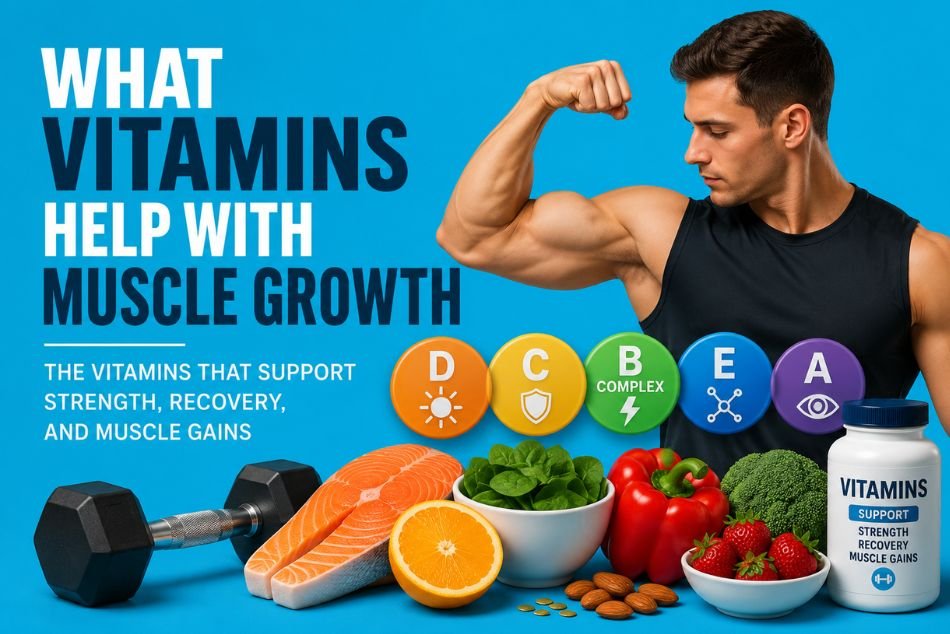
Understanding what vitamins help with muscle growth gives you an edge that most gym-goers overlook. Vitamin D for muscle function and testosterone support. Vitamin C for collagen synthesis and recovery. B vitamins for energy metabolism and protein processing. Vitamins A and E for cellular repair, hormone support, and protecting the hard work you put in during training.
None of these are complicated. A diet that’s varied, whole-food based, and protein-rich covers most of what you need. Sunlight handles vitamin D for a lot of people. Supplementing where gaps exist — especially B12 for plant-based athletes — fills in the rest.
Vitamins aren’t a shortcut or a secret — they’re the foundation your training sits on. Get them right, and everything else you’re doing in the gym and the kitchen gets more effective.
Put in the work. Eat the food. Get the sunlight. The results follow.
FAQs
Q1) What Vitamins Help With Muscle Growth the Most?
The ones that show up consistently are vitamin D, B12, and vitamin C. Vitamin D supports testosterone and muscle protein synthesis. B12 keeps your nervous system and red blood cells functioning properly. Vitamin C helps repair tissue after training. None of them work in isolation, but these three come up most often when muscle growth is the goal.
Q2) Can I Build Muscle if I’m Low on Vitamin D?
You can, but you’ll be working against yourself. Low vitamin D is linked to reduced strength output and slower recovery. A lot of people are deficient without knowing it, especially if they spend most of their time indoors. A simple blood test will tell you where you stand.
Q3) Do I Need Vitamin Supplements if I Eat Well?
Depends on your diet. If you’re eating a wide variety of whole foods, getting sunlight, and including enough protein, you may not need much. But most people have at least one or two gaps. Vitamin D is the most common deficiency even in people who eat well.
Q4) Is Vitamin C Actually Important for Muscle Growth?
More than most people think. It plays a direct role in collagen synthesis, which matters for connective tissue — tendons, ligaments, the stuff that keeps your joints together under load. It also helps reduce oxidative stress after hard training sessions. Not glamorous, but important.
Q5) What About B Vitamins — Do They All Matter Equally?
Not equally, no. B12 and B6 are the ones most relevant to muscle function and energy metabolism. The others matter for general health but aren’t as directly tied to training performance. If you eat meat regularly, you’re probably getting enough B12. Vegans and vegetarians should pay closer attention.
Q6) How Does Vitamin D Affect Muscle Growth Specifically?
It’s involved in how your muscles contract and how much testosterone your body produces. Both matter when you’re trying to add size or strength. Research shows that athletes with adequate vitamin D levels tend to perform better and recover faster than those who are deficient.
Q7) Should I Take a Multivitamin to Cover All My Bases?
A multivitamin can fill gaps, but it’s not a substitute for a decent diet. Most multivitamins also contain low doses that may not move the needle if you have a real deficiency. If you suspect a specific shortfall — vitamin D being the most common — a targeted supplement is usually more effective.
Q8) When Is the Best Time to Take Vitamins for Muscle Growth?
Fat-soluble vitamins like D and K absorb better with a meal that contains fat. Water-soluble ones like B12 and C can be taken any time. Consistency matters more than timing — taking them at the same time each day makes it easier to stay on track.
Q9) Can Too Many Vitamins Hurt Muscle Growth or Performance?
Fat-soluble vitamins — A, D, E, and K — build up in the body and can cause problems in very high doses. Water-soluble ones are harder to overdo since excess gets flushed out. The risk is mostly with people taking mega-dose supplements, not those eating a normal diet with standard supplementation.
Q10) What Vitamins Help With Muscle Growth for Older Adults Specifically?
Vitamin D and B12 become more important with age. The body gets less efficient at absorbing B12 from food, and vitamin D synthesis through skin decreases as you get older. Both affect muscle function and recovery. If you’re over 50 and training seriously, these two are worth monitoring regularly.