How to Lean Bulk the Right Way
If you’ve been lifting for a while, you already know the problem. You want to build muscle, but you also don’t want to spend months looking like you just ate your way through a buffet. That’s exactly what figuring out how to lean bulk is about.
It’s not about eating everything in sight. It’s about being deliberate with your calories, your macros, and your training. Get it right, and most of the weight you gain is muscle. Get it wrong, and you end up in a dirty bulk, covered in extra fat and back to square one.
What Is a Lean Bulk?
A lean bulk is a slow, controlled approach to gaining muscle. Instead of hammering your body with a massive calorie surplus, you eat just enough above your maintenance to support growth.
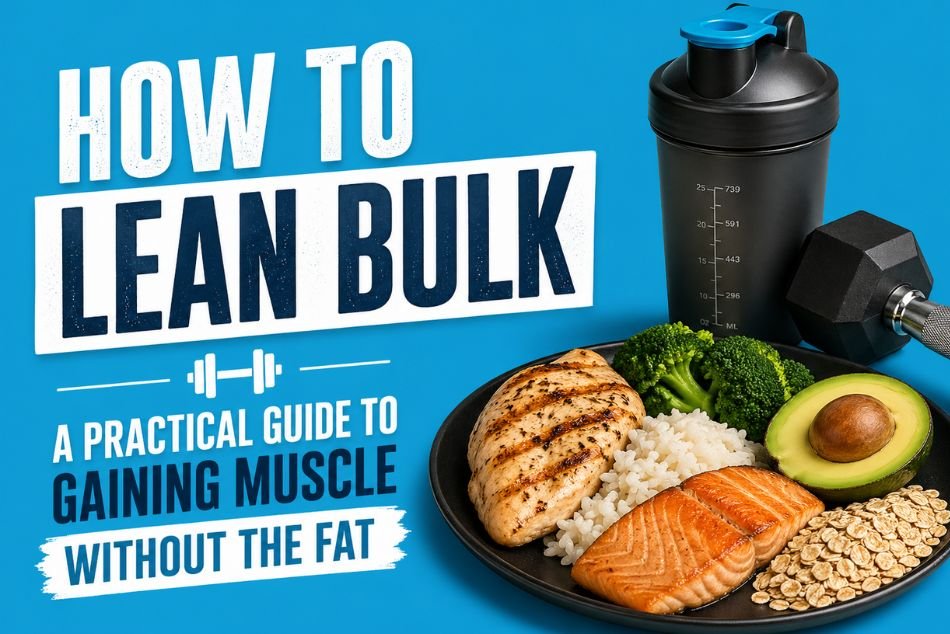
The logic is straightforward. Give your body slightly more fuel than it burns, and that extra fuel goes toward building muscle. Keep the surplus tight, and fat gain stays manageable. Push the surplus too high, and you’re just adding fat with a side of muscle.
For most people, a surplus of 200 to 400 calories per day is the target. That’s not a lot. It might feel like nothing. But at that level, you’re looking at gaining roughly 0.25 to 0.5 pounds per week, which is close to the upper limit of what natural lifters can add as actual muscle.
Lean Bulk vs. Dirty Bulk – What’s the Difference?
A dirty bulk means eating whatever you want, as much as you want. The idea is that you’ll cut the fat later. It does work to some extent. You’ll gain muscle. You’ll also gain a lot of fat, and cutting it takes time, effort, and a whole separate phase.
A lean bulk is more measured. You gain weight slowly. The trade-off is that muscle comes on at a slower pace, but you don’t end up dreading the mirror halfway through the process.
Most experienced lifters prefer the lean bulk approach. Not because it’s flashier, but because the end result is better. You get more muscle relative to fat, and you don’t have to grind through an eight-week cut to look the way you wanted to look in the first place.
How Many Calories Do You Need?
This is where most people slip up. They either eat too little and wonder why they’re not growing, or too much and wonder why their waist keeps expanding.
To lean bulk effectively, you need to first know your TDEE — your Total Daily Energy Expenditure. That’s the number of calories your body burns at your current activity level. Start there, then add 200 to 400 calories on top.
A 250-calorie surplus is a solid starting point for most people. It’s conservative, but that’s the point. You can always adjust upward if the scale doesn’t move. Eating too much from the start is harder to undo.
If you want to calculate your TDEE accurately, the Calorie Calculator on spcfitz.com can give you a reliable starting number to work from.
How to Set Up Your Macros
Hitting the right total calories gets you in the right ballpark. Getting your macros dialed in is what moves the needle on actual muscle growth.
Protein
Protein is the foundation. Without enough of it, your body can’t build or repair muscle tissue no matter how well you train.
Aim for 0.8 to 1 gram of protein per pound of bodyweight. If you weigh 175 pounds, that’s 140 to 175 grams daily. Chicken, eggs, lean beef, fish, Greek yogurt, and cottage cheese should be your go-to sources.
Carbohydrates
Carbs are your training fuel. They maintain your performance in the gym and help drive nutrients into muscle tissue after you train.
After protein is accounted for, the majority of your remaining calories should come from carbs. Prioritize complex sources like oats, rice, sweet potatoes, and whole grain bread. Save simpler carbs for around your workouts when your body can use them most efficiently.
Fats
Fat isn’t the enemy. It supports hormone production, including testosterone, and that matters a lot when your goal is muscle growth.
Target roughly 20 to 30% of your total calories from healthy fats. Eggs, avocado, olive oil, nuts, and fatty fish all fit the bill.
Best Foods to Eat During a Lean Bulk
You don’t need to eat exotic foods to make this work. The basics are enough.
- Protein Sources: Chicken breast, eggs, lean beef, tuna, salmon, Greek yogurt, cottage cheese, turkey.
- Carb Sources: White rice, oats, sweet potato, whole wheat bread, pasta, fruit, beans.
- Fat Sources: Eggs, avocado, almonds, peanut butter, olive oil, salmon, walnuts.
- Vegetables: Spinach, broccoli, kale, zucchini, peppers. Low in calories, high in nutrients, should be part of every meal.
Keep it mostly whole food. Fast food, processed snacks, and sugary drinks make hitting a controlled surplus harder and pile in empty calories that do nothing for recovery or growth.
How to Train During a Lean Bulk
Understanding how to lean bulk isn’t just about what you eat. Your training has to be set up correctly, or the extra calories have nowhere to go.
Build Around Compound Lifts
This isn’t the time for an hour of cable flys and machine work. Squats, deadlifts, bench press, rows, and overhead press should anchor every week. These movements hit the most muscle and send the clearest signal for your body to adapt and grow.
If you’re after a structured strength program to run alongside your lean bulk, the 5/3/1 workout method covered on spcfitz.com is a straightforward approach that pairs well with a clean nutrition setup.
Progressive Overload – Every Session
If you’re lifting the same weight for the same reps month after month, your body has no reason to add muscle. You need to be getting stronger over time.
Track your lifts. Aim to add a small amount of weight or squeeze out an extra rep from one session to the next. The improvements don’t need to be dramatic. Small, consistent progress compounds into real results over a full year.
Keep Cardio in Check
Cardio isn’t bad. But doing an hour every day while trying to gain muscle makes it hard to maintain your surplus and recover from hard training.
Two to three moderate sessions per week is enough while lean bulking. Twenty to thirty minutes of steady-state cardio, or a couple of shorter HIIT sessions. Enough to keep your conditioning up, not so much that it cannibalizes your recovery.
How Often Should You Be Eating?
Meal timing is less important than your total daily calories and protein. That said, some practical habits are worth keeping.
Spreading protein across 3 to 5 meals helps with muscle protein synthesis throughout the day. Eating a chunk of your carbs around your training window — before and after — supports performance and recovery.
Don’t make this more complicated than it needs to be. If you’re hitting your calorie and protein targets by the end of the day, the timing details are secondary.
Sample Lean Bulk Day of Eating
Here’s a rough example of what a lean bulk day might look like for someone targeting around 2800 calories.
- Breakfast: 4 whole eggs scrambled, 1 cup oats with a handful of blueberries, black coffee.
- Mid-Morning Snack: Greek yogurt with a banana and a small handful of almonds.
- Lunch: 200g chicken breast, 1.5 cups of white rice, a large portion of green vegetables, olive oil drizzle.
- Pre-Workout: 2 slices whole wheat toast with peanut butter and a piece of fruit.
- Post-Workout: Whey protein shake with a cup of milk, or another solid protein meal.
- Dinner: Salmon fillet, sweet potato, mixed salad with olive oil and lemon.
- Evening Snack: Cottage cheese or a cup of Greek yogurt if you’re still short on protein for the day.
This isn’t a rigid prescription. Adjust portions based on your calorie target and how your body responds week to week.
How to Track Your Lean Bulk Progress
One of the most important parts of learning how to lean bulk effectively is knowing how to tell whether it’s actually working.
Weekly Weigh-Ins
Weigh yourself first thing in the morning after using the bathroom and before eating. Do this every day and take a 7-day average to compare week to week.
Target 0.25 to 0.5 pounds of gain per week. If the scale hasn’t moved after two weeks, add 100 to 150 calories. If you’re gaining more than a pound a week consistently, pull back a little.
Progress Photos
The scale doesn’t show everything. Take front, side, and back photos every two weeks at the same time of day, under the same lighting.
Photos reveal what the scale hides — whether the weight you’re gaining looks like muscle or just fat storage.
Track Your Lifts
If your strength numbers go up over time, muscle is likely being built. If you’re eating in a surplus and getting stronger, you’re on the right track. If strength stalls for weeks at a time, something needs adjusting.
Common Mistakes to Avoid on a Lean Bulk
Eating Too Much Too Soon
The most common mistake is thinking more calories means faster muscle. It doesn’t. Your body has a ceiling for how much muscle it can actually synthesize in a week. Calories above that become fat.
Stick to a moderate surplus. Patience pays off.
Falling Short on Protein
Some people hit their calorie targets but consistently miss their protein. Without enough protein, you can’t build muscle effectively regardless of how many total calories you’re eating.
Protein isn’t optional. Hit your target daily.
Skipping Deload Weeks
Training hard every week without backing off will eventually lead to accumulated fatigue, stalled lifts, and poor recovery. Plan a lighter training week every 4 to 6 weeks.
Reduce volume and intensity during that week. You’ll come back noticeably fresher.
Not Adjusting When Progress Stalls
A lean bulk is not a set-it-and-forget-it situation. Your metabolism adapts, your bodyweight changes, and your calorie needs shift. If weight gain stalls for two straight weeks, bump your calories up. If fat gain feels excessive, pull back.
Check in on your progress and make adjustments. That’s the whole game.
Who Should Try a Lean Bulk?
Intermediate Lifters
Lean bulking suits people who have already built a solid foundation. If you’ve been training consistently for 6 to 12 months, you’ve built enough base strength and muscle awareness to benefit from this approach.
Complete beginners can often build muscle while eating at or near maintenance. If you’re just getting started, check out the beginner workout routine on spcfitz.com before worrying about lean bulking specifics.
People Who Have Done a Cut
If you’ve just finished a fat loss phase, a lean bulk is the natural next step. You’ve already built the habit of tracking food. That discipline transfers directly into managing a controlled surplus.
Anyone Who Hates the Dirty Bulk Aftermath
If you’ve done a dirty bulk before and then spent three months trying to cut off the resulting fat, you already know how tedious that is. A lean bulk keeps that whole mess from happening.
How Long Should You Run a Lean Bulk?
Most lean bulks run for 3 to 6 months. After that, a short cut — usually 6 to 12 weeks — removes any fat that accumulated before the next building phase.
This cycle of bulking and cutting is how most natural lifters build their physique over time. There’s no shortcut, but a well-run lean bulk is as efficient as it gets.
Don’t try to run a bulk indefinitely. When your body fat gets too high, muscle building slows and you feel worse. Cycle appropriately.
Supplements Worth Considering
Supplements won’t fix a bad diet or a weak training program. But a few have solid evidence behind them.
- Creatine Monohydrate: The most researched supplement in fitness. It increases strength and power output, which helps you train harder over time. Three to five grams per day is the standard dose.
- Whey Protein: Useful if you’re falling short of your protein target through food alone. Not required, but convenient.
- Caffeine: Can improve training performance. A cup of coffee 30 to 45 minutes before your session works fine.
Skip anything else unless you have a specific, evidence-backed reason for including it. Most supplements on the market aren’t worth the money.
Signs Your Lean Bulk Is Going Well
Not sure if your approach is working? Here are the signals to look for.
- Your weight is going up slowly — about 0.25 to 0.5 pounds per week on a weekly average.
- Your strength is improving in the major compound lifts.
- You’re recovering well between sessions and not feeling consistently run down.
- Your progress photos show your physique filling out without excessive fat accumulation.
- Your waist measurement is holding relatively steady or increasing very slowly.
If you’re seeing most of these, your lean bulk is working. Keep going and stay consistent.
Wrapping Up
A lean bulk isn’t complicated, but it does require consistency. Hit your calorie surplus, nail your protein targets, train with progressive overload, and stay patient. The muscle will come.
Understanding how to lean bulk correctly is really about accepting that building a quality physique takes time. You won’t put on 20 pounds of muscle in a month. But over the course of a year, with a well-managed lean bulk, the results are real, sustainable, and worth the effort.
Get the basics right. Stay consistent. Trust the process.
FAQs
Q1) What Exactly Is a Lean Bulk?
A lean bulk is a controlled approach to building muscle where you eat in a small calorie surplus — usually 200 to 400 calories above maintenance. The goal is to gain muscle while keeping fat gain to a minimum.
Q2) How Long Should a Lean Bulk Last?
Most lean bulks run for 3 to 6 months before transitioning into a short cutting phase. The right duration depends on your goals and how much fat you’ve accumulated.
Q3) How Much Weight Should You Gain Each Week?
Around 0.25 to 0.5 pounds per week is the target for most people. Gaining faster usually means you’re adding more fat than muscle.
Q4) Do You Need to Count Calories on a Lean Bulk?
Tracking makes hitting a controlled surplus much easier. Most people who try to do it by feel either eat too much or not enough. At minimum, track for the first few weeks until you have a good sense of your intake.
Q5) Can You Do Cardio While Lean Bulking?
Yes. Two to three moderate cardio sessions per week is fine. Just don’t do so much that it cuts into your calorie surplus or undermines your recovery from lifting.
Q6) What if I Stop Gaining Weight Mid-bulk?
Add 100 to 150 calories and monitor for two more weeks. If the scale still doesn’t move, add another 100. Metabolism adapts over time, so small upward adjustments are a normal part of the process.
Q7) Is a Lean Bulk Suitable for Beginners?
Beginners can usually build muscle while eating near maintenance. A structured lean bulk is better suited for intermediate lifters who have been training consistently for at least 6 to 12 months.