What Are Full Body Workouts: Benefits, Frequency, and a Sample Routine
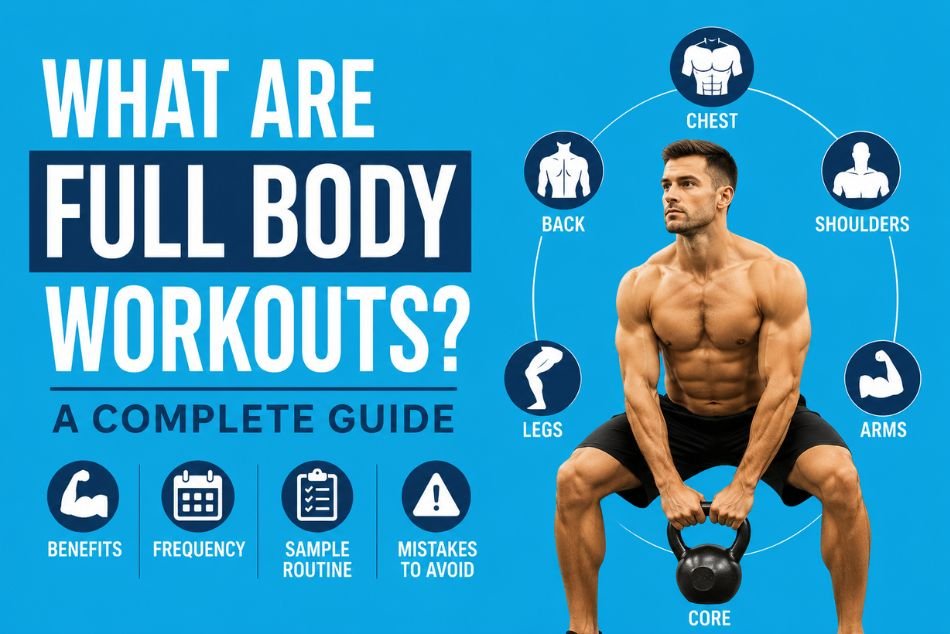
So, what are full body workouts, exactly? In simple terms, it’s a training style where you hit every major muscle group, chest, back, legs, shoulders, arms, and core, in a single session instead of spreading them across different days. Rather than dedicating one day to chest and another to legs, you train the whole body each time you show up. It’s one of the oldest and most reliable ways to build strength, and it’s still the go-to recommendation for beginners and busy lifters alike.
Full body training isn’t new. Long before workout splits and bodybuilding magazines convinced everyone to isolate muscles one at a time, lifters trained their whole body every session because that’s simply how strength training was done. The approach has stuck around because it works, not because it’s trendy.
A lot of people ask this because they’ve been told they need a fancy split just to make progress. The truth is simpler than that. Most of the strength and muscle you’ll ever build comes from a handful of basic movements done consistently, not from chasing the latest program someone posted online.
Who Should Be Doing Full Body Workouts
Not everyone needs the same training split, and that’s fine. Full body training tends to work best for a few specific groups of people.
Beginners get the most out of it because they’re still learning the core lifts. Practicing squats, presses, and rows multiple times a week speeds up that learning curve in a way that a once-a-week split simply can’t match.
Busy people benefit too. If you can only make it to the gym two or three times a week, full body training makes sure nothing gets neglected. You’re not leaving your legs or your back untouched for ten days because your schedule got in the way.
Anyone coming back from a layoff, whether from an injury, a busy season at work, or just life getting in the way, tends to do well with full body training. It rebuilds a base of strength across your entire body before you start specializing again.
How Full Body Training Actually Works
The idea is straightforward. You pick a handful of compound exercises, movements that work several muscle groups at once, and build your session around them. Think squats, deadlifts, bench press, rows, and overhead press.
Instead of spending an entire hour just on biceps or just on chest, you’re moving through the big lifts that recruit your legs, back, shoulders, and core all at the same time. A typical session might include one lower body push, one lower body pull, one upper body push, one upper body pull, and maybe some core work tacked on at the end.
You’re not doing five sets of everything under the sun. You’re picking the exercises that give you the most bang for your buck and building a session that’s efficient and repeatable.
What Muscle Groups Do Full Body Workouts Cover
A proper full body session touches every major area of your body, not just the ones that show up well in a mirror.
- Legs: Squats, lunges, and deadlifts train your quads, hamstrings, and glutes.
- Back: Rows and pull-ups or pulldowns build thickness and width in your upper back and lats.
- Chest and Shoulders: Bench press, overhead press, and push-up variations cover your pushing muscles.
- Core: Planks, carries, and hanging leg raises keep your midsection strong and stable.
- Arms: While arms aren’t usually the focus, they get plenty of indirect work from all the pressing and pulling. A little direct arm work at the end of a session is fine if you want it.
You don’t need to hit every single muscle with a dedicated exercise every session. The compound lifts already cover most of what you need.
Why People Keep Coming Back to Full Body Workouts
There’s a reason this style of training has survived every fitness fad that’s come and gone.
You Train More Efficiently
Full body sessions rely on compound lifts, and compound lifts simply do more per set. A squat works your quads, glutes, hamstrings, and core in one movement. Try getting that kind of coverage from a leg extension machine.
This means you don’t need to spend two hours in the gym to get a complete workout. Most full body sessions can be done in 45 to 90 minutes, which matters a lot if you’re juggling work, family, or basically anything else life throws at you.
Higher Training Frequency
Here’s something a lot of people miss when they’re picking a workout split. Training a muscle group once a week isn’t the most effective way to build strength or size. Research on training frequency has shown that hitting a muscle group two to three times per week tends to produce better results than the approach of training it once and letting it rest for seven days.
Full body training naturally builds in that frequency. Since you’re working your whole body every session, each muscle group gets trained multiple times a week without you having to think about it.
It’s Beginner Friendly
If you’ve never picked up a barbell before, full body workouts are about as close to foolproof as training gets. You’re not stuck guessing which split to run or worrying about whether your program has the right chest-to-back ratio.
You just show up, train your whole body, recover, and repeat. It’s simple enough that you can focus on learning proper form instead of overthinking your program.
Built-In Recovery and Flexibility
Because full body programs typically only call for two to four sessions a week, missing a workout doesn’t wreck your entire routine. Compare that to a five-day split where skipping leg day means your legs don’t get trained again for over a week.
With full body training, if life gets in the way and you miss Wednesday, you haven’t lost an entire muscle group for the week. You just pick back up where you left off.
Burns More Calories Per Session
Since you’re recruiting more muscle mass in every workout, your body ends up burning more calories per session compared to isolating one muscle group at a time. If fat loss is part of your goal, that’s a nice side benefit layered on top of the strength gains.
How Many Days a Week Should You Train
This is probably the most common question people have once they understand what are full body workouts and how they’re structured. The honest answer depends on your experience level and your schedule.
For most beginners, three sessions a week, something like Monday, Wednesday, and Friday, hits the sweet spot. It gives your body enough stimulus to adapt while leaving a full rest day between sessions so you’re not walking into the gym still sore from last time.
If your schedule is tighter, two sessions a week still get the job done. Research comparing twice-weekly training to three times a week has found the results are close enough that consistency matters more than squeezing in an extra day.
More experienced lifters sometimes push to four sessions a week, but at that point, many coaches suggest switching to an upper/lower or push/pull/legs split instead. Once you’re training that frequently, a full body approach can start to feel repetitive and harder to recover from.
Do You Need a Gym Full of Equipment?
Not really. Full body training is one of the few styles that works just as well with minimal equipment as it does in a fully loaded commercial gym.
A barbell, a rack, and some plates cover almost everything you need for squats, deadlifts, presses, and rows. Add a pull-up bar and you’ve got a complete setup.
If you’re training at home or you don’t have access to a barbell, dumbbells and a bench can get you almost the same results. Goblet squats, dumbbell presses, and single-arm rows all hit the same muscle groups without needing a full rack.
Bodyweight versions work too, especially for beginners. Push-ups, bodyweight squats, inverted rows, and planks can build a solid foundation before you ever touch a weight.
A Sample Full Body Workout You Can Actually Use
Here’s a simple three-day template that covers all your bases without overcomplicating things.
Day 1
- Barbell back squat, 3 sets of 5
- Bench press, 3 sets of 5
- Bent-over row, 3 sets of 8
- Plank, 3 sets, hold as long as you can with good form
Day 2
- Deadlift, 3 sets of 5
- Overhead press, 3 sets of 5
- Lat pulldown or pull-up, 3 sets of 8
- Hanging leg raise, 3 sets of 10
Day 3
- Front squat or goblet squat, 3 sets of 8
- Incline dumbbell press, 3 sets of 8
- Single-arm dumbbell row, 3 sets of 10 per side
- Farmer’s carry, 3 sets, walk for 30 to 40 seconds
Add weight gradually as the lifts start feeling easier. That’s really the whole game with strength training, small, steady increases over weeks and months rather than trying to max out every session.
How to Progress Week to Week
The sample template above is only useful if you keep pushing it forward over time. Here’s a simple way to think about progression without overcomplicating things.
In the first few weeks, focus purely on form. Get comfortable with the movement pattern before you worry about adding weight. There’s no rush here.
Once the reps start feeling manageable, add a small amount of weight, five pounds on upper body lifts and maybe ten on lower body lifts. Small jumps keep you moving forward without stalling out too quickly.
If a lift feels like it’s stalling for more than two or three sessions in a row, back off the weight slightly and build back up. Chasing numbers you’re not ready for usually leads to sloppy form and a higher chance of getting hurt.
Every four to six weeks, consider taking a lighter week where you drop the weight and volume a bit. This gives your joints and nervous system a break so you can keep progressing without burning out.
Common Mistakes People Make
Once you know what are full body workouts supposed to feel like, it’s easier to spot when something in your routine is off. Here are the mistakes that trip people up most often.
Doing Too Much Volume
One of the biggest traps beginners fall into is treating a full body day like it’s three separate workouts crammed into one. You don’t need eight exercises per session. Pick your main lifts, do them well, and get out of the gym.
Skipping Rest Days
Full body training is demanding precisely because you’re hitting everything each time. Skipping rest days or trying to train every single day is a fast track to burnout, nagging joint pain, or worse.
Ignoring Progressive Overload
If you’re doing the same weight for the same reps every single week, you’re not giving your body a reason to adapt. Add a little weight, add a rep, or tighten up your form. Something has to change over time or progress stalls.
Not Warming Up Properly
Jumping straight into a heavy squat or deadlift without warming up is asking for trouble. A few minutes of light cardio followed by lighter warm-up sets on your first lift goes a long way toward keeping you injury-free.
Program Hopping
Switching your entire routine every couple of weeks because you saw something new online is one of the fastest ways to stall out. Full body training rewards patience. Pick a template, stick with it for at least six to eight weeks, and let the small weekly improvements add up before you change anything.
Full Body Workouts Vs. Split Routines
People love to argue about which approach is better, but honestly, it comes down to your schedule and your goals.
If you can only make it to the gym two or three times a week, full body training is going to get you further than a split routine ever could. You simply can’t hit each muscle group enough times with a five-day split if you’re only showing up twice.
On the other hand, if you’re training five or six days a week and you’re past the beginner stage, a split routine lets you dedicate more focused volume to specific muscle groups. Neither approach is objectively better. It’s about matching the plan to your actual life.
Some lifters even blend the two, running full body sessions during busy stretches of the year and switching to a split when their schedule opens up. There’s no rule that says you have to pick one style forever.
Nutrition and Recovery Matter Just As Much
No workout program, full body or otherwise, is going to do much for you if your nutrition and sleep are a mess. You need enough protein to repair and build muscle tissue, and you need enough sleep for your body to actually recover between sessions.
Aim for a reasonable protein intake spread across your meals, stay hydrated, and try to get seven to nine hours of sleep. It’s not glamorous advice, but it’s the stuff that actually moves the needle.
Recovery days matter just as much as training days. Your muscles don’t actually grow while you’re lifting, they grow afterward, while you’re resting and refueling. Skimping on either one undercuts everything you just did in the gym.
A lot of people chase the perfect program while ignoring the basics of eating enough and sleeping enough. Fix those two things first, and almost any reasonable training plan will start producing results.
Wrapping Up
So, what are full body workouts really about? Training smart, not just training hard. Hitting your whole body in one session, two to four times a week, gives you a simple and sustainable way to build strength without living at the gym.
Whether you’re just getting started or coming back after time away from lifting, a full body approach strips away the guesswork. Pick your main lifts, add weight over time, get enough rest, and let consistency do the heavy lifting.
A Few Common Questions
Q1) Can Full Body Workouts Help With Weight Loss?
Yes. Since you’re recruiting more muscle mass per session, you burn more calories during the workout itself, and building muscle bumps up your metabolism over time. Pair the training with a reasonable diet and the results add up.
Q2) Are Full Body Workouts Good for Building Muscle, or Just Strength?
Both. As long as you’re progressively adding weight or reps and eating enough to support recovery, full body training builds muscle just as effectively as a split routine, especially for beginners and intermediate lifters.
Q3) How Long Should a Full Body Workout Take?
Most sessions land somewhere between 45 and 90 minutes, depending on how many exercises you include and how long you rest between sets.
Q4) Can Women Do Full Body Workouts Too?
Absolutely. The principles of compound lifting, progressive overload, and adequate recovery apply the same way regardless of gender. There’s nothing about this style of training that’s exclusive to any one group.