A Practical Breakdown on How to Get Bicep Vein Showing
If you’ve been hitting the gym consistently and still can’t figure out how to get bicep vein showing, you’re not alone. That road-map of veins running along your upper arm is one of the most chased aesthetics in fitness — and for good reason. It’s a dead giveaway that someone is lean and has put in real work. But it doesn’t happen by accident.
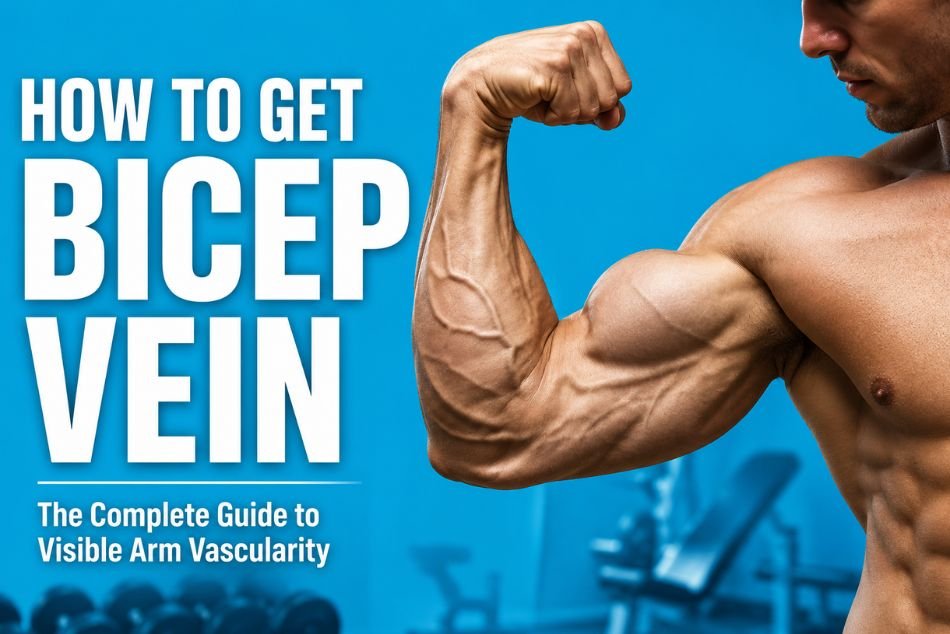
The vein you’re actually trying to reveal is called the cephalic vein. It runs along the outer edge of the bicep, from the forearm all the way up to the shoulder. Everyone has one. The difference is what’s hiding it.
Two things determine whether that vein shows: body fat percentage and muscle mass. That’s it. No secret technique, no magic supplement. You strip the fat covering it, build the muscle beneath it, and the vein surfaces. This guide breaks down exactly how to do that.
Why the Bicep Vein Hides in the First Place
Subcutaneous fat — the fat sitting just beneath your skin — acts like a layer of insulation over your veins. The thicker that layer, the deeper the vein sits. Simple as that.
Genetics also play a role. Some people have more superficially placed veins than others. Skin thickness varies person to person. But regardless of your starting point, the core levers are the same: lower your body fat and build your arm muscles.
Here’s the rough breakdown of what to expect as your body fat drops:
- Above 15% body fat: Very little to no visible vascularity in most people
- 12–15%: Some vascularity begins showing, especially during a pump
- 10–12%: Noticeably veiny arms start to emerge
- Below 10%: Prominent vascularity even without flexing
For women, the thresholds shift slightly higher. Visible vascularity typically starts showing around 18–20% body fat, due to differences in natural fat distribution.
Step 1: Lower Your Body Fat Percentage
This is the part that’s not negotiable. You can do every arm exercise in the book, but if you’re carrying significant fat over your arms, that cephalic vein stays buried. Fat loss has to come first.
Run a Sensible Caloric Deficit
The most reliable way to lose body fat is to consistently eat less than you burn. A deficit of 300–500 calories per day is the sweet spot — enough to push fat loss without destroying muscle or leaving you wrecked at the gym.
Track your food for at least a few weeks until you have a real sense of what you’re eating. Most people are eating more than they think. Apps like MyFitnessPal make this straightforward.
Prioritize protein. Keeping protein high — around 0.7–1g per pound of bodyweight — helps preserve muscle while you’re in a deficit. And muscle is exactly what you need pushing that vein toward the surface.
Add Cardio to Accelerate Fat Loss
Cardio isn’t the enemy — it just needs to be used smartly. Two to four sessions per week of 20–30 minutes is enough to accelerate fat loss without eating into recovery.
HIIT (high-intensity interval training) works well here. Short bursts of hard effort followed by rest periods burn calories efficiently and keep sessions brief. Steady-state cardio — a brisk walk, light jog, or bike ride — also does the job and is easier on the joints.
Pick whatever format you’ll actually stick with. Consistency beats intensity every time.
Step 2: Build Arm Muscle to Push the Vein Up
Low body fat is non-negotiable, but muscle mass is what gives the vein somewhere to go. Larger, denser muscles create internal pressure that physically pushes veins toward the skin surface. The bigger the bicep, the closer the cephalic vein sits to the top.
The best way to improve bicep vein visibility isn’t just to train the bicep itself — it’s to grow the brachialis. That’s the muscle sitting directly underneath the bicep. When it develops, it pushes the whole bicep up and outward, which brings the cephalic vein right along with it.
Exercises That Actually Move the Needle
- Hammer Curls: These are probably the most underrated arm exercise going. A neutral grip (palms facing each other) shifts the workload onto the brachialis and brachioradialis. Do 3–4 sets of 10–12 reps. Control the eccentric.
- Cross-Body Curls: Similar to hammer curls but you curl the dumbbell across your body toward the opposite shoulder. Another solid brachialis builder. Works well as a finishing movement.
- Preacher Curls: Forces a deep stretch at the bottom and keeps the bicep under constant tension throughout the range of motion. Great for building thickness. Use moderate weight and go slow.
- Chin-Ups: Don’t overlook these. A shoulder-width underhand grip chin-up is one of the best compound movements for bicep development. Moving your entire bodyweight forces the muscle to work hard. Aim for 3–4 sets of 8–12 reps.
Training Volume and the Pump
For arm size, moderate weight with higher volume is the way to go. Stick to 3–4 sets of 10–15 reps per exercise. The goal is getting a deep pump — that skin-tightening feeling when blood floods the muscle.
A pump doesn’t just feel good. It temporarily increases blood flow to the area, and over time, consistent training like this increases the vascularity of the tissue itself. The veins literally adapt to handle more blood.
Step 3: Dial In Your Diet and Hydration
Once your body fat is trending in the right direction, small dietary adjustments can make a noticeable difference in how your veins look day to day.
Drink Enough Water
Hydration is one of the most overlooked factors in vascularity. When you’re well-hydrated, your blood volume is higher, your veins stay fuller, and they press more against the skin. Dehydration collapses veins and makes them harder to see.
Aim for at least 3 litres (around 100 oz) of water per day. More if you train hard or sweat a lot.
Manage Sodium and Electrolytes
Sodium gets a bad reputation, but the issue isn’t sodium itself — it’s imbalance. Too much sodium without enough potassium causes water retention, which blunts vascularity and makes you look softer.
Eating a diet rich in whole foods, plenty of vegetables, and avoiding processed garbage handles most of this automatically. Potassium-rich foods like bananas, sweet potatoes, and spinach help balance sodium levels and keep the body’s fluid regulation on track.
You don’t need to get obsessive about it. Just clean up your diet and the water retention generally sorts itself out.
Carbohydrates and Muscle Fullness
Carbs get stored as glycogen inside muscle tissue. Fully stocked glycogen means fuller, rounder muscles — and fuller muscles push veins closer to the skin. Don’t crash your carbs to zero while trying to lean out. Keep them around your training sessions for the best of both worlds.
Temporary Vascularity Hacks for an Immediate Pop
These won’t replace the actual work, but they’re useful if you want your veins at their best for a photo or before you hit the gym floor.
Get a Pre-Session Pump
A quick set of push-ups or light bicep curls before you need to look your best sends blood flooding into the arms. Veins swell as the muscle fills. This is literally what every bodybuilder does before walking on stage.
Warm Your Body Up
Warm muscles and a warm environment cause vasodilation — your blood vessels expand in response to heat. Working out in a cooler room? Your veins will sit deeper. Warm up properly and you’ll see a noticeable difference in how your arms look within minutes.
Keep Your Arms Low
Gravity pulls blood downward. Arms hanging at your sides will show more vascularity than arms raised above your head. If you’re trying to make them pop for a photo, keep your hands down and slightly relaxed.
What Role Does Genetics Play?
Genetics matter more here than in most areas of fitness. Some people have veins that sit close to the skin naturally — they’re visible even at higher body fat. Others have thicker skin or deeper veins and need to get much leaner before anything shows.
Age is a factor too. As you get older, skin thins out and veins become more visible — which is why older lifters often look veinier than younger ones at the same body fat.
You can’t change your genetics. What you can change is your body fat and muscle mass. Focus on those. The rest follows.
Common Mistakes People Make When Chasing Vascularity
Focusing on Arms While Ignoring Overall Body Fat
You cannot spot-reduce fat. No amount of bicep curls will specifically burn the fat covering your arm veins. Fat loss happens systemically. Lower your overall body fat and your arms follow.
Skipping Compound Lifts
Isolation curls have their place, but they’re not what builds serious arm mass. Compound movements like rows, pull-ups, and chin-ups load the bicep with real weight and force significant muscle growth. Build a strong base first.
Cutting Calories Too Aggressively
Crash dieting burns muscle along with fat. And less muscle means veins sit deeper, not higher. Stay in a moderate deficit, keep protein high, and train hard. Slow and steady gives you the look — not a two-week starvation stint.
Ignoring Recovery
Muscles grow during rest, not during the workout. Poor sleep and inadequate recovery tank your progress whether you’re chasing vascularity or overall size. Get 7–9 hours of sleep. Take your rest days seriously.
A Simple Arm Training Plan to Improve Vascularity
You don’t need a complicated setup. Two dedicated arm sessions per week alongside your regular training is enough. Here’s an example of what that looks like in practice:
Session A
- Chin-Ups — 4 sets of 8–10 reps
- Hammer Curls — 3 sets of 12 reps
- Preacher Curls — 3 sets of 10 reps
- Cross-Body Curls — 3 sets of 12 reps each arm
Session B
- Barbell Curls — 4 sets of 8–10 reps
- Incline Dumbbell Curls — 3 sets of 12 reps
- Hammer Curls — 3 sets of 15 reps
- Cable Curls (for the pump) — 3 sets of 15–20 reps
Emphasize training smart over training blindly. The exercises above are chosen because they target the muscles that most directly contribute to visible vascularity — not just the bicep peak.
How Long Does It Take to Get a Visible Bicep Vein?
This depends on where you’re starting from. If you’re already training consistently and sitting around 15–16% body fat, a few months of focused fat loss can get you there. If you’re starting from 25%+, you’re looking at a longer runway.
A realistic fat loss rate is 0.5–1 pound per week in a proper deficit. That’s 2–4 pounds per month. If you need to drop 10 pounds of fat to reach the body fat threshold, you’re looking at roughly 3–5 months of solid, consistent effort.
There’s no shortcut here. But the good news is the approach that reveals your bicep vein — lower body fat, more muscle, clean eating, proper training — makes you look and feel better in every way. It’s not a sacrifice. It’s just the work.
Final Thoughts
If you’ve been wondering how to get bicep vein visibility, the answer is straightforward — even if the execution takes time. Get lean. Build the brachialis and bicep. Manage your hydration and diet. And stop chasing hacks before doing the basics.
Most people who can’t get their veins to show are simply carrying too much fat over the area. The vein is there — it just needs the covering stripped away. That’s a body composition problem, and it’s one you can solve with consistent training, a caloric deficit, and time.
The temporary vascularity hacks are a bonus, not a solution. Use them when you need an extra pop. But the real work — the training, the dieting, the patience — is what gives you that look on an ordinary Tuesday morning, not just when the lighting is right.
Frequently Asked Questions
Q1) What Body Fat Percentage Do I Need to Get Bicep Vein Visibility?
For men, the cephalic vein typically starts showing around 15% body fat and becomes much more defined below 12%. Below 10% and it’s visible without flexing, without a pump — just standing there. For women, it starts appearing around 18–20% body fat due to naturally higher essential fat levels. These are general ranges, not hard rules. Genetics shift the numbers in either direction.
Q2) How Long Does It Realistically Take to Get a Visible Bicep Vein?
For most people starting at 15–20% body fat (men) or 22–28% (women), you’re looking at 3–6 months of consistent training and a proper caloric deficit. Lose fat too fast and you burn muscle with it, which actually works against you. Slow, steady fat loss with high protein intake gives you the best shot at arriving lean with muscle still intact.
Q3) Is It Possible to Get a Bicep Vein Without Losing Weight?
If you’re already lean but sitting just above the threshold, building more arm muscle can close the gap. Bigger muscles push veins physically closer to the skin surface. That said, if you’re carrying meaningful fat over your arms, no amount of curls will reveal what’s buried underneath. Fat loss is non-negotiable for most people.
Q4) Can Women Get a Visible Bicep Vein?
Yes. The same principles apply — lower body fat, more arm muscle, proper hydration. Women just need to work to a slightly higher body fat threshold than men to hit visible vascularity, roughly 18–20% before things start showing. Supinated-grip movements like chin-ups and underhand cable rows are particularly effective for bringing out the cephalic vein in women.
Q5) Does Hydration Actually Affect How Vein Visibility?
More than most people realize. When you’re well hydrated, blood volume is higher and veins stay fuller and press harder against the skin. Dehydration causes veins to partially collapse, making them harder to see even if you’re lean. Aim for at least 3 litres of water daily, more on training days. It’s one of the cheapest things you can do to improve vascularity day to day.
Q6) Why Do My Veins Disappear When I Stop Training?
Two things happen when you stop. Blood flow to the arms drops without the stimulus of regular training, so veins don’t fill as much. And if you regain body fat over time, the subcutaneous layer thickens and covers them back up. The vein doesn’t go anywhere — it just gets buried again. Get back to training and leaning out, and it comes back.
Q7) Do Supplements Actually Help With Getting a Bicep Vein?
Some have a real, if modest, effect. Nitrates found in beetroot juice increase nitric oxide production, which causes vasodilation and temporarily improves blood flow to the muscles. Creatine increases muscle fullness by pulling water into the muscle cells, which can make veins look more prominent. But no supplement replaces the two things that actually matter: low body fat and developed muscle. If you want to know how to get bicep vein showing on a consistent basis, the answer is diet and training — not a pre-workout.
Q8) Does Genetics Determine Whether I Can Get a Bicep Vein at All?
Genetics affect how easy or hard it is — not whether it’s possible. Some people have veins that sit naturally close to the skin and show up at 15% body fat without much effort. Others have thicker skin or deeper veins and need to get to 10% before anything is visible. Skin also thins with age, which is why older, experienced lifters often look veinier than younger ones at the same body fat. Work the variables you can control — body composition and training — and genetics become less of a factor than people assume.