Everything You Need to Know About How to Deload (Without Losing Progress)
If you’ve been training hard for weeks and your lifts have suddenly stalled, this is probably the article you need. Learning how to deload properly is one of those skills that separates lifters who make steady progress for years from lifters who burn out, get hurt, or quit after six months. It sounds simple on paper, just lift a little lighter for a week, but most people either skip it entirely or do it wrong.
I’ve seen both extremes at the gym. Guys who never deload and end up nursing a cranky lower back for months. And guys who “deload” by basically taking a week off, then wonder why they feel weak when they come back. Neither approach works.
This guide walks through what a deload actually is, when you need one, and how to structure it so you come back stronger instead of rusty. No fluff, no complicated math, just the stuff that actually matters.
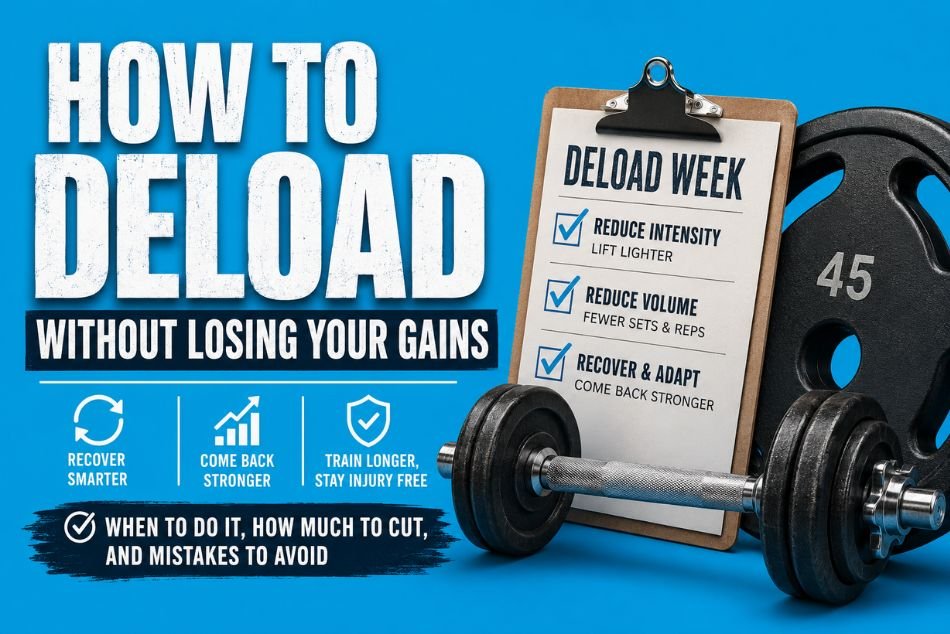
What a Deload Actually Is
A deload is a planned week (sometimes longer) where you pull back on how hard you’re training. Not a vacation from the gym. Not skipping workouts. Just less weight, fewer sets, or both.
The point is to let your joints, connective tissue, and nervous system catch up. Muscles recover fast. Tendons and your central nervous system don’t. That mismatch is exactly why lifters who train hard for months without a break eventually hit a wall, or worse, get injured.
Jim Wendler builds a deload into every single 5/3/1 cycle, and it’s not an accident. Every fourth week, instead of grinding toward a new rep max, you back off and work with lighter percentages. We’ve covered the full structure of that program on spcfitz.com if you want to see how a deload fits into a real, working template instead of just floating on its own.
Think of it like driving a car. You don’t redline the engine every single trip and expect it to last ten years. Eventually something wears out. Training is the same. The weight on the bar is the easy part to track. What’s harder to see is the wear and tear building up in your elbows, your lower back, your patellar tendons, all the stuff that doesn’t show up on a spreadsheet until it forces you to stop training altogether.
Signs You Actually Need One
Some people plan deloads in advance. Others wait until their body forces the issue. Both are valid, but the second approach usually costs you a few extra weeks of frustration before you admit what’s happening.
Here’s what tends to show up before a deload becomes necessary:
- Weights that felt easy two weeks ago suddenly feel heavy
- Soreness that lingers past 48 hours
- Joints ache in a way that wasn’t there before
- Sleep gets worse even though nothing else changed
- You dread going to the gym instead of looking forward to it
If two or three of those sound familiar, you’re probably overdue. I’ll be honest, I ignored these signs for a solid month once, chasing a bench PR that wasn’t coming. My shoulder made the decision for me. Don’t be like me on that one.
There’s also a mental side to this that doesn’t get talked about enough. If you’re irritable, if you’re dreading your warm-up sets, if the idea of loading the bar feels like a chore instead of something you want to do, that’s fatigue talking. Physical burnout and mental burnout usually show up together, not one before the other.
How Often Should You Deload
Most lifters do fine with a deload every four to eight weeks, depending on how hard the training block was and how experienced they are. Beginners can often go longer between deloads because they’re not yet lifting heavy enough to generate serious fatigue. Advanced lifters pushing near their limits usually need one sooner.
Programs like 5/3/1 bake this in automatically every fourth week, which is one reason it’s stayed popular for so long. You’re not guessing when to back off. It’s already built into the calendar.
If you’re running your own program without a built-in schedule, a good rule of thumb is to plan a deload after every third or fourth hard training block, then adjust based on how your body actually feels once you get there.
Training age matters here too. Someone who just started lifting six months ago is nowhere near the same fatigue level as someone who’s been grinding for a decade. Newer lifters can sometimes go two or three months between deloads without issue. Veterans pushing heavy singles and doubles often need one every four to five weeks, sometimes sooner if they’re also dealing with a physically demanding job or poor sleep.
How to Deload: Volume vs Intensity
There are really two levers you can pull during a deload, and understanding the difference matters more than most people realize.
Reducing volume means keeping the weight roughly the same but cutting your sets and reps down, sometimes by 30 to 50 percent. If you normally squat 5×5, you might do 3×3 at a similar weight. This keeps your body used to handling real weight while cutting the total workload that’s been grinding you down.
Reducing intensity means dropping the actual weight on the bar, often down to 50 to 70 percent of what you normally use, while keeping your sets and reps closer to normal. This is the more common approach for lifters who are dealing with joint pain or general burnout rather than just accumulated training volume.
Some coaches mix both, cutting volume moderately while also trimming the weight a bit. Honestly, there’s no single “correct” ratio here. It depends on why you’re deloading in the first place. Fatigue from too much volume calls for cutting sets. Joint pain or nervous system burnout usually responds better to cutting weight.
Research on tapering backs this up. Reviews of strength and power athletes generally show that cutting volume by somewhere between 30 and 70 percent while keeping intensity high tends to preserve performance better than dropping everything at once. That’s useful to know if your main goal is staying strong through the deload rather than just surviving it.
If you’re newer to this and don’t want to overanalyze it, here’s the short version: figure out why you’re tired first, then pick your lever.
- Sore joints, achy elbows, cranky lower back → drop the weight
- Just generally gassed, sleep is fine, nothing hurts → drop the sets and reps
- Both → drop both, moderately
A Simple Deload Week You Can Actually Use
Here’s a template I’ve used with lifters who weren’t sure how to deload without overthinking it.
Main lifts (squat, bench, deadlift, press): Drop to about 50-60% of your working weight. Keep the reps around 3-5. Two to three sets is plenty. You should walk away from every set feeling like you had five more reps in the tank.
Accessory work: Cut the volume by roughly half. If you normally do four sets of rows, do two. Keep the weight light enough that form stays sharp.
Conditioning or cardio: Keep this light too. This isn’t the week to test your mile time.
What to skip entirely: Don’t add new exercises during a deload week. It’s tempting to experiment since the weights feel easy, but this is a recovery week, not an exploration week. Save the new movement patterns for when you’re back to normal training.
A week like this usually takes 6-8 days depending on how your schedule falls, and most lifters come out the other side feeling noticeably fresher.
Example with real numbers: Say your working squat is 315 for 3×5 on a normal week. During a deload, you’d drop to somewhere around 165-190 pounds for 3×3. That’s roughly half the load and about 40 percent less total volume. It should feel almost too easy. That’s the point.
If your deload feels like a normal hard training day, you didn’t back off enough. That’s the single most common mistake lifters make when they’re first learning how to deload. Ego gets in the way, and the “light” week ends up not that light at all.
Common Mistakes People Make
Skipping it entirely. This is the most common one. Training feels good, momentum feels good, and backing off feels like giving something up. The problem is fatigue is invisible until it isn’t, and by the time you notice it, you’re usually already dealing with an injury or a multi-week plateau.
Turning it into a full week off. A deload isn’t the same as rest. Complete inactivity for a week can actually make you feel stiffer and weaker when you return, especially if you’re an intermediate or advanced lifter used to consistent training.
Going too light. Some people take “deload” to mean “barely lift anything,” which defeats the purpose. You still want enough stimulus to maintain your movement patterns and keep your nervous system familiar with the lifts.
Overthinking the exact percentages. Questions are asked all the time about whether 55% or 65% is the “right” number. Honestly, either works fine. The specific percentage matters far less than actually doing the deload consistently every few weeks.
Deloading only the lifts that don’t hurt. Some people will back off the bench because their shoulder is barking, but keep squatting heavy because their knees feel fine. That’s missing the point. Fatigue is systemic. Your nervous system doesn’t care which joint is complaining loudest.
Waiting for a “perfect” week to schedule it. There’s no perfect week. Life is busy, work is stressful, something’s always going on. Pick a week, put it on the calendar, and do it, rather than waiting for some ideal moment that never actually shows up.
How Do You Know It Worked
The easiest test is your first session back at normal training. If the weights that felt heavy before the deload suddenly feel manageable again, and your first work set feels crisp instead of grindy, the deload did its job.
If you come back and things still feel heavy, that’s a sign either the deload wasn’t long enough, wasn’t light enough, or there’s something else going on outside the gym, like poor sleep, stress, or just not eating enough during the week off. A deload can’t fix a nutrition problem or a sleep debt on its own.
Some lifters also track this with simple bar speed. If your deload squat at 60% moves noticeably faster and smoother than it did a few weeks back at the same percentage, your nervous system has recovered. That’s a good sign your training is trending in the right direction, not just spinning in place.
How This Fits Into a Bigger Program
If you’re following a structured program like 5/3/1, figuring out how to deload isn’t really a decision you have to make on your own. Wendler already built the deload week into the fourth week of every cycle, using lighter percentages of your training max so you’re not stuck guessing at numbers.
That’s part of why so many lifters, gravitate toward programs with built-in deloads rather than writing their own training from scratch. It removes the guesswork and, honestly, it removes the temptation to skip the deload because “you feel fine.”
If you’re not running a structured program and building your own training instead, you can borrow this idea directly. Pick a week every month, mark it on your calendar in advance, and commit to it before you’re forced into it by an aching shoulder or a stalled bench press.
Deloading for Different Goals
Strength athletes chasing a bigger squat, bench, or deadlift usually benefit from keeping intensity fairly high (75-85% of normal) while cutting volume substantially. This preserves the neural adaptations that come with lifting heavy without adding to the fatigue pile.
Bodybuilders and hypertrophy-focused lifters tend to do better cutting both volume and intensity noticeably, since the accumulated joint and connective tissue stress from high-rep training adds up differently than pure strength work.
General fitness lifters who aren’t chasing a specific number can often get away with a simpler approach: just cut everything by roughly a third to a half for a week and see how they feel.
None of this needs to be complicated. The goal, no matter your training focus, is walking into the following week feeling noticeably better than you did going into the deload.
Powerlifters approaching a meet handle this a bit differently. In the final weeks before competition, the goal shifts from general recovery to peaking. Volume typically drops in stages, sometimes 25% one week and 50% the next, while intensity stays high so you walk onto the platform strong instead of stale. That’s a more advanced version of the same idea covered here, and it’s worth its own conversation if you’re prepping for a meet.
Athletes in-season (football, basketball, whatever the sport) usually need shorter, more frequent deloads worked around game schedules rather than one big planned week. A few lighter training days spread through a busy stretch can do the same job as a full deload week when your calendar doesn’t allow for one.
When to Deload Outside the Normal Schedule
Sometimes life throws a curveball and you need to deload outside of your planned schedule. Getting sick, poor sleep for several nights in a row, unusual work stress, or a nagging injury are all good reasons to insert an unplanned deload, even if your calendar says you’ve got two more weeks of hard training left.
Ignoring these signals and pushing through “because the program says so” is how minor issues turn into major ones. A program is a guide, not a contract you’re obligated to honor at the expense of your joints.
Wrapping Up
Learning how to deload is honestly one of the more underrated skills in strength training. It’s not glamorous. Nobody posts their deload week on Instagram. But it’s the difference between training for years and training for a few months before something gives out.
Keep it simple: cut your volume, cut your intensity, or both, roughly every four to eight weeks, or whenever your body starts sending you warning signs. Don’t skip workouts entirely, and don’t overthink the exact numbers. If you want a program that already has this built in so you’re never left guessing, the 5/3/1 is a solid place to start. Get the deload right, and everything else about your training gets easier.
A Few Quick Questions People Ask
Q1) Will I Lose Strength During a Deload?
No, not in a meaningful way. A single week of reduced training doesn’t erase months of adaptation. If anything, most lifters come out stronger because the fatigue masking their real strength has cleared out.
Q2) Can I Still Train Other Things During a Deload, Like Conditioning or Mobility?
Sure. A deload targets the specific lifts and movements that have been beating you up. Light cardio, mobility work, and easy walks are usually fine and can actually help you recover faster.
Q3) What if I Feel Great and Don’t Think I Need One?
Deload anyway if it’s been more than eight weeks since your last one. Fatigue tends to build up faster than it feels, and by the time you notice it, you’re often already a week or two behind.
Q4) Do Beginners Need to Deload?
Less often than intermediate or advanced lifters, but yes, eventually. Even beginners benefit from a lighter week every couple of months, especially once they start adding real weight to the bar.