What Is Classic Physique? History, Meaning, Judging Criteria, and Why Aesthetics Still Matter
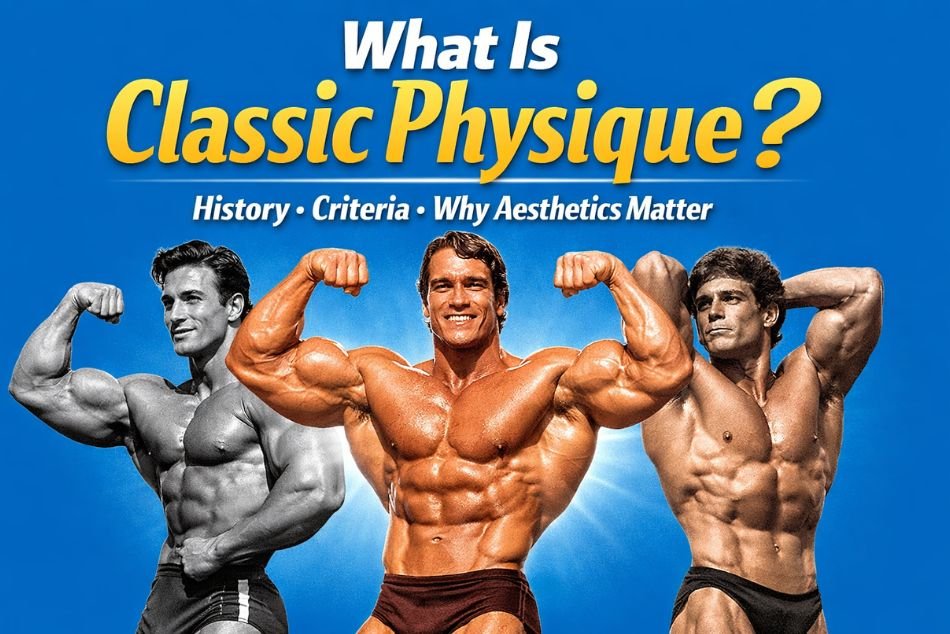
What is classic physique is a question many modern lifters ask once they realize that bigger does not always mean better. In bodybuilding, Classic Physique refers to a competitive division that prioritizes balance, symmetry, proportion, and visual appeal over sheer muscle mass. It represents a return to an era when physiques were admired not just on stage, but also off it. Bodies that looked powerful, athletic, and attainable rather than overwhelming.
Classic Physique sits between Men’s Physique and Open Bodybuilding. It allows athletes to carry more muscle than Men’s Physique competitors, while avoiding the extreme size, density, and often distended midsections seen in Open Bodybuilding. The goal is a tapered V-shape, a tight waist, flowing muscle lines, and confident posing that highlights structure rather than size alone.
To truly understand Classic Physique, you need to understand where it came from, why it disappeared, and why it has made such a strong comeback in recent years.
The Origins of the Classic Physique Ideal
Long before bodybuilding became a sport defined by extreme mass, the ideal physique was rooted in balance and proportion. In the early and mid-20th century, the best bodies in the world were admired because they looked complete from every angle.
One name stands above all others when discussing the birth of the classic physique ideal: Steve Reeves.
Reeves competed in the late 1940s and early 1950s and set what many still consider the gold standard for male aesthetics. At over six feet tall, he displayed broad shoulders, a narrow waist, full chest development, and athletic legs. His physique looked powerful yet graceful, muscular yet refined.
What made Reeves special was not extreme size. It was the way every body part flowed into the next. His shoulders framed his chest. His lats flared into a tight waist. His legs complemented his upper body rather than overpowering it. This balance made him a global icon and helped him transition into Hollywood, where he famously portrayed Hercules.
Reeves became the blueprint. Even today, when people talk about the “ideal male physique,” they are often unknowingly describing Steve Reeves.
The Golden Era and the Rise of Aesthetic Bodybuilding
Following Reeves, the 1950s and 1960s introduced several athletes who carried the classic torch forward. Reg Park and Bill Pearl were among the most influential. They added more muscle while maintaining clean lines and symmetry.
Then came the late 1960s and early 1970s, a period now referred to as bodybuilding’s Golden Era. This was the time when aesthetics and size were perfectly balanced.
Sergio Oliva, known as “The Myth,” brought a level of mass previously unseen, yet he retained a tight waist and dramatic V-taper. Despite his size, his physique remained visually pleasing, winning him three Mr. Olympia titles between 1967 and 1969.
The 1970s were defined by two legends who represented different ends of the classic spectrum.

Arnold Schwarzenegger brought charisma, width, and power. His chest, arms, and presence dominated stages, yet his structure and proportions kept his physique firmly within classic standards.
On the other end was Frank Zane, who emphasized precision over size. Zane’s narrow waist, flawless symmetry, and textbook vacuum poses earned him three consecutive Mr. Olympia titles from 1977 to 1979. For many purists, Zane represents the ultimate expression of what classic physique truly means.
When Size Took Over: The Shift in the 1990s
The 1990s marked a dramatic turning point in bodybuilding. The ideal physique shifted from aesthetic balance to overwhelming mass and density.
This change is most commonly associated with Dorian Yates. Yates introduced what became known as the “mass monster” era. His thick back, dense muscle bellies, and conditioning redefined judging standards.
While Yates was undeniably dominant and disciplined, his success altered the direction of the sport. Symmetry and flowing lines took a back seat to size, hardness, and grainy conditioning. Distended abdomens became more common. Vacuum poses disappeared. The classic V-taper was no longer essential.
For many fans and lifters, bodybuilding began to lose its visual appeal. The physiques were impressive, but no longer inspiring in a relatable way. This dissatisfaction quietly grew for decades.
The Call for Change and the Return of Aesthetics
Few voices carry as much weight in bodybuilding as Arnold Schwarzenegger’s. Over the years, Arnold repeatedly expressed concern about the direction the sport had taken. He openly criticized bloated midsections, poor posing, and the lack of aesthetic appeal in modern champions.
His argument was simple. When you saw champions like Steve Reeves on the beach, you wanted to look like them. With modern mass monsters, admiration did not always translate into aspiration.
This growing frustration among fans, athletes, and legends of the sport eventually led to change.
The Birth of the Classic Physique Division
In response to this demand, the NPC and IFBB introduced the Classic Physique division. It was designed to bring aesthetics back into competitive bodybuilding while still allowing significant muscular development.
Classic Physique was not meant to replace Open Bodybuilding. Instead, it filled the gap between Men’s Physique and the Open division.
Athletes who were too muscular for board shorts but did not want to chase extreme mass finally had a competitive home.
What Makes Classic Physique Different From Other Divisions?
Understanding what is classic physique requires comparing it directly to other bodybuilding categories.
Classic Physique vs Men’s Physique
Men’s Physique focuses on upper-body aesthetics with limited leg development. Competitors wear board shorts and are judged primarily on shoulder width, chest shape, and overall presentation.
Classic Physique requires full-body development. Legs matter. Calves matter. Posing matters. Athletes wear traditional posing trunks, which means weaknesses cannot be hidden.
Classic Physique vs Open Bodybuilding
Open Bodybuilding has no upper size limit. The goal is maximum muscle mass combined with extreme conditioning.
Classic Physique uses height and weight caps to maintain proportion. Athletes must meet weight limits based on their height, preventing excessive bulk and encouraging balanced growth.
Key Characteristics of a Classic Physique
Classic Physique athletes are judged on several specific traits.
- Proportion and Symmetry: Muscle groups must match each other. Overdeveloped arms with a weak back or massive quads with a small upper body will hurt an athlete’s placing.
- Small Waist and V-Taper: A tight midsection is essential. The vacuum pose is a hallmark of Classic Physique and a direct nod to old-school bodybuilding.
- Flow and Muscle Lines: Muscles should transition smoothly. Judges look for clean separations without blocky or harsh appearances.
- Posing Ability: Classic poses are mandatory. Athletes must demonstrate control, confidence, and the ability to showcase their physique artistically.
Training for a Classic Physique
Training for Classic Physique is not about chasing numbers on every lift. It is about sculpting the body intelligently.
Athletes focus heavily on:
- Shoulder width and roundness
- Upper chest thickness
- Lat width for a strong taper
- Hamstring and quad separation without overpowering the frame
- Core control rather than brute abdominal thickness
Volume, tempo, and mind-muscle connection matter more than maximal loading.
Nutrition and Conditioning the Classic Way
Classic Physique competitors aim for conditioning that enhances shape rather than destroys fullness. Extreme dehydration and stringy muscle are less rewarded here.
Carbohydrate timing, moderate fat intake, and controlled sodium manipulation help maintain round muscle bellies while keeping the waist tight.
Why Classic Physique Appeals to Modern Lifters
One reason Classic Physique has exploded in popularity is relatability. While still elite, these physiques feel achievable with years of disciplined training.
Many gym-goers train not to win shows, but to look good year-round. Classic Physique aligns perfectly with that mindset.
It values health, longevity, and aesthetics. It rewards patience and structure over reckless size chasing.
The Cultural Impact of Classic Physique Today
Social media has played a major role in the division’s growth. Physiques that look good in real life, not just under stage lights, resonate more with audiences.
Classic Physique athletes are often seen as ambassadors of bodybuilding’s original spirit. They remind people why the sport existed in the first place.
Is Classic Physique the Future of Bodybuilding?
While Open Bodybuilding will always have its place, Classic Physique represents a correction rather than a trend. It restores balance to a sport that once drifted too far in one direction.
Judging standards continue to evolve, but the core values remain consistent: proportion, symmetry, and beauty in muscular development.
Final Thoughts: What Is Classic Physique Really About?
At its core, what is classic physique is not just a category. It is a philosophy. It is the belief that the best body is not the biggest body, but the most complete one.
Classic Physique celebrates structure, discipline, and artistic expression through training. It honors the legends who built the foundation of bodybuilding and gives modern athletes a path that values longevity and aesthetics.
For lifters who train not just to be large, but to look exceptional, Classic Physique is where bodybuilding feels whole again.
Frequently Asked Questions (FAQ)
Q1) What Is Classic Physique in Bodybuilding?
Classic Physique is a competitive bodybuilding division that focuses on aesthetics, symmetry, proportion, and overall visual balance rather than extreme muscle mass. It emphasizes a V-tapered frame, small waist, flowing muscle lines, and classic posing styles inspired by bodybuilding’s golden era.
Q2) What Is the Main Difference Between Classic Physique and Open Bodybuilding?
The biggest difference is size and structure. Open Bodybuilding has no weight limits and rewards maximum muscle mass and conditioning. Classic Physique has height and weight caps to maintain proportion and rewards balance, shape, and aesthetics over sheer size.
Q3) How Is Classic Physique Different From Men’s Physique?
Men’s Physique competitors wear board shorts and are judged mainly on upper-body aesthetics, with minimal emphasis on legs. Classic Physique athletes wear traditional posing trunks, must show full leg development, and perform mandatory classic poses, making it a more complete bodybuilding category.
Q4) Why Are Height and Weight Limits Used in Classic Physique?
Height and weight limits prevent athletes from becoming overly bulky and help preserve classic proportions. These limits ensure competitors focus on symmetry, structure, and muscle quality rather than chasing excessive mass.
Q5) What Poses Are Required in Classic Physique?
Classic Physique includes mandatory poses such as the front double biceps, side chest, back double biceps, abdominal and thigh, and classic poses like the vacuum. Posing quality and presentation play a major role in judging.
Q6) Is the Vacuum Pose Mandatory in Classic Physique?
While not always listed as a standalone mandatory pose, the vacuum is strongly favored and often expected. A tight waist and strong abdominal control are key judging factors in Classic Physique.
Q7) Is Classic Physique Healthier Than Open Bodybuilding?
Generally, yes. While still an extreme sport, Classic Physique places less emphasis on maximum bodyweight and extreme conditioning. Many athletes find it more sustainable long-term due to lower body mass and a stronger focus on structural balance.
Q8) Can a Natural Bodybuilder Compete in Classic Physique?
Yes, especially at amateur and regional levels. The division’s emphasis on shape and proportion makes it more accessible to natural athletes compared to Open Bodybuilding, though elite levels remain highly competitive.
Q9) What Type of Training Is Best for Classic Physique?
Training should focus on building wide shoulders, a thick upper chest, strong lats, balanced legs, and a tight core. Controlled volume, good form, and mind-muscle connection matter more than lifting maximum weights.
Q10) Why Has Classic Physique Become So Popular?
Many lifters prefer physiques that look athletic and impressive year-round. Classic Physique represents a return to bodybuilding’s aesthetic roots, making it more relatable, visually appealing, and inspiring for the average gym-goer.
Q11) Is Classic Physique the Future of Bodybuilding?
Classic Physique is not replacing Open Bodybuilding, but it has become one of the fastest-growing divisions. Its focus on aesthetics, structure, and presentation suggests it will remain a major part of competitive bodybuilding for years to come.
Q12) What Is Classic Physique Really About?
At its core, what is classic physique comes down to balance over bulk. It’s about building a body that looks powerful, symmetrical, and artistic rather than simply massive.